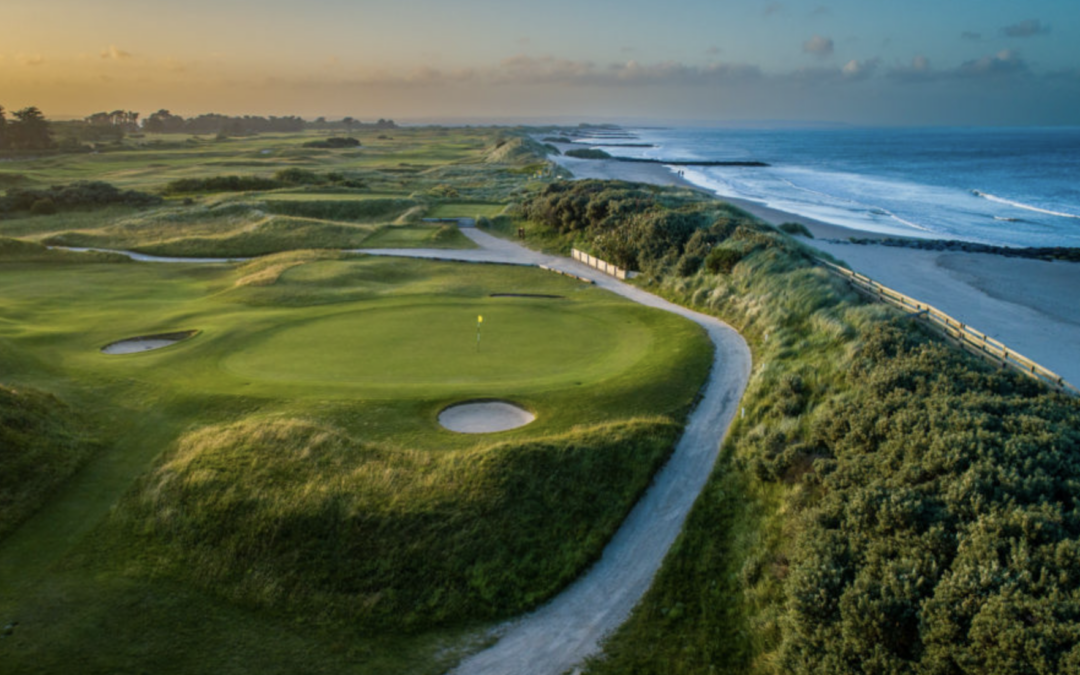
There is a moment — somewhere on the outward nine at Rosslare — when the dunes close in around you, the sea disappears from view, and all that exists is salt grass, sky, and the low, insistent moan of wind through marram. The world you arrived from is gone. There is only the peninsula, the ball, and the next decision.
That moment is why you came to Ireland.
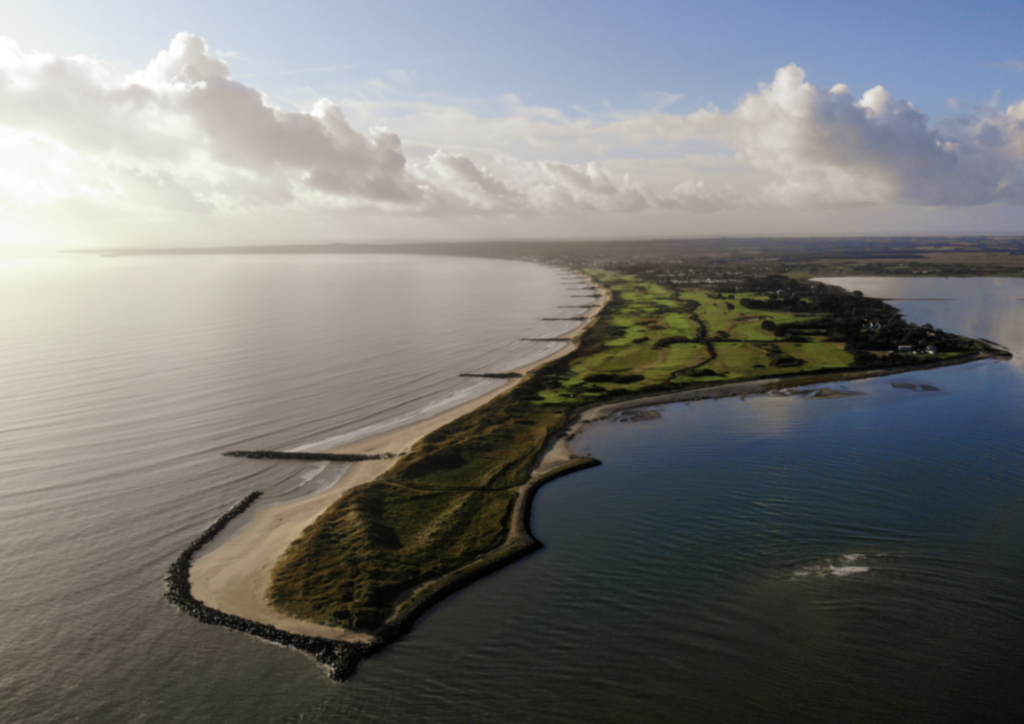
Rosslare Golf Links sits at the far tip of a narrow finger of land in County Wexford — Ros Láir, meaning ‘middle promontory’ in Irish, a name that carries the geography of the place within itself. The Irish Sea presses in from the east. Wexford Harbour opens wide to the west. To reach it, you follow the road south until the road runs out of ideas. The land narrows. The sky gets bigger. And then, almost before you’ve realised it, you’re standing on a links course that feels less like a built thing and more like a discovered one — as though the game of golf and this particular strip of coastline found each other a century ago and simply never let go.
The Foundations
The club was founded in 1905, and the 18-hole Old Course you play today was laid out by the English firm of Hawtree and Taylor, who completed the design in 1926 — the same architects returning in 1928 to finalise the bunker layout. The fact that Hawtree and Taylor’s fee for the entire design was £15 and 15 shillings plus expenses is one of Irish golf’s great historical footnotes. What they delivered for that sum is one of only 50 true links courses in Ireland, and the only one in the south-east of the country.
None of that history prepares you for the feeling of simply being here. Because Rosslare is not a course you understand through its scorecard. You understand it through your feet — through the firm, fast, sandy ground that sends the ball scurrying forward, through the subtle cambers that redirect a perfectly struck iron into places you didn’t intend, through the realisation, somewhere around the 7th hole, that the wind has just changed direction and everything you thought you knew about this round is now open to negotiation.
The First Breath
Step off the first tee and the air hits you differently than it does anywhere else. It is lighter here, somehow. Sharper. Already in motion, even on days when the trees back in Dublin stand perfectly still. This is coastal air that has crossed open water to reach you, and it carries with it a kind of elemental clarity — the feeling that you are, at last, somewhere that is entirely itself.
The Old Course plays to 6,702 yards — not long by modern championship standards, which is precisely the point. Length was never Rosslare’s primary defence. The fairways are firm and honest. There is no lushness designed to flatter. The ball does what the ground tells it to do, not what your swing intended, and learning to accept that — to trust it, even — is the first lesson Rosslare teaches. You are not in control here. You are in conversation.
That shift in mindset — from controller to collaborator — is what separates links golf from every other form of the game. Rosslare, uncluttered and uncompromising, delivers it in its purest form.
The Peninsula Unfolds
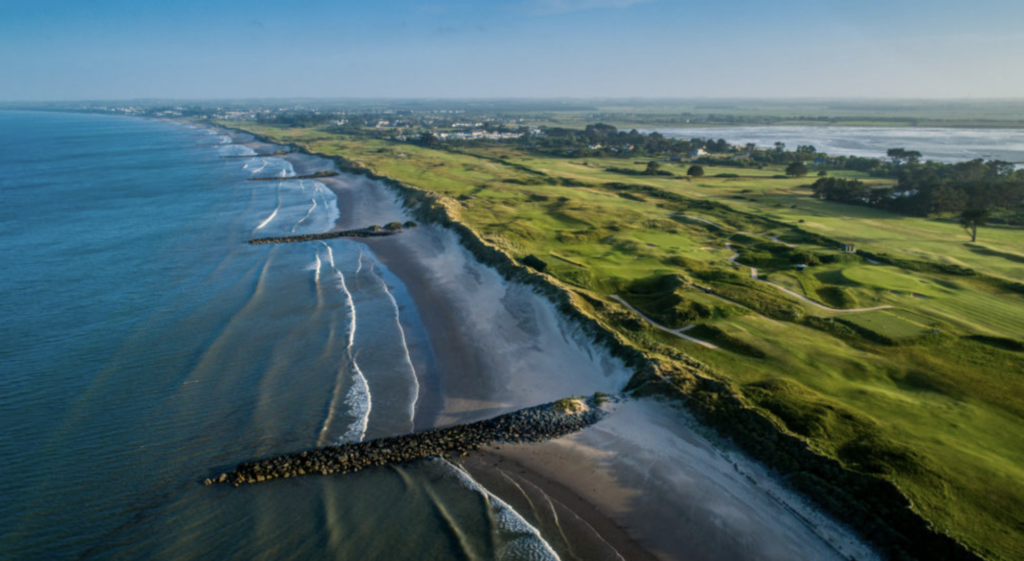
The routing follows the land as naturally as a river follows gravity. Seven holes play outward along the coast before the course turns for home, the remaining eleven running back along this sandy stretch of peninsula — many in parallel, the wind shifting its relationship to every fairway as you go. What was helping you on the way out is now in your face. What sheltered you in the dunes now funnels and twists in new directions.
This is not a design trick. It is geography. And it is quietly brilliant.
Holes weave between dune ridges and open onto sudden, breathtaking corridors where you can see Wexford Harbour spreading away to the west and, beyond the dune line, sense the Irish Sea pressing close. Those glimpses are fleeting. You earn them. And then the dunes fold back around you and you are enclosed again — just you and the hole and the decision.
The par 72 layout offers four par 5s and four par 3s, providing genuine variety across the round. No two holes feel the same. And yet all of them feel unmistakably like the same place. That unity of character, rare in modern golf and almost impossible to manufacture, is what Rosslare carries in abundance.
Where Everything Becomes Real
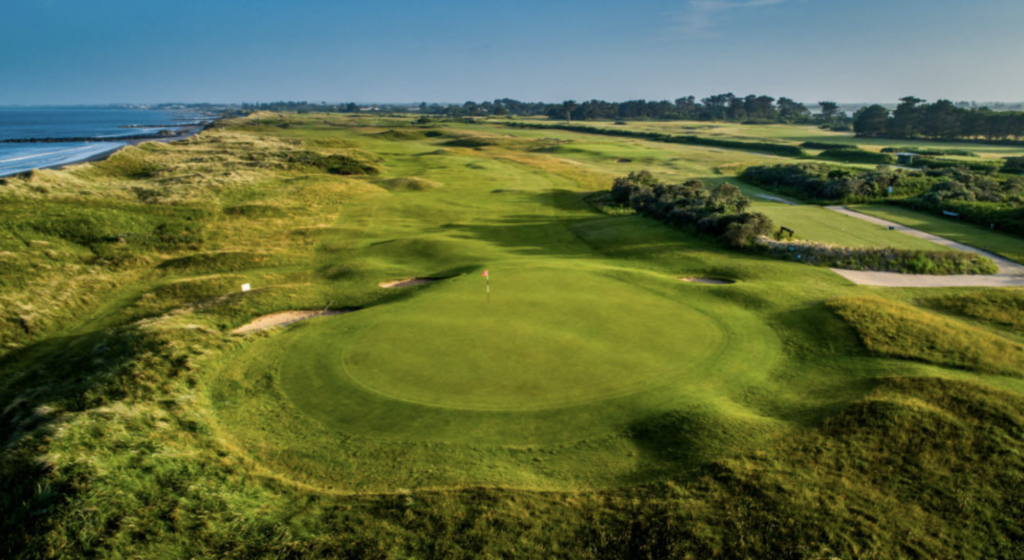
The par 5 7th plays across open links terrain with diagonal wind that rarely behaves the same way twice. It can be a three-shot exercise in patience or an invitation to gamble — but whichever you choose, the land will have the final say.
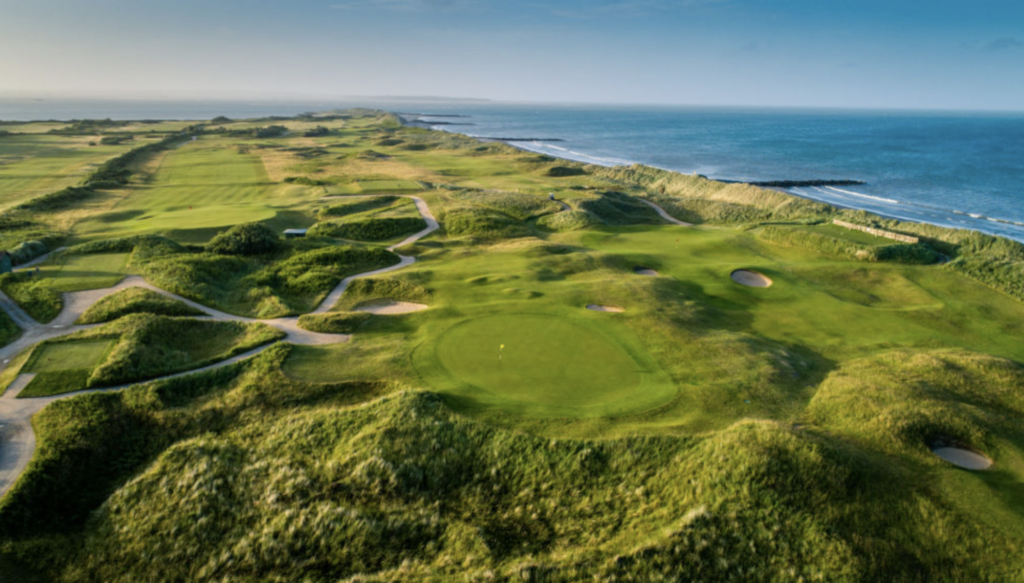
The middle stretch of Rosslare is where the course reveals its truest self, and where many a travelling golfer has quietly rearranged their understanding of what this game can be.
The par 4 11th is where the peninsula stops being gentle. Long and exposed, fully surrendered to the prevailing wind, it demands two committed golf shots back-to-back with no hiding place and no margin for softness. Making par here feels like arriving somewhere. Bogey feels like learning something.
Every hole at Rosslare asks a question. The questions are never unfair. But they are always serious.
Natural and Unforgiving
The greens are not protected by armies of bunkers or trick architecture. They are protected by nature — by subtle slopes and clever positioning, by run-off areas that look innocent until your ball finds them, by the particular quality of a putting surface that appears flat but holds a dozen tiny secrets. Approach play here demands imagination. Technique is necessary but insufficient. You must feel your way around Rosslare, reading the ground as much as the air.
And the air. Always the air.
When the wind strengthens off the Irish Sea — which it will, eventually, because this is Wexford and the sea has been doing this for ten thousand years — the course transforms entirely. A mid-iron becomes a fairway wood. A comfortable par four stretches into something psychological. Club selection stops being numerical and becomes instinctual. You make decisions with your gut, and then you live with them, for better or worse, with nothing to blame but the wind and your own nerve.
This is not frustrating. Not once you surrender to it. It is, in fact, the closest the game of golf comes to being genuinely, irreducibly alive.
Henry Cotton Was Right About the 13th
Rosslare does not build its identity around dramatic signature moments. It accumulates character quietly, hole by hole, until you realise you are deeply, unexpectedly invested in your round.

But if one hole has earned its place in the game’s longer memory, it is the 13th. When Henry Cotton — three-time Open Champion — visited Rosslare in 1953, it was this hole that stopped him. He described it as one of the finest par fours in Europe, calling it an ‘upturned saucer’ for the way the green sits raised within the landscape, repelling anything that doesn’t arrive with full commitment and precise line. Cotton’s verdict has been quoted at Rosslare ever since, and a round here makes it easy to understand why it has lingered. The hole is not theatrical. It is honest — which is sometimes a more demanding quality.
To Close
The 18th at Rosslare brings you home the way the best closing holes always do — not with manufactured drama, but with the quiet insistence of a course that has been making demands of you since the first tee and sees no reason to relent now. Playing back along the peninsula toward the clubhouse, the hole captures everything the Old Course has been saying across the previous seventeen — firm, fast ground that rewards the player who has learned to use it, coastal wind that has its own opinion about what club you should be holding, and the particular satisfaction of a links finishing hole that earns its moment through character rather than spectacle.
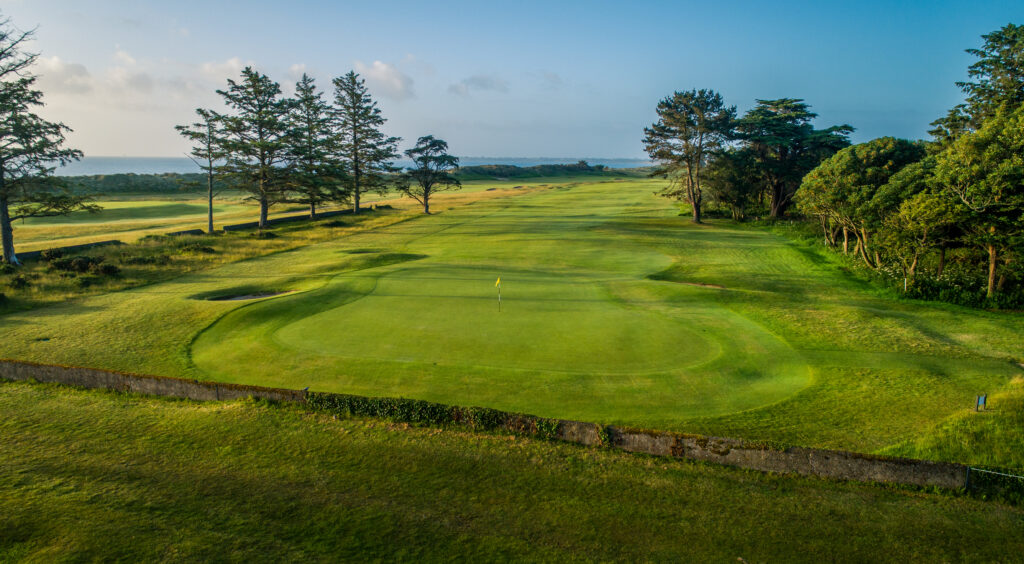
By the time you reach the green, Wexford Harbour is somewhere behind you, the Irish Sea somewhere to your right, and the round has become the kind of memory that doesn’t need a scorecard to survive — only the feeling of having played golf, honestly and completely, on a strip of land that has been doing exactly this since 1926.
The Burrow: A Different Conversation with the Same Coastline
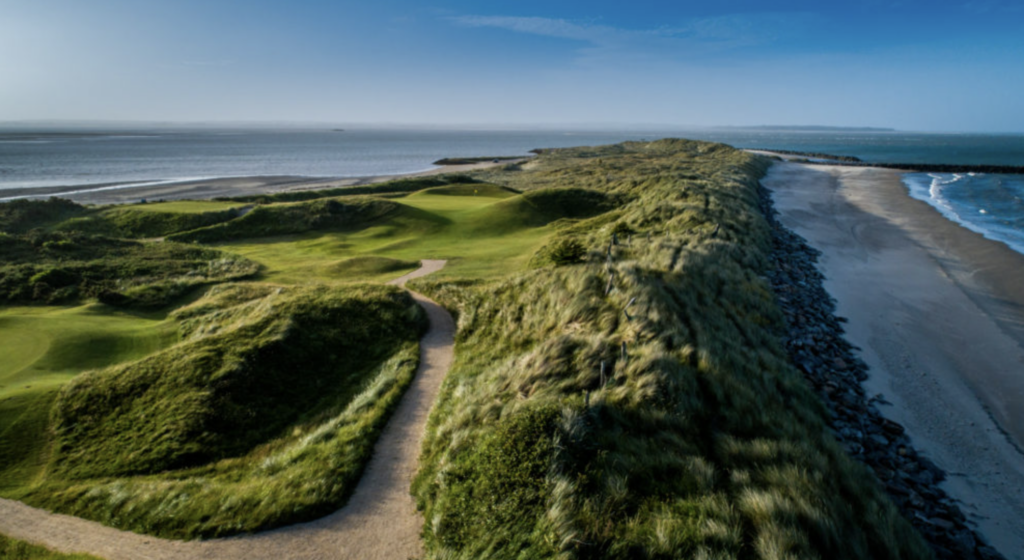
Beyond the Old Course, Rosslare offers a second option that deserves its own moment. The 12-hole Burrow Links — a bunkerless executive course designed by Christy O’Connor Jnr, opened in 1992 with three further holes added in 2000 — occupies some of the most scenic ground on the peninsula, with views across Wexford Harbour and out toward Raven Point that the Old Course only glimpses.
For the travelling golfer, the Burrow provides a natural addition to the day — a shorter, more relaxed engagement with the same coastal landscape that shaped the Old Course, played without the strategic intensity of its neighbour but with scenery that more than compensates. It is, in the best sense, a reward for having survived the main event.
What the Clubhouse Knows
After the round, the clubhouse waits with quiet warmth. No ceremony. No performance. Just a building that looks out over the dunes and the finishing holes, where golfers come in from the wind and settle into conversations that are not really about scores.
They are about decisions. About the 13th. About the wind shift on the back nine. Conversations about the putt that broke the wrong way, and whether they read it correctly or simply refused to believe what the green was telling them.
This is what Rosslare gives you to talk about. Not a photograph, not a leaderboard — a round of golf that felt like something. That asked something of you. That left a mark.
Why Ireland Keeps This Secret
Rosslare is consistently rated within Ireland’s Top 100 courses, yet it remains one of the country’s most under-the-radar links experiences. It does not need to compete with the headline names because it occupies a different category entirely — one defined not by fame but by honesty, not by spectacle but by character. It is, as the club itself notes, the only true links course in the south-east of Ireland, offering something that nowhere else in this corner of the country can provide.
For the travelling golfer building a south-east Ireland itinerary — perhaps the parkland grandeur of Mount Juliet or Druids Glen inland, combined with the coastal drama of Wicklow’s headland courses further north — Rosslare belongs at the end, like a last sentence that reframes everything that came before it.
Wexford itself deepens the experience. The long sandy beach at Rosslare Strand. The narrow streets and working harbour of Wexford town. The remarkable birdlife reserves at the North Slob. And for those arriving or departing by ferry from the nearby Rosslare Europort, a kind of geographic poetry in beginning or ending an Irish journey right here — at the edge of the island, on a strip of land that belongs to the sea almost as much as it belongs to the game.
What Stays With You
You will not remember Rosslare as a scorecard. The numbers will fade. What remains — what tends to remain from the truly meaningful rounds — is a feeling.
The feeling of being on a narrow peninsula where the sea exists on both sides and the sky takes up more space than you’re used to. Where the wind made every shot a question and the ground provided answers you didn’t always like. Where the game asked you, again and again, to think before you acted — and where the honest ones among us admitted, somewhere around the 14th hole, that we should have been doing that all along.
Rosslare does not announce itself. It does not perform. It simply exists, out there at the end of the road in County Wexford, doing what it has always done since Hawtree and Taylor first laid it out in 1926 — offering pure, elemental, unfiltered links golf to anyone willing to drive far enough south to find it.
The first tee is waiting at Rosslare Golf Links — one of only 50 true Irish links courses, and the only one in the south-east. Where the Irish Sea meets the game at its most honest.
At a Glance
- 2 hours drive from Dublin City Centre
- 18 hole Old Links and the 12 holes of The Burrow
- Best time to visit: May to September
- Lovely welcoming clubhouse and staff
- Excellent practice facilities
- Well stocked professional’s shop
- Where to Stay: Kelly’s Resort Hotel & Spa and Coast Rosslare Strand
- Visit the Rosslare Golf Links website here
A massive thank you to Rosslare’s General Manager, Mark Doyle for hosting us and for buying us lunch. Irish Hospitality at its finest. Thank you also to the staff at Rosslare for welcoming us with open arms. All photos courtesy of Rosslare Golf Links.

Jim Callaghan CCM is a former Club Manager with experience of overseeing several top Scottish Golf Clubs.
Now, as European Editor of Golf Operator Magazine and World’s Best Golf Destinations, he shares insights into club operations and his golfing adventures across Europe.
Jim is also an Ambassador for premium clothing brand Fenix Xcell Clothing and also for the Spanish local DMC, Costa Verde Golf and is host of @JimTheSeniorGolfer on YouTube.
If your club/resort or brand wants to reach over 450,000 golfers, contact Jim at [email protected] or call 0044 (0) 78522 88732
Featured Post

 0
0