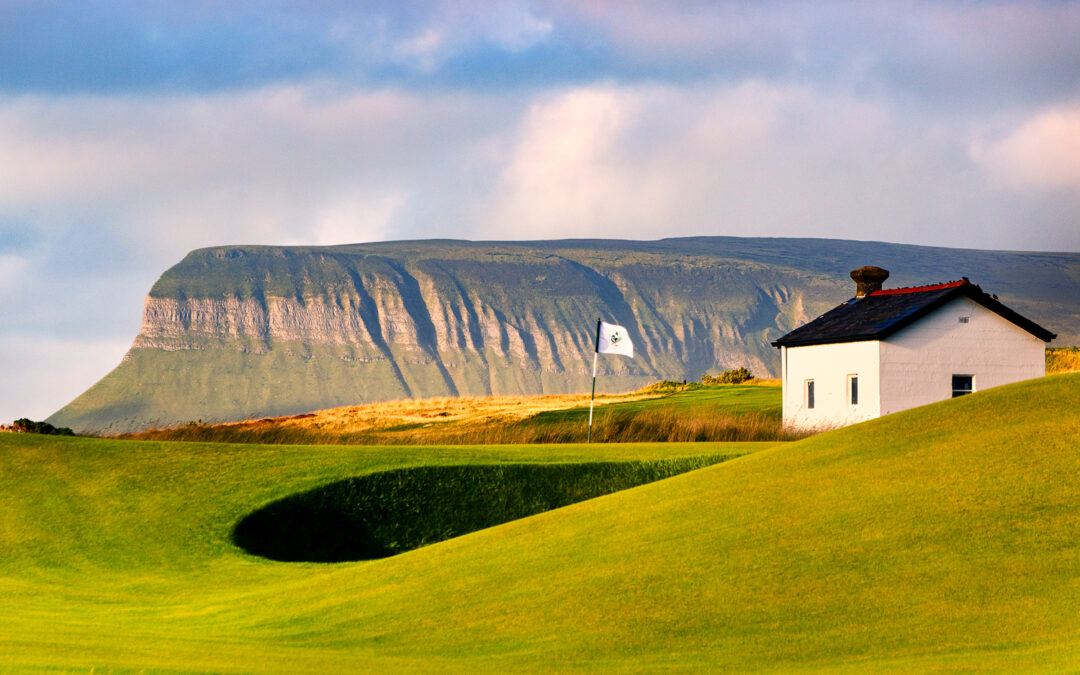
There is a moment, somewhere past Sligo town, when the road narrows and the world seems to lean toward the sea. Benbulben rises to the north, flat and unmistakable, its table-top silhouette carrying centuries of Irish myth on its shoulders like it has nowhere else to put them. Knocknarea watches from the south, crowned by the ancient cairn they call Queen Maeve’s grave. And between these two old sentinels, on a headland that juts stubbornly into the Atlantic, lies a golf course that has been quietly breaking hearts, in the best possible way since 1894.
This is Rosses Point. This is County Sligo Golf Club. It does not so much begin as arrive.
A Links Carved, Not Built
The club describes itself in six words: carved by earth, winds and water. The temptation is to read that as marketing. Walk the course once and the temptation disappears. Nothing here feels imposed. The fairways rise and fall the way the dunes always intended, the wind moves across the peninsula the way it has for a thousand years before golf ever arrived to interrupt it, and the game simply exists inside all of it, patient and inevitable, as though it were always going to end up here.
The bones of the place run deep. The original nine holes were laid out in 1894 by George Combe, at the request of Colonel James Campbell, the club’s first Captain. By 1906, the game had outgrown itself, and the task of extending the course to eighteen holes fell to Campbell’s stepbrother, Captain William Campbell, himself an accomplished golfer. Combe’s original work was folded into the new layout rather than discarded, a foundation, not a false start.
Colt’s Genius
Then, in 1927, as championship golf demanded more of the course than its early design could offer, the committee turned to Harry Colt, one of the era’s defining architects, to rebuild it from the ground up. Colt chose an anticlockwise routing with right-hand changes of direction at the 7th, 9th, and 10th, a pattern he had admired at St Andrews, Prestwick, Lytham, and Royal Troon. Almost the entire old course was swept away in the process; only what are now the 12th and 13th survive from the Campbell era. What Colt built is, in its essentials, still what golfers play today, even as new tees, greens, and bunkers have extended the course considerably over the decades, from its original length to today’s 7,157 yards. That’s way too long for us so we are playing the white tees at 6,574 yards.
Where Legends Have Lost Themselves
You do not need a travel writer’s word for what this place does to a golfer. Rosses Point’s guestbook reads like a history of the game itself . Walter Hagen, Henry Cotton, Fred Daly, Byron Nelson, Nick Faldo, Tom Watson, Peter Alliss, and Bernhard Langer have all made the pilgrimage. Langer’s visit has become part of the club’s own folklore. He arrived planning to stay a single day, and ended up staying a week. Even W.B. Yeats, Sligo’s most famous son, could not resist these headlands. The course has been immortalised in his poetry, the same way Benbulben and Drumcliff were, woven into the same landscape he never really left.
That is the company Rosses Point keeps. It has never needed to ask for it.
The Front Nine Shows Its Teeth
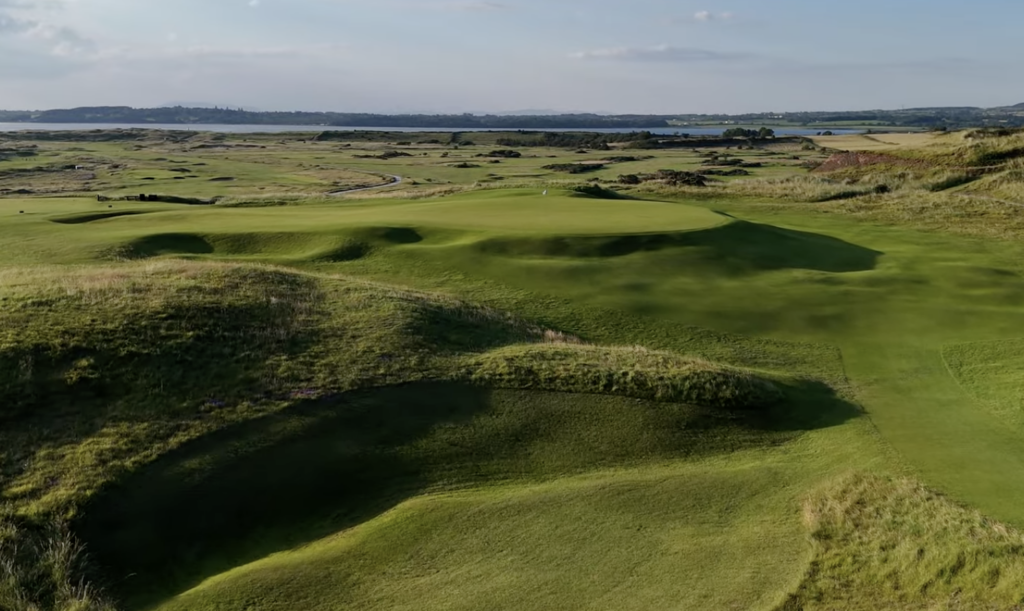
The 4th, Gan Gaineamh, 164 yards, par 3. It carries a name that is really a piece of theatre. Irish for “without sand,” it promises a green with not a single bunker guarding it. That sounds like relief. It is not. Colt’s genius here is subtraction rather than addition. With no sand to aim away from, the green becomes the only reference point that matters. Anything short or right leaves a recovery shot far uglier than any bunker would have offered. One hole in, and Rosses Point has already taught you that its hazards aren’t always the ones you can see.
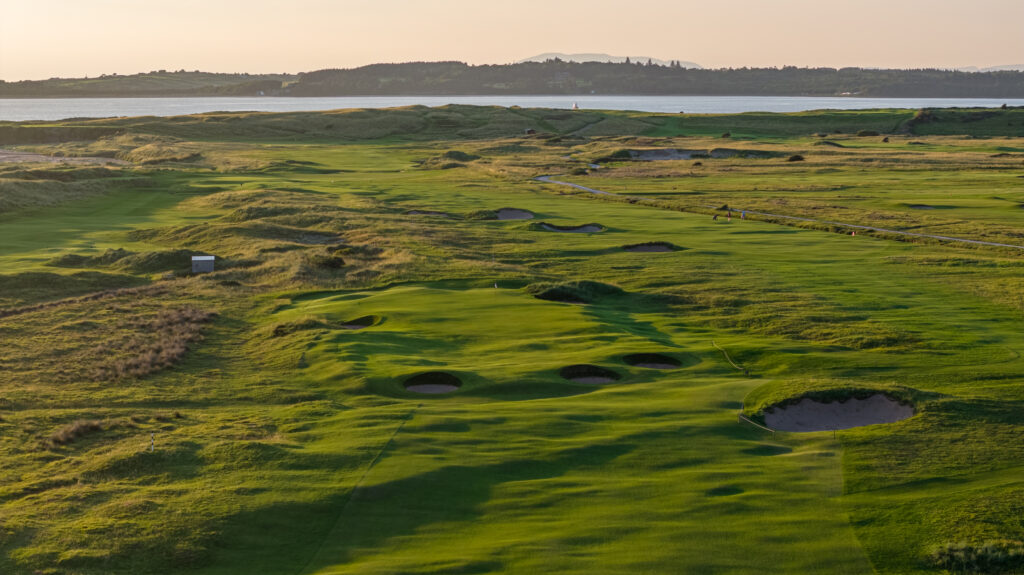
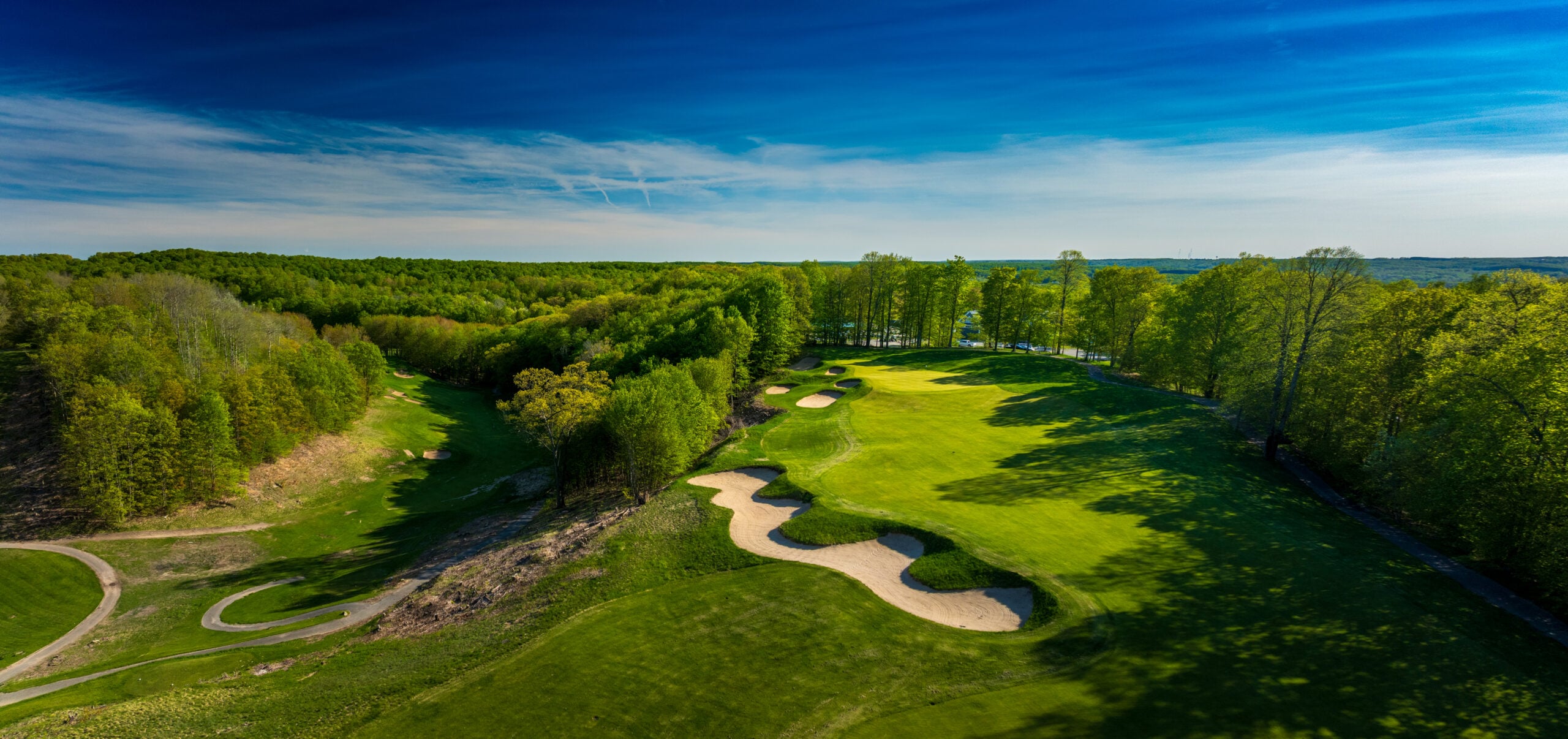
The 5th, The Jump, 489 yards, par 5. This hole is where ambition gets tested properly. The fairway runs invitingly down the left, practically daring the long hitter to have a go in two. But short of the green, a dip loaded with bunkers waits for exactly that kind of confidence. Play it conservatively and a simple wedge rewards the patience. Play it greedily and the hole can turn on you in a single swing.
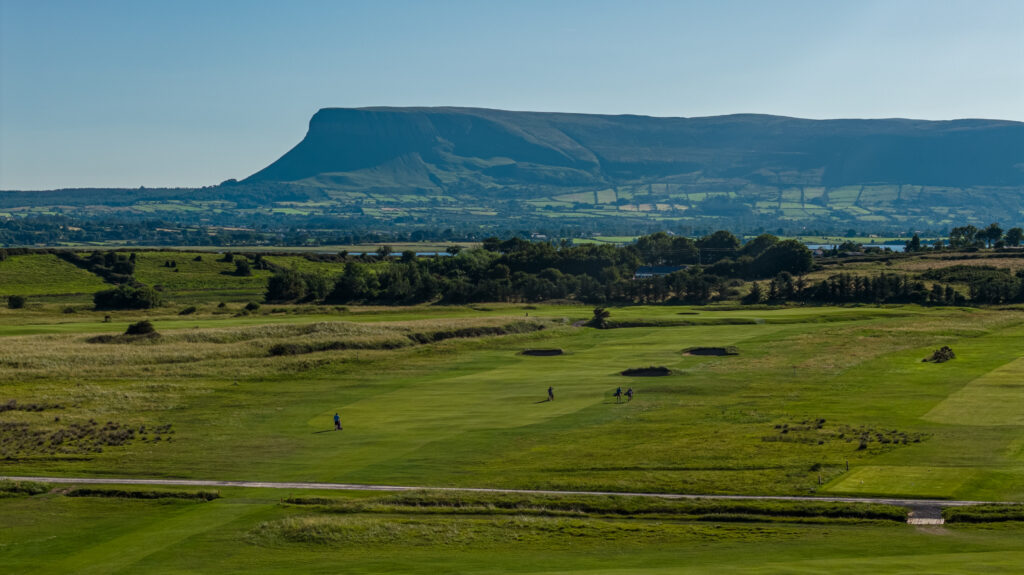
The 7th, Ewing’s Profile, 421 yards, par 4. The 7th carries the course’s toughest index, and it earns it honestly. This is where Colt’s right-hand turn first asks something different of you, with the line shifting just enough to unsettle a golfer who thought they’d found their rhythm. The ditch short of the putting surface is a watery grave for those that can’t carry the distance to the green. If in doubt, lay up and hope to chip and putt for par.
The Back Nine Wears You Down
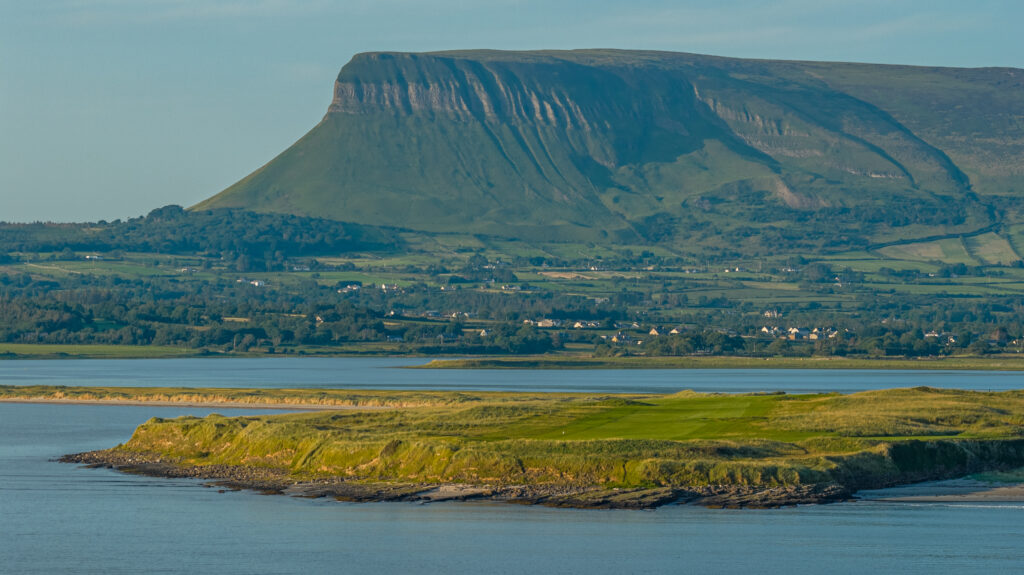
The 12th, Lighthouse, 520 yards, par 5. The 12th offers little respite after what’s come before it. Playing into the prevailing wind for almost its full length, it punishes anything loose off the tee, bunkers pinching the landing zone from both sides. Only a genuinely long, well-placed drive down the left opens a sightline to the green for the second shot. Anything less, and Lighthouse quietly becomes a three-shot hole regardless of what the card says.
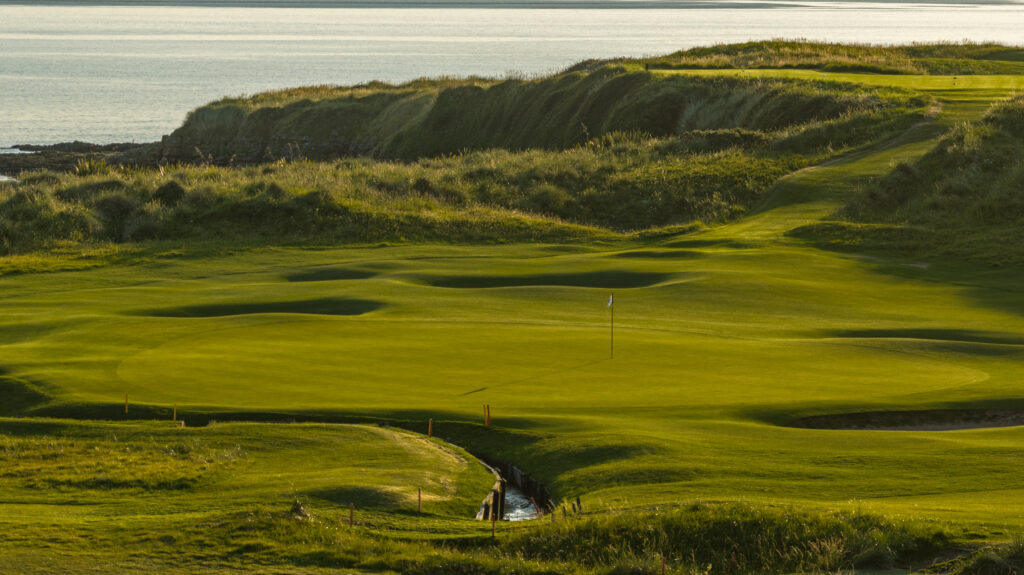
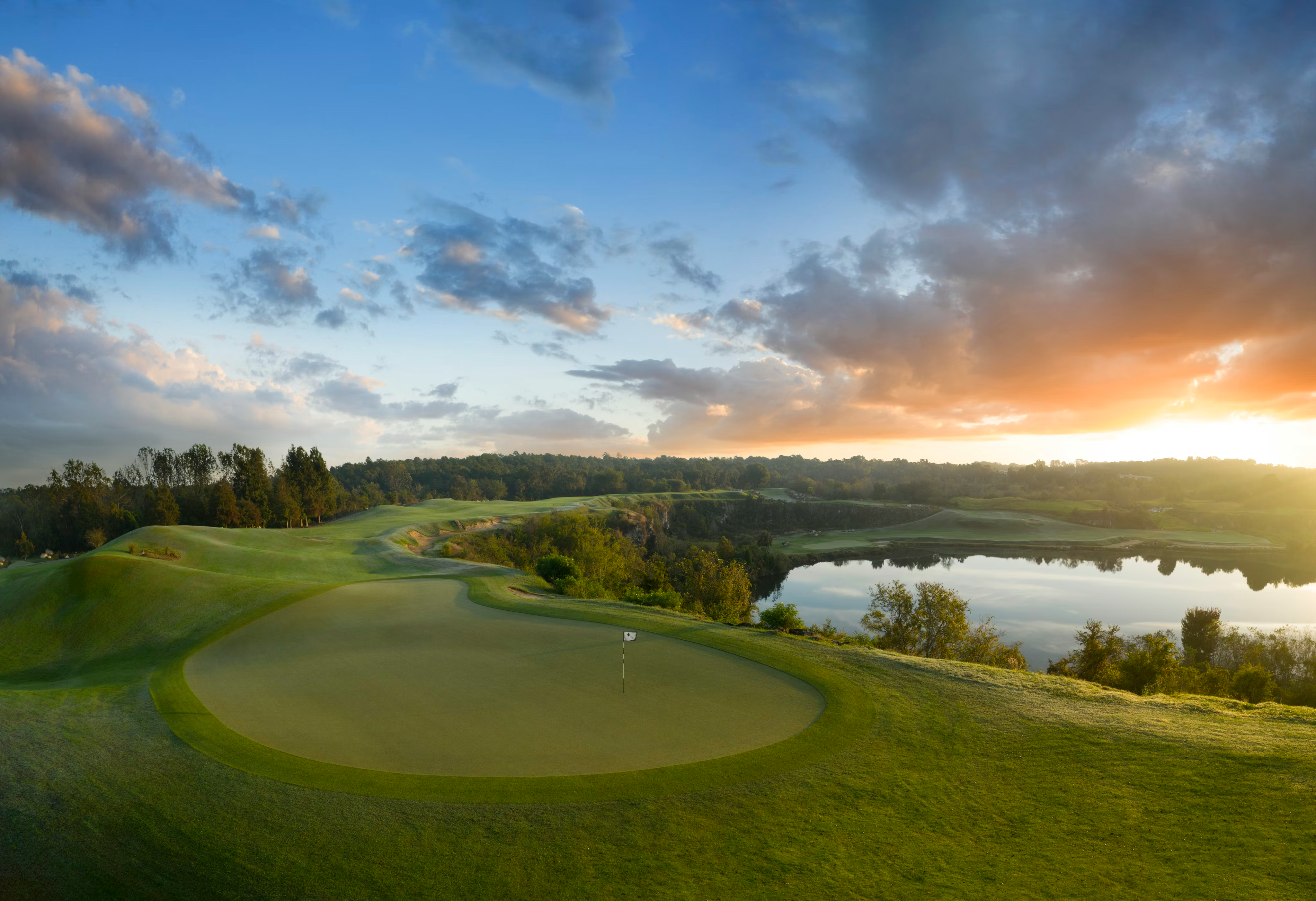
The 13th, Wrynne Point, 162 yards, par 3 is the most photographed hole on the course, and it earns every frame. Played from an elevated tee down to a green ringed by water and sand, it looks, in stillness, almost impossibly serene. The kind of image that sells a golf trip before a single word is written about it. Stand on that tee in a crosswind off the bay, though, and the serenity evaporates in seconds. Club selection turns to guesswork. The green shrinks in your mind, and the very beauty that drew you here becomes the thing testing your nerve.
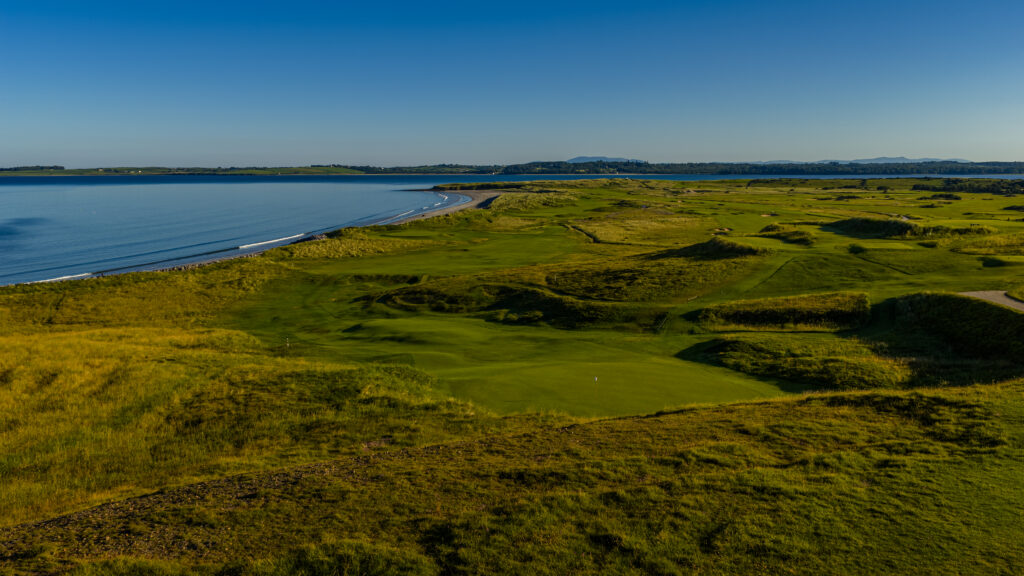
The 17th, The Gallery, 422 yards, par 4 is the real strategic crux of the closing stretch, and the second-toughest hole on the card. The tee shot alone is a decision with consequences either way. Lay up short and safe, or push on and gamble for a shorter approach. Legs tired, wind still working on you, round almost done. The Gallery has quietly decided plenty of matches before anyone reaches the 18th tee.
More Than a Round
The championship course at County Sligo doesn’t just play well, it glows, like the land itself has been polished by centuries of wind and tide until nothing rough remains. Every blade of grass seems to hold its breath as you walk it. The turf firm and true underfoot, the greens rolling smooth as glass under a sky that never quite settles. There’s a hush to it, the kind reserved for cathedrals. You find yourself moving slower, almost reverent, aware that somewhere beneath this quiet perfection lies the patient work of hands that understood exactly what this ground deserved. This isn’t a course that’s been maintained. It’s been cared for, the way you’d care for something you loved and were afraid of losing.
Alongside the Championship Links, the club’s Bomore course offers something shorter and more relaxed. It’s a nine-hole complement for a lighter round, practice, or a mixed-ability group.
Step off the 18th green and Sligo doesn’t let the story end there. The town, a short drive away, hums with traditional music and warm pubs and the long literary shadow of Yeats himself. Yeats is buried nearby at Drumcliff beneath Benbulben, exactly as he asked to be. Climb Knocknarea for views across five counties on a clear day. Head for the beaches of Strandhill and Enniscrone, where more links golf and some of Ireland’s best surfing are waiting. The Wild Atlantic Way unspools in every direction from here. Past hidden coves and fishing villages that turn one round into a week without much persuasion.
The Call You Won’t Regret Answering
County Sligo Golf Club was named Irish Golf Course of the Year 2024 at the Golf Course Awards. A recognition that will surprise no one who has stood on the third tee. Where on a clear day the view stretches across five counties. The lighthouse out to sea, the cliffs of Slieve League in Donegal, Lissadell House across the bay, Queen Maeve’s grave atop Knocknarea, and Benbulben standing over all of it. The course has long hosted the West of Ireland Championship. One of Irish amateur golf’s most historic events, and has staged the Home Internationals on two occasions besides, a championship pedigree few Irish clubs can match.
Some courses you play. Rosses Point is one you remember standing inside. The wind in your face, Benbulben at your back, and the unmistakable feeling that you’ve found something Ireland doesn’t hand out easily.
Where to Lay Your Head
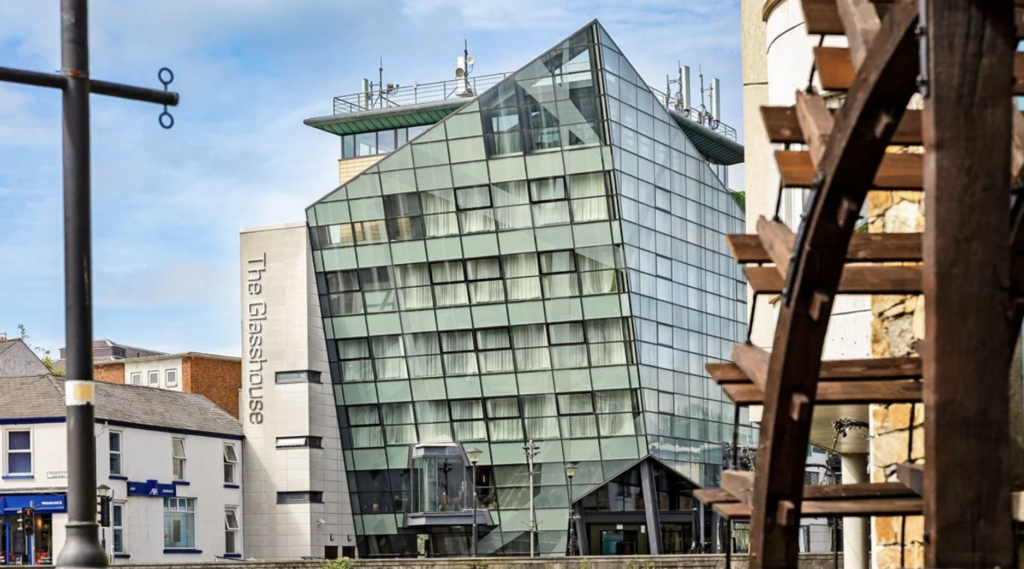
The Glasshouse rises over the Garavogue River like something that arrived by water rather than land. It’s striking, ship-like silhouette catching the eye long before you reach Sligo’s town centre. Inside, the contemporary design carries its own quiet confidence: 116 newly refurbished rooms, the best of them looking straight down onto the river. Some suites open onto private balconies where the water seems to move at exactly the pace a good evening should. This is a hotel built for a town that has stopped apologising for how beautiful it is, with Benbulben standing guard on the skyline as a reminder of exactly where you are.
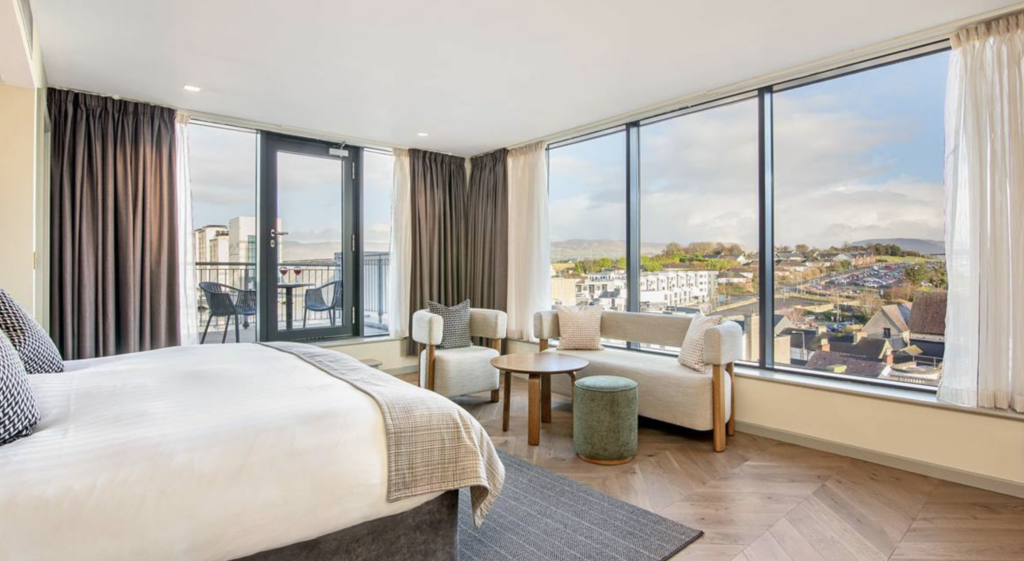
Evenings here settle into their own kind of rhythm. The Kitchen Restaurant leans into the region’s produce with real intent, while The View Bar hums a little later into the night. Cocktails, conversation, and on weekends a DJ keeping things moving for the strictly-over-21s crowd. Step outside, and Sligo’s shops, pubs, and cultural corners are close enough to reach on foot, the whole town folded neatly around the hotel’s front door. The Glasshouse doesn’t ask you to choose between comfort and location. It simply gives you both, and lets Sligo do the rest.
At a Glance
- Championship links, established 1894 (George Combe), extended to 18 holes 1906 (William Campbell), redesigned by Harry Colt, 1927
- Course length: white tees 6,574 yards
- Named Irish Golf Course of the Year, 2024 (Golf Course Awards)
- Host venue for the West of Ireland Championship; has hosted the Home Internationals twice
- Championship Links plus the shorter Bomore course on-site
- Excellent practice facilities and professional’s shop
- Lovely clubhouse with attentive staff and tasty food
- Visitor tee times and green fees: €335 midweek in the summer months
- Visit the County Sligo Golf Club website here
Thank you to County Sligo Golf Club and The Glasshouse, Sligo for the photos used in this article.
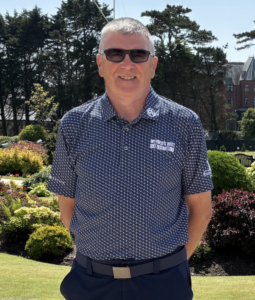
Jim Callaghan CCM is a former Club Manager with experience of overseeing several top Scottish Golf Clubs.
Now, as European Editor of Golf Operator Magazine and World’s Best Golf Destinations, he shares insights into club operations and his golfing adventures across Europe.
Jim is also an Ambassador for premium clothing brand Fenix Xcell Clothing and also for the Spanish local DMC, Costa Verde Golf and is host of @JimTheSeniorGolfer on YouTube.
If your club/resort or brand wants to reach over 450,000 golfers, contact Jim at [email protected] or call 0044 (0) 78522 88732
Featured Post

 0
0