For the travelling golfer who understands that some rounds are not about the score. They are about the feeling of having played somewhere that will not leave you alone.
Editor’s note: World’s Best Golf Destinations was hosted at Dromoland Castle for this visit, with accommodation at the Rine Hotel and golf provided. Our impressions below are our own.
The castle appears before you are ready for it.
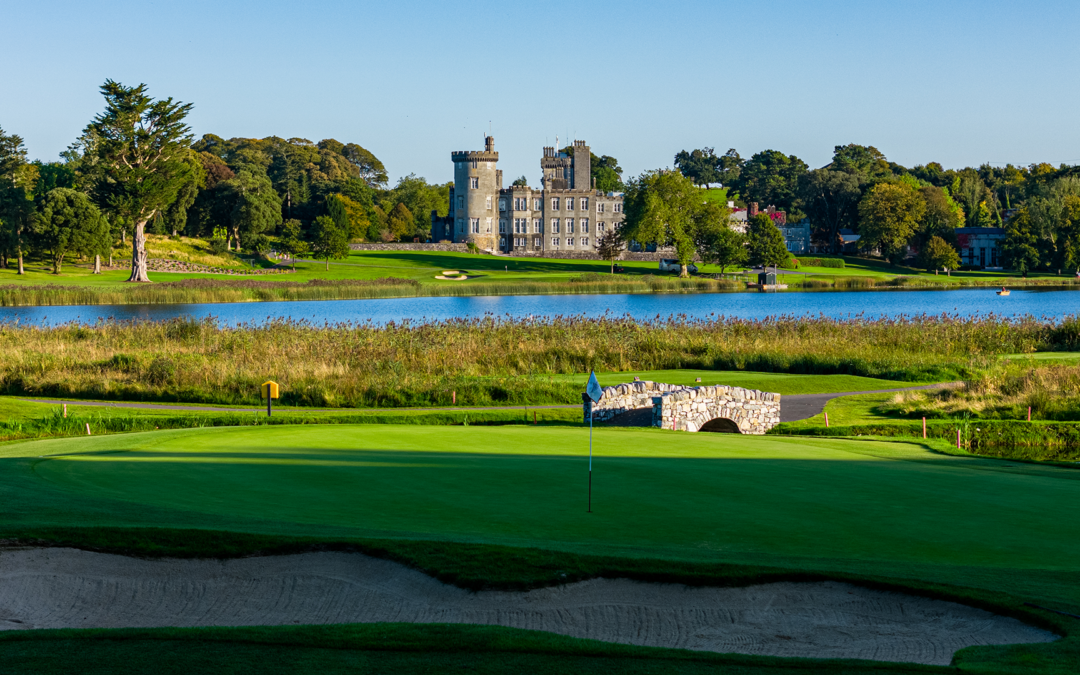
You are driving through County Clare, through the particular green of an Irish midlands morning, stone walls running alongside the road, sky doing something complicated overhead, and then the gates of Dromoland materialise from the landscape and you turn in, and the road narrows beneath old trees, and water flashes between the woodland, and then — there it is. Rising from the stillness of its own reflection in the lake, composed and ancient and entirely unconcerned with the impression it is making, because places of this age have long since stopped trying to impress anyone.
It impresses you regardless. Completely. Immediately. Without your permission.
This is where you are going to play golf today. And the round has not yet begun, and it has already started to get underneath your skin.
What Restraint Looks Like in Stone and Grass
There is a particular failure mode that castle golf resorts are susceptible to. The temptation to let the castle do all the work — to position the cameras and the marketing and the design decisions around the single fact of having a medieval fortress on the property, and to assume that the presence of turrets makes everything else secondary. The course becomes decoration. The golf becomes scenery. The experience becomes a photograph rather than a memory.
Dromoland does not make this mistake.
Designed by Ron Kirby and J.B. Carr, measuring almost 6,300 yards from the white tees, the par 72 course was built with the understanding that the castle’s presence should be felt rather than forced. It appears and reappears throughout the round — glimpsed through breaks in the trees, reflected in still water, visible across sweeping parkland — but always as a presence rather than a performance. It watches the golf rather than replacing it. And that restraint, that confidence in letting the architecture and the landscape carry equal weight with the history of the setting, is what elevates Dromoland from a beautiful location into a genuinely memorable golf experience.
The course knows what it is. It has no need to shout.
The First Movement
From the opening tee shot, Dromoland establishes its language and does not deviate from it for the next eighteen holes. The language is rhythm. Not intensity, not drama, not the sudden shock of a cliff-edge par three or a fairway that drops into the sea. Rhythm — the measured, unhurried progression of a course that understands the difference between challenge and chaos, and has chosen, deliberately, the former.
Fairways roll gently through mature trees, opening and closing like corridors through a living landscape. The visual framing is soft, green, composed. The kind of beauty that does not demand your attention but simply has it. And yet beneath that softness, the strategic intelligence is constant. Landing areas are generous enough to invite confidence and angled precisely enough to punish the drive placed even slightly wrong. Position here is not an advantage. It is the entire game.
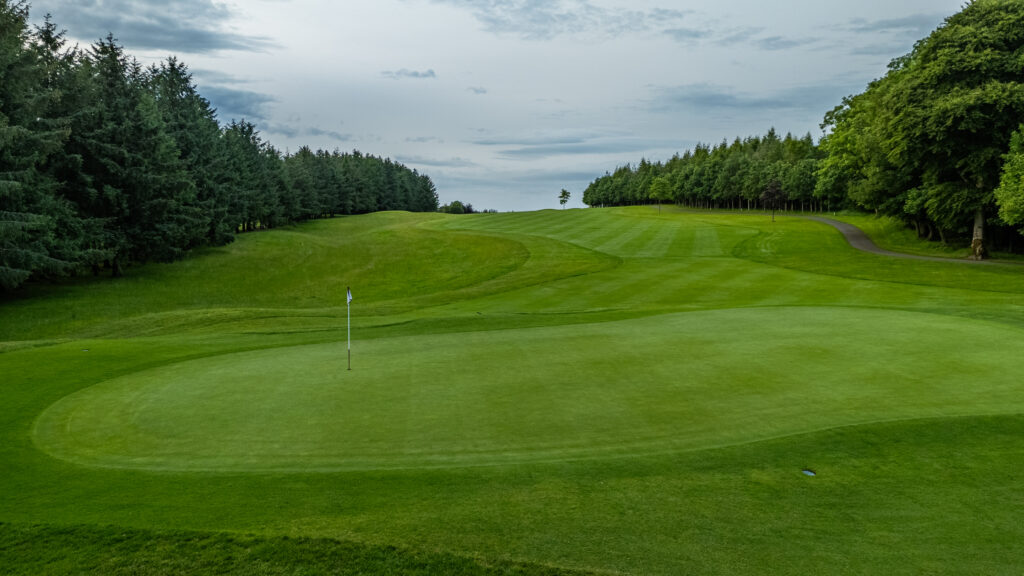
The greens reinforce this immediately. Smooth, quick, subtly contoured — they reveal their character slowly, in the way that difficult things reveal themselves slowly, with a kind of patience that initially reads as simplicity and only later discloses its actual intentions. The putt that looked straightforward from address breaks late, softly, just enough. The approach that landed on the wrong half of the green leaves a two-putt that requires more thought than it should. Nothing at Dromoland is tricked up. Everything at Dromoland is thoughtfully designed. These are different things, and the difference matters enormously.
The Round as a Journey Through Chapters
What Dromoland understands about course design — what Kirby and Carr built into the routing with structural intelligence — is that a round of golf is a narrative, and narratives need variation of pace and tone to sustain engagement across their full length.
The front nine introduces the estate’s parkland character with measured generosity. Gentle movement in the land, tree-lined fairways, the rhythm of a course easing you in without ever letting you forget that something more demanding is waiting ahead. Then the middle section arrives and the landscape tightens. Subtle elevation changes introduce new perspectives. Doglegs and water begin to play more active roles. The estate feels simultaneously larger and more intimate — fairways opening briefly into sweeping parkland before narrowing again into wooded corridors where the outside world disappears.
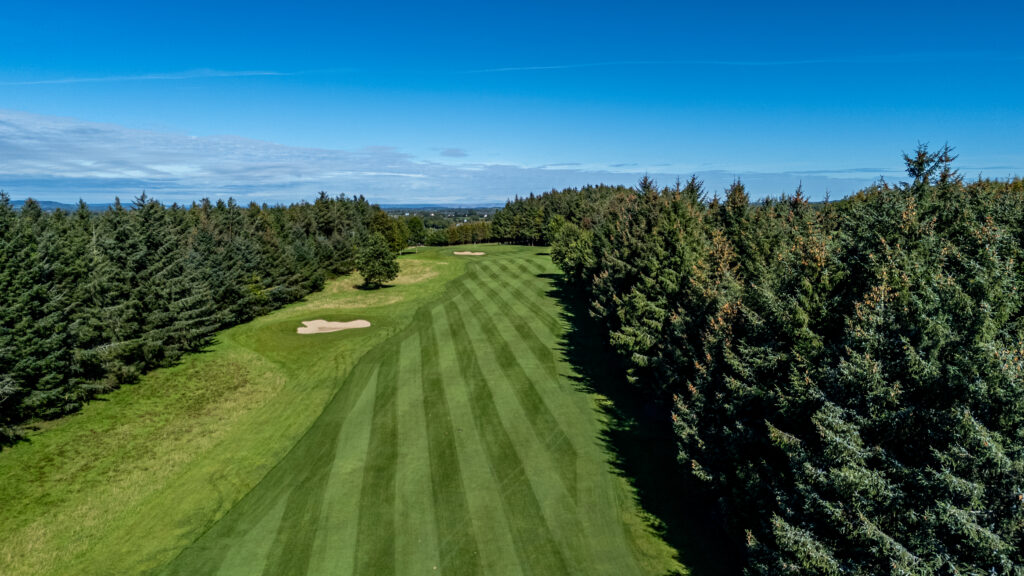
From the white tees, the 4th hole is a long par 4, not a par 5. The tee shot asks for commitment before it offers anything in return — a tight window over a shallow valley, the ground rising gently ahead of you like the course itself is holding its breath. A fairway bunker waits on the left, out of reach for most players’ tee balls, but it doesn’t need to be reachable to do its job: it simply defines where safety ends and doubt begins. Everything that follows depends on what you do here. Miss your line and the hole will spend the next two shots reminding you of it.
The approach is where the real conversation happens. A low swale gathers across the front of the green, patient and unhurried, ready to swallow anything struck without conviction, while a deep bunker guards the left half like an old argument that was never quite settled. There is no shortcut through this green — only a shot played with intention, and the quiet satisfaction of watching it hold.
The Seventh Hole and the Problem of Beauty
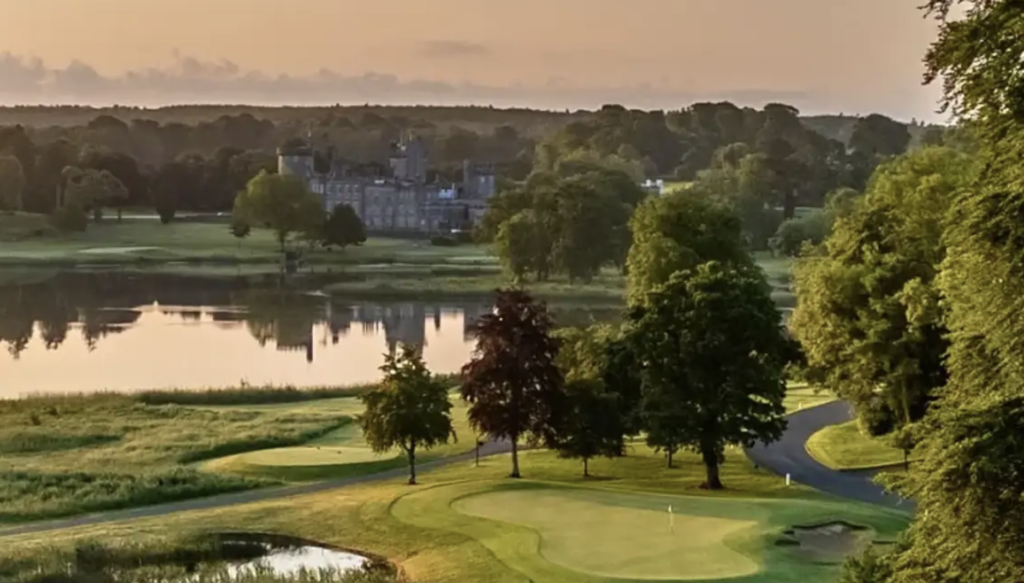
The par 3 7th is the hole that stays in the photographs and, more durably, in the memory. From an elevated tee, the shot drops toward a green framed by water and bunkering, with Dromoland Castle and its lake arranged in the background with the composed perfection of a painting that knows it is a painting and is entirely comfortable with this.
The temptation, standing on this tee, is to simply look. To absorb the visual — castle, water, woodland, sky — and postpone the business of actually playing the shot for as long as propriety allows. Most golfers give in to this temptation. It is the correct response.
And then you play the shot, and the beauty does not disappear — it intensifies, because now there is the additional pressure of consequence. The green is real. The bunkers are real. The wind that has been moving quietly through the trees is now, standing over the ball, entirely real. A hole that looked like a painting from the tee becomes a problem to be solved from address, and the solving of it — whatever the outcome — is part of what Dromoland does to you.
It makes the beautiful demanding. And it makes the demanding beautiful. This is its gift, and it gives it on almost every hole.
Water Waits at the Turn
The back nine offers no gentle re-entry. Water arrives immediately at the 10th and stays into the 11th. Two holes in a row that ask the same quiet question. Can you find dry land when it matters? There is no working around it, no clever line that avoids the issue entirely. Only the tee shot in front of you, and the water waiting patiently to see what you decide. Par is still there for the taking on both holes, but it belongs only to those willing to commit rather than hope. The back nine, it turns out, wastes no time reminding you what kind of golf this is.
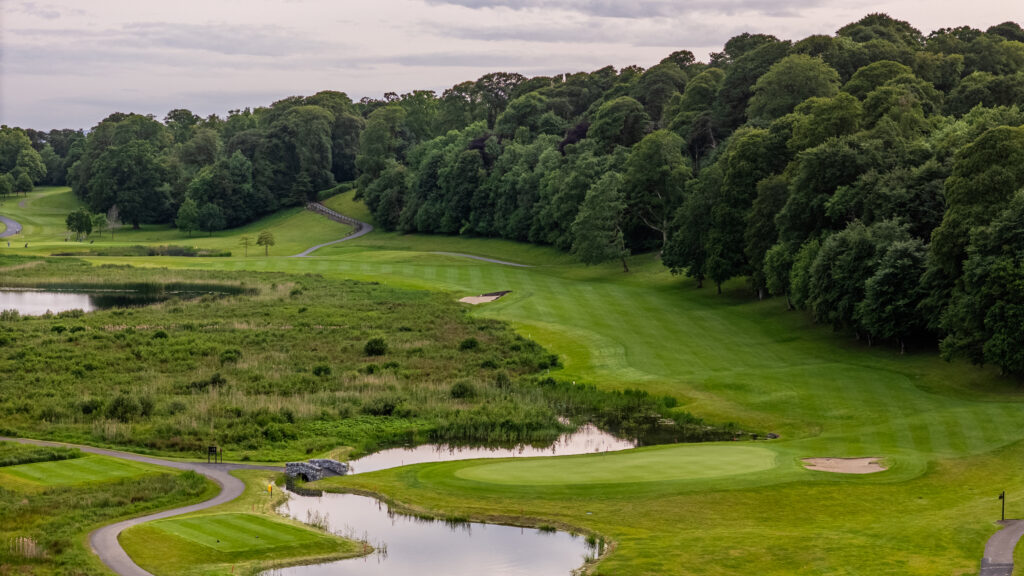
The par 5 11th is where strategic maturity is fully required. Reachable in two for the longer hitter. Guarded by water and bunkering positioned with the specific purpose of making aggression feel expensive. The smarter play is a controlled layup to a precise distance. A wedge into a green that punishes anything slightly misjudged, is not a defeat. It is the intelligence the hole was designed to reward. Dromoland respects the golfer who knows when not to attack. It respects them by giving them birdie opportunities that the over-aggressive player has already squandered.
Risk and Reward
As the closing stretch begins, Dromoland does something that great course routings do and mediocre ones do not. It returns you to where you began, but changed. The castle becomes visible again through breaks in the trees. The estate opens around you with the spaciousness of a final act that knows it has earned the right to breathe.
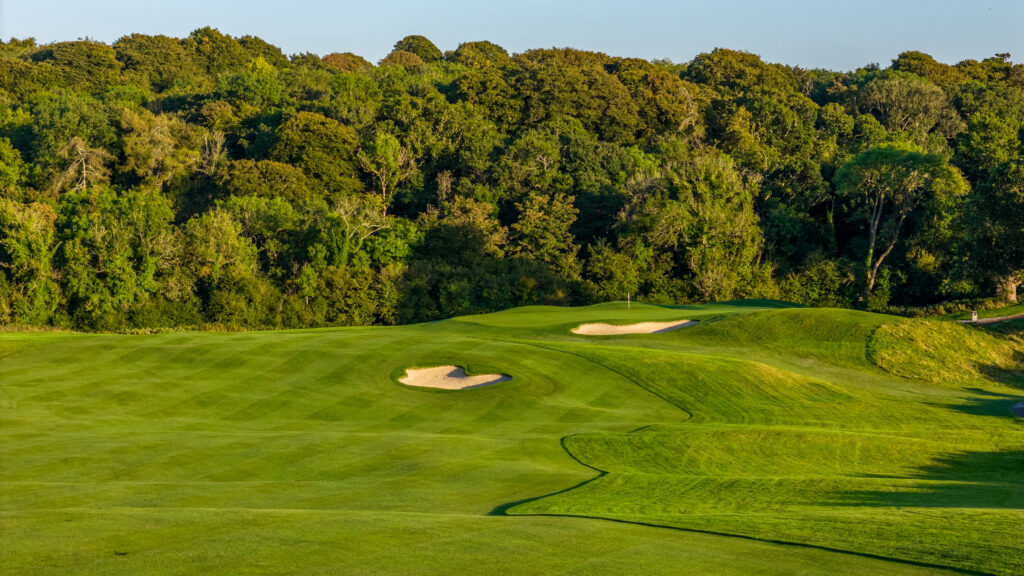
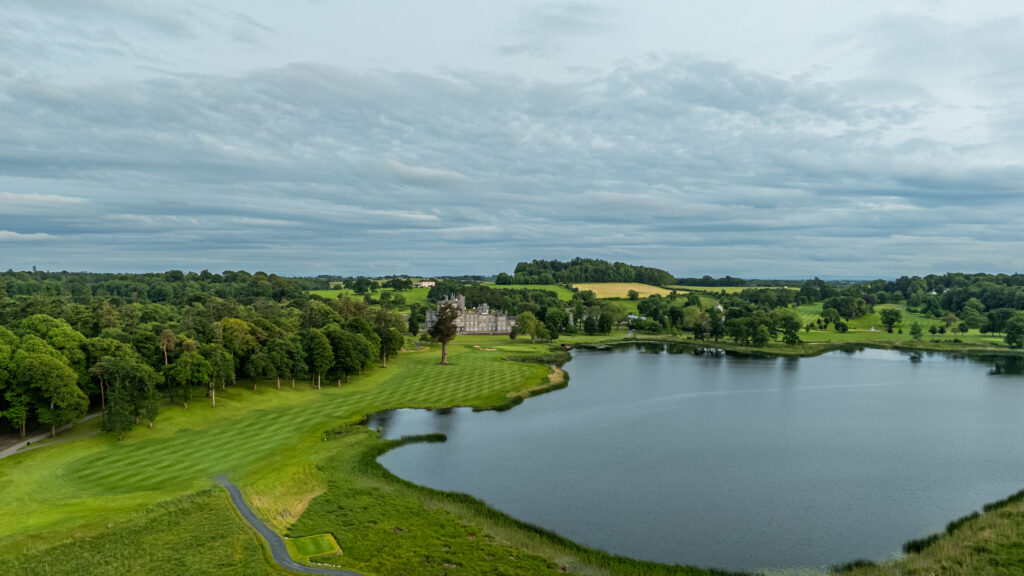
The par 5 18th draws you back toward the castle setting with water and bunkering framing the final green. The whole estate arranged around you as you play what is, in truth, a composed and elegant closing shot rather than a dramatic one. The round ends in the same register it began. Refined, thoughtful, quietly difficult. The satisfaction of walking off the 18th green is the satisfaction of something completed properly. Without excess, in exactly the spirit it was intended.
You look back toward the castle. The castle looks back at you. Something passes between you that would be difficult to explain to someone who has not played this round, but that any golfer who has will recognise immediately.
Clare Is Wider Than the Estate
Step outside the gates of Dromoland and County Clare opens around you with the particular abundance of a region that has never needed to compete for attention because the attention was always going to come anyway.
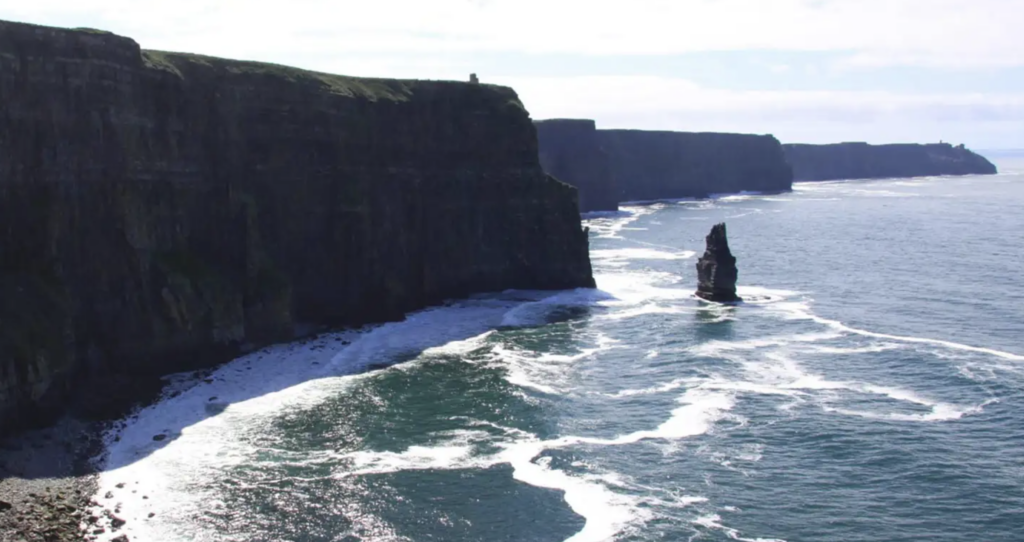
The Cliffs of Moher are close enough for an afternoon that will rearrange your understanding of the word dramatic. Those towering Atlantic faces, the spray and the light and the wind making constant theatre out of the collision between land and sea. The Burren offers something stranger and quieter. An otherworldly limestone landscape of rare flora and ancient tombs. A place that feels like the edge of geological time rather than an Irish national park.
Ennis, vibrant with traditional music and medieval streets and restaurants that take food seriously without taking themselves too seriously. The town provides the cultural counterpoint to the estate’s tranquillity. Shannon Airport sits a short drive away, which means Dromoland is accessible to a visiting golfer in a way that some of Ireland’s greatest experiences are not. You can land, play, and build outward from here with the confidence of a well-chosen base.
Where to Stay
The Rine Hotel sits inside 500 acres of ancient woodland on the Dromoland estate. You feel that before you’ve even checked in. The river the hotel takes its name from moves quietly at the foot of the hill. Setting a pace the rest of the day seems happy to follow.
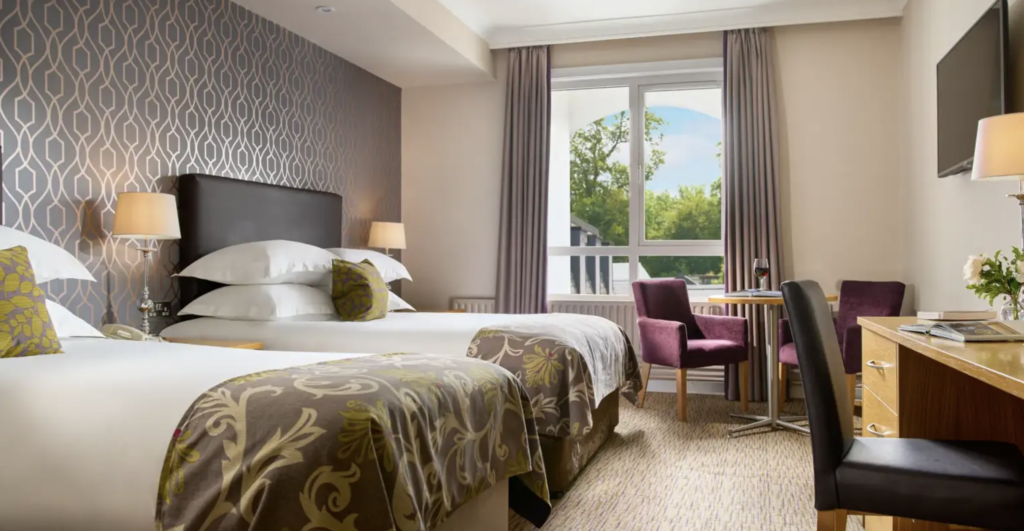
Rooms look out over the golf course and the wide sweep of the Shannon Estuary. It’s the kind of view that turns an ordinary morning into something worth sitting still for. This is a place that has been reimagined rather than reinvented, and the difference matters. New enough to feel considered, familiar enough to feel like it already knows you.
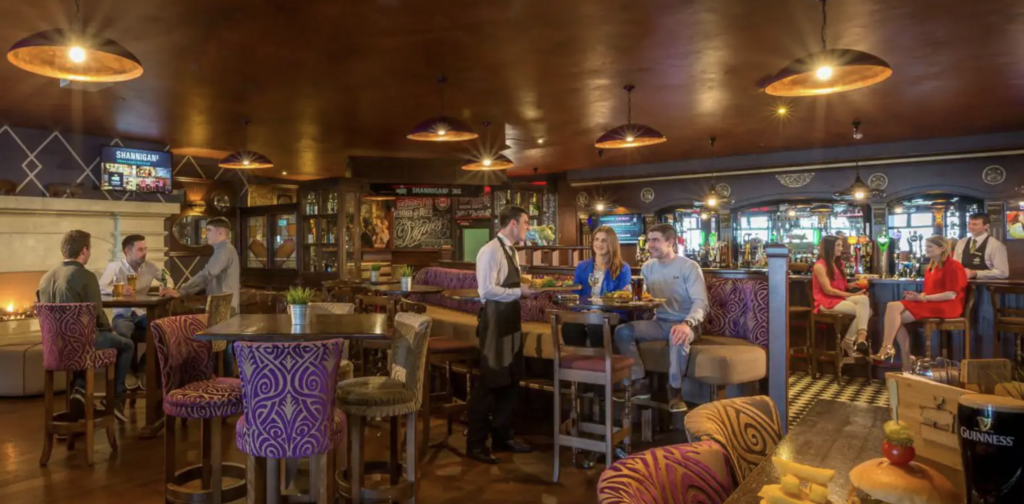
Evenings settle into their own rhythm here. Shannigan’s Gastro Pub offers the warmth of an honest Irish local. While The Whitethorn holds the room for something more occasion-worthy. The kind of dinner that deserves a second glass of wine and no particular hurry to finish it.
What the Round Leaves Behind
There are golf courses that you remember as a sequence of holes. The 7th here, the 12th there, the drive you hit on the par 5 that you still think about when you’re standing on the range. These are good memories and they are worth having.
Dromoland Castle Golf Course leaves a different kind of memory. Not a sequence of moments but a continuous impression. Of walking through 450 acres of estate where golf and landscape and eight hundred years of history exist in a quiet harmony. It feels, somehow, entirely natural. As though the course was always going to be here, and the castle was always going to watch it, and you were always going to play your round while both of them paid attention.
The golf is real. The challenge is real. The strategic intelligence of the design is real. It will test you in ways that reveal the honest truth about your game, hole by honest hole.
But what lingers, what follows you home, what surfaces unexpectedly in the weeks after when someone asks about your trip and you find yourself choosing this before the more famous names, is not a shot or a score. It is the feeling of a round played in the right place, at the right pace, with the castle appearing through the trees at intervals that feel, by the end, almost like visits from an old friend.
Go. Let the gates close behind you. Let the road narrow through the trees.
The castle is waiting. So is the golf. And both of them are better than you are expecting.
At a Glance
- 18 hole championship parkland course
- Green fee €225 midweek in the summer
- Course stats: 6294 yards from the white tees, par 72
- Practice facilities: Golf simulator, short game practice area and putting green
- Accommodation onsite both at the castle and Rine Hotel
- 30 minutes drive north west of Limerick
- View the Dromoland Castle website here
Thank you to Eamonn O’Donnell for hosting us and for the photos used in this article.

Jim Callaghan CCM is a former Club Manager with experience of overseeing several top Scottish Golf Clubs.
Now, as European Editor of Golf Operator Magazine and World’s Best Golf Destinations, he shares insights into club operations and his golfing adventures across Europe.
Jim is also an Ambassador for premium clothing brand Fenix Xcell Clothing and also for the Spanish local DMC, Costa Verde Golf and is host of @JimTheSeniorGolfer on YouTube.
If your club/resort or brand wants to reach over 450,000 golfers, contact Jim at [email protected] or call 0044 (0) 78522 88732
Featured Post

 0
0