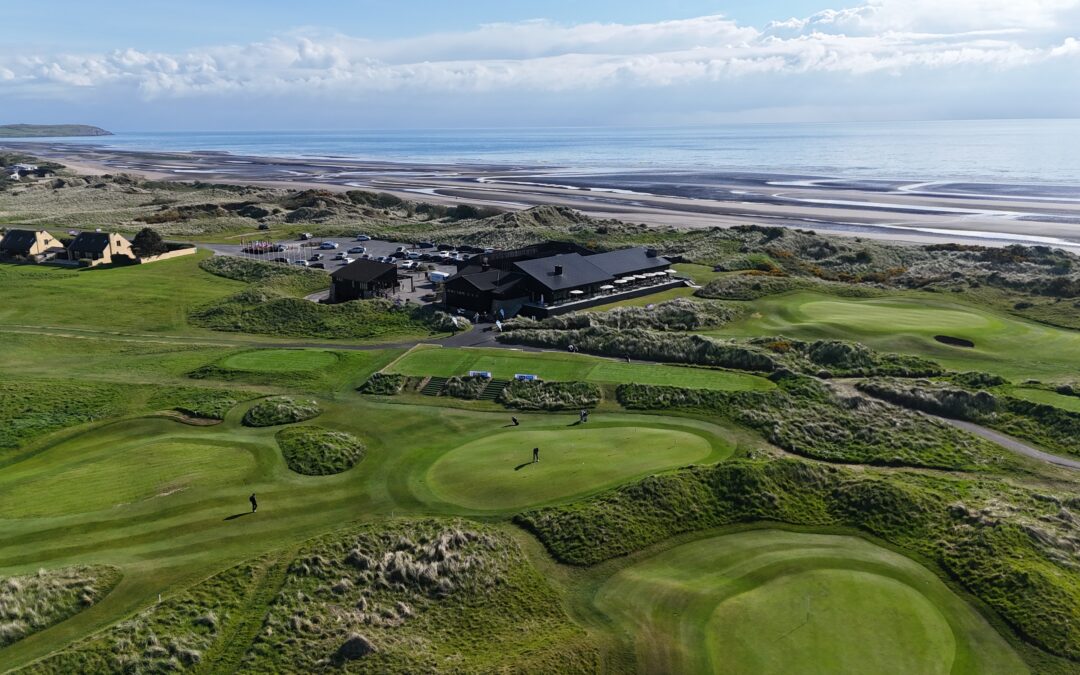
There is a moment, somewhere along the coast road north of Dublin, when the fields give way and the sea simply arrives — no announcement, no fanfare, just salt in the air and the sudden feeling that the land has been waiting for you the whole time. That is Termonfeckin. That is Seapoint. And for a course barely half an hour from Dublin Airport, it carries itself with the quiet, unbothered confidence of somewhere that has never needed to shout for attention.
You don’t find Seapoint by chance. Somebody tells you about it first — usually in the hushed, almost conspiratorial tone golfers reserve for the places that actually live up to the whispers. And then you’re standing on the first tee, the wind already testing you before you’ve swung a club, and you understand. Every word of it was true.
Carved From Weather, Not Just Land
Every great links course has a creation story written in hardship, and Seapoint’s is no exception. In 1990, Des Smyth — Louth-born, Ryder Cup player, a man who understood this coastline in a way no outsider ever could — set to work pulling a championship layout out of 260 raw acres of duneland along Termonfeckin Beach. It should have been straightforward. It wasn’t.
The Irish Sea fought back with brutal weather that forced extensive reseeding, stretching what should have been a quick build into a long, uncertain wait. Finally, on the 1st of June, 1993, the first ball was struck, and word spread fast enough that people came from all directions just to see whether the wait had been worth it. A year later, the clubhouse rose to meet them, and Seapoint began the slow climb toward becoming one of Irish golf’s genuine championship venues.
The story hasn’t stood still since. In 2021, a consortium led by the Carr Golf Group took control, investing heavily in both course and clubhouse, and today Seapoint operates under the Genesis Links banner with an ambition that matches the wind scouring its fairways. What was once simply a very good members’ course has quietly become something bigger — modern, sharp, and still unmistakably itself.
Padraig Harrington — a man who has played every links worth playing in this country — said it as plainly as it can be said: there isn’t a weak hole anywhere on this course. We went to find out if he was exaggerating. He wasn’t.
A Round Built to Undo You Slowly
Seapoint plays to a par 72 from four different tees, stretching from a manageable 5,644 yards to a full 7,150 from the very back. We played the medal markers — enough length to feel the course’s teeth without losing the round to them entirely. The routing itself is a study in symmetry, two par 5s and two par 3s on each side, but on a course like this, symmetry is not the same thing as mercy. The wind rewrites the balance hole by hole, gust by gust, and nothing here plays the same twice.
The front nine keeps its back to the sea at first, threading inland through dune and gorse, close enough that the water is always audible even when it isn’t visible. It’s a nine built on patience rather than spectacle — quiet questions about nerve and restraint, asked again and again until you either answer them or you don’t.
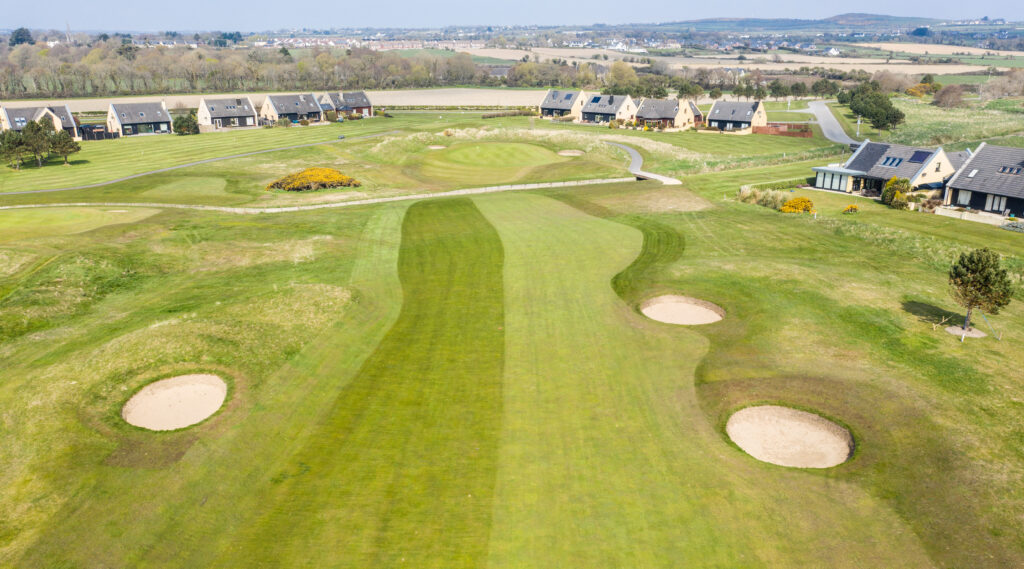
The approach to the 1st green
It begins with deceptive gentleness. The 1st, a downhill par 4 of 354 yards, drops toward a green that looks generous enough — until you notice the stream crossing the fairway just short of the putting surface, a small, almost mischievous echo of the burn that has haunted golfers at the first hole of the Old Course in St Andrews for centuries. A soft handshake that still knows how to bite.
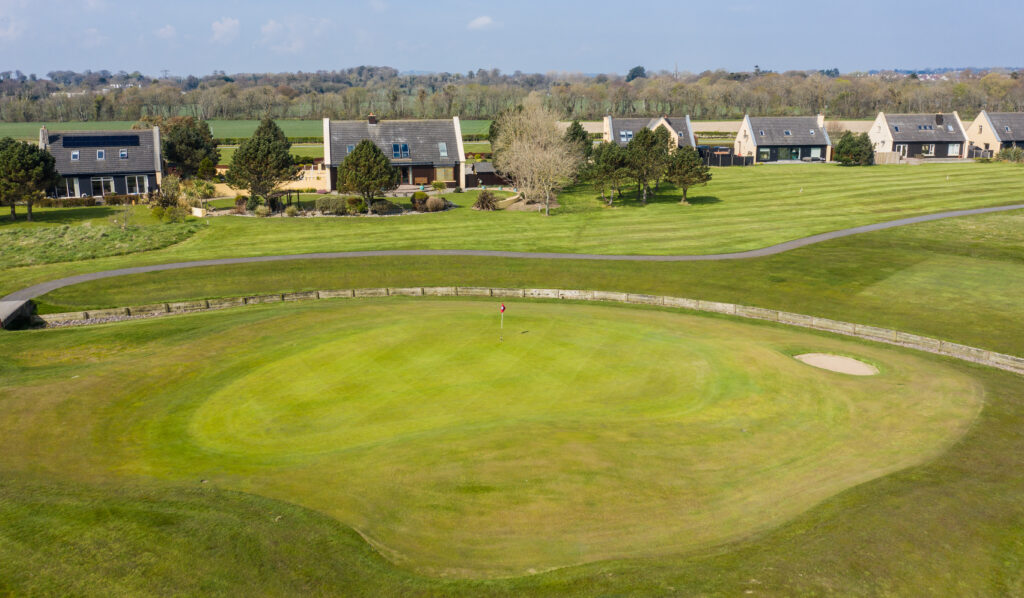
The 2nd green
By the 2nd, a short 145-yard par 3, the water has found its voice properly. It wraps around the front of the green, punishing anything struck even slightly thin, while a bunker waits on the left and the ground simply vanishes on the right. There is no comfortable miss here — only degrees of trouble.
Seaport’s Hardest Hole
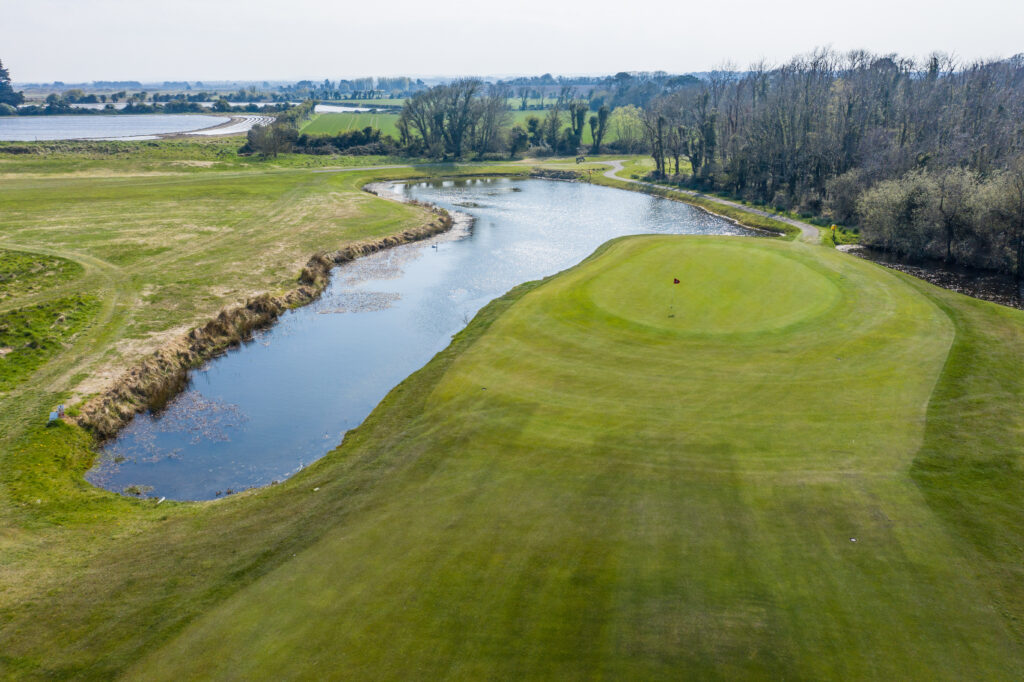
The 5th green
Then comes the stretch that separates hope from result. The 4th and 5th arrive together like a pair of cross-examinations — the 4th a demanding two-shotter, bunkers crowding in from the left, water and sand both lying in wait even for a well-struck approach; the 5th, Seapoint’s number one stroke index, water in front of the tee, out of bounds tight down the right, and two unforgiving bunkers on the left that make even a safe miss feel like a gamble. Walk away from these two holes with pars intact, and the rest of the round already feels like a bonus.
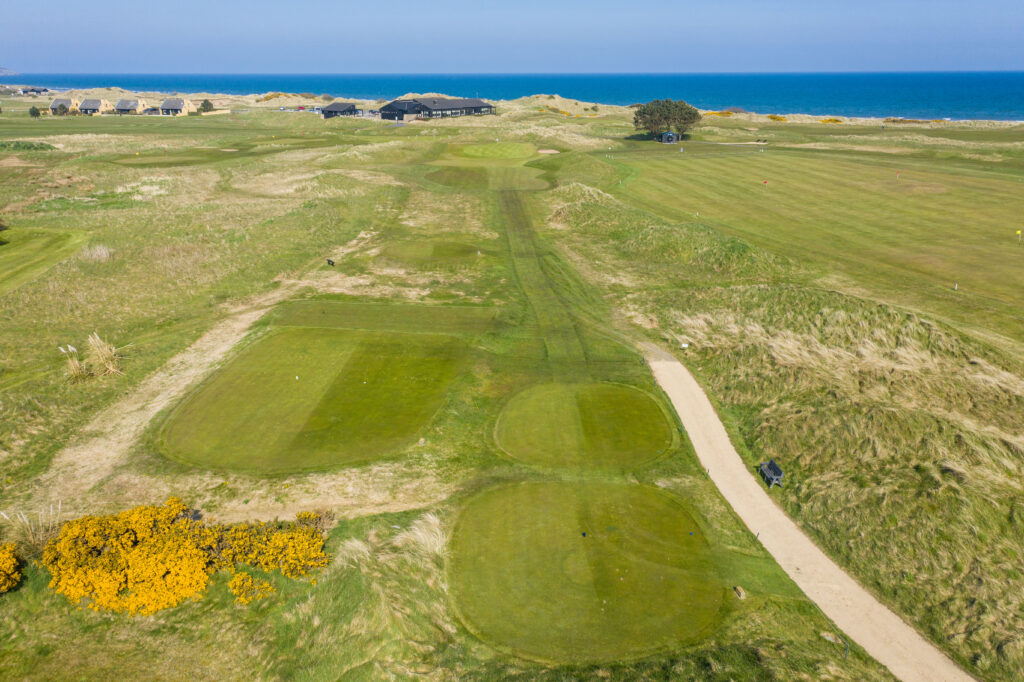
The 9th hole
The front nine closes on the 9th with one last examination — a 186-yard par 3 straight into the prevailing wind, its tiered green demanding precision not just onto the putting surface but into the correct section of it. By the time you reach the clubhouse for a breather, you’ve earned it.
Where the Drama Finally Breaks Loose
If the outward nine is a slow conversation, the inward nine is a confession. It opens gently — an easy par 5, a run of varied par 4s — but from the 14th onward, the dunes part and the Irish Sea steps forward to claim what’s always been its stage. This is where Seapoint stops being patient and starts making demands.
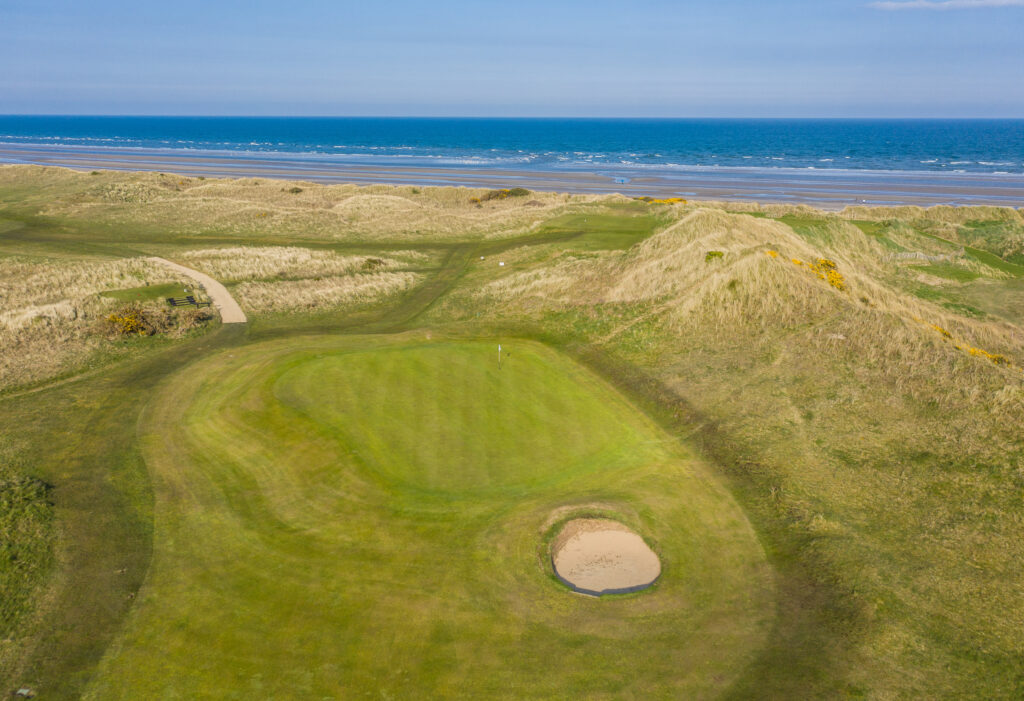
The 15th green
The 15th, barely 154 yards, looks harmless enough on a still day — a short par 3 played toward the water, its green sloping cruelly left. Still days, though, are rare here. Add the crosswind that so often comes off the Irish Sea, and that innocent little hole turns into a genuine lesson in humility, its contoured, two-tiered green offering no forgiving path back if you land on the wrong half.
Signature Finish
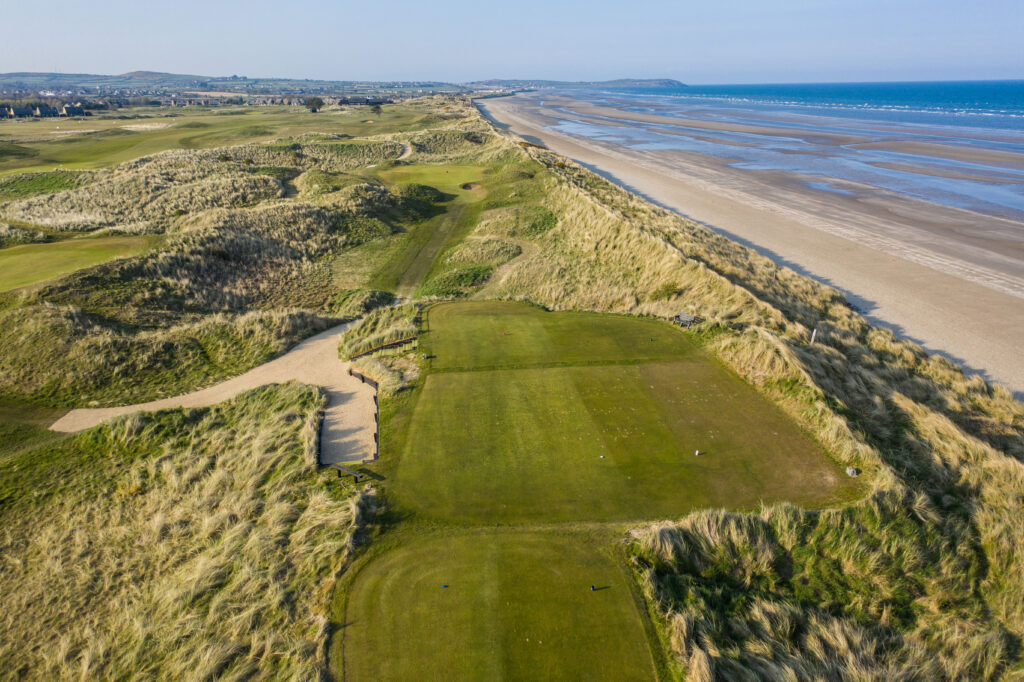
The Signature Hole
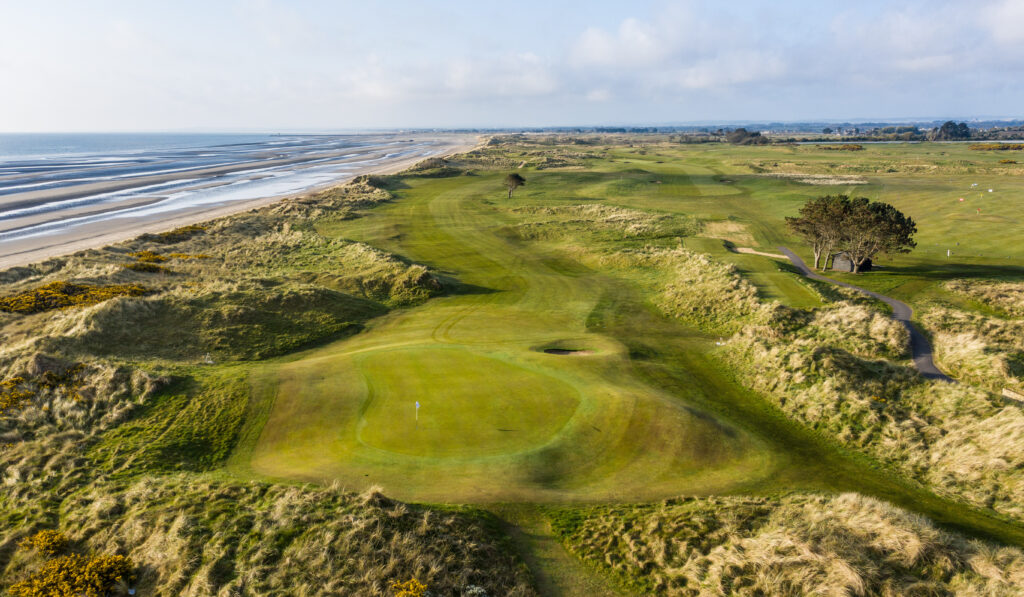
And then, the 17th — Seapoint’s finest and most honestly earned signature hole. An elevated tee shot threads through the dunes toward a long, narrow green split by a ridge into two distinct halves, front and back. Miss the correct side, and you’re not just off target — you’re facing a putt that might as well belong to an entirely different hole. Standing on that tee, wind swirling, sea glinting somewhere below, it feels for a moment like the entire round has been quietly building toward this single, suspended shot.
The 18th hole
The close is pure theatre. The 18th runs 499 yards along the Irish Sea and asks for one final act of faith — a blind tee shot toward a fairway you cannot see, squeezed between a hidden bunker and a stubborn tree down the left. The approach that follows is guarded by still more sand, but beyond it, like a promise finally kept, the clubhouse comes into view. It is, without argument, one of the great closing holes anywhere on Ireland’s east coast — golf as theatre, an ending you didn’t realise you’d been walking toward the whole time.
A Clubhouse That Earns Its View
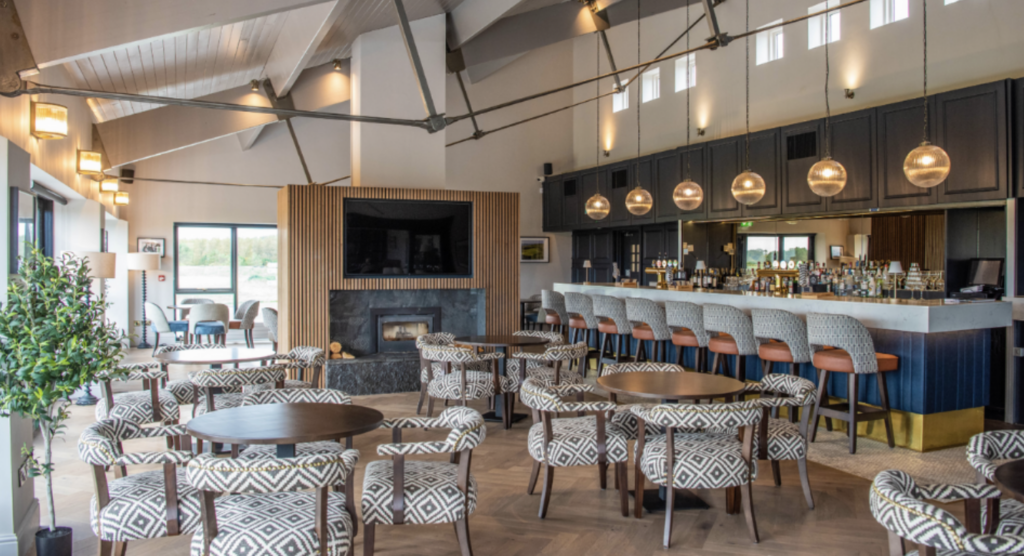
Step off the 18th green and Seapoint isn’t quite finished with you yet. The clubhouse is modern, glass-walled, its lounge opening onto the very green you’ve just survived or been humbled by. A terrace stretches beyond it, the sea still in full view, while inside, the restaurant draws heavily on the produce of the Boyne Valley and the Irish Sea alike — plates built for the kind of appetite only a Termonfeckin wind can create.
There’s a quiet confidence to the place now, the sort that only comes from genuine investment matched with real pride. Nothing here feels like it’s coasting on its history. It feels like a place still actively building toward more of it.
A Championship Pedigree Deeper Than Its Years
For a course still young by links standards, Seapoint’s résumé runs surprisingly deep. Des Smyth himself won the club’s very first professional event, the Glen Dimplex Irish Matchplay Championship, beating Paul McGinley in a final that set the tone for everything that followed. The Irish Youths Amateur Championship arrived in 2002. Canadian golfer Alison Murdoch began an extraordinary run of Irish Senior Women’s Open titles here in 2004, eventually collecting four of them. The Irish PGA Championship visited in back-to-back years soon after, and the Irish Amateur Close Championship followed in 2014.
More recently, the European Legends Tour has twice chosen Seapoint as its stage, with the OFX Irish Legends bringing former Ryder Cup captains and major champions to Termonfeckin in both 2023 and 2024 — the latter decided by a sudden-death playoff that held the entire gallery its breath. And in 2025, Seapoint stood alongside Royal County Down and Portmarnock as host of the Flogas Irish Men’s Amateur Open, exactly the kind of company that confirms what this course has quietly become.
Where to Stay
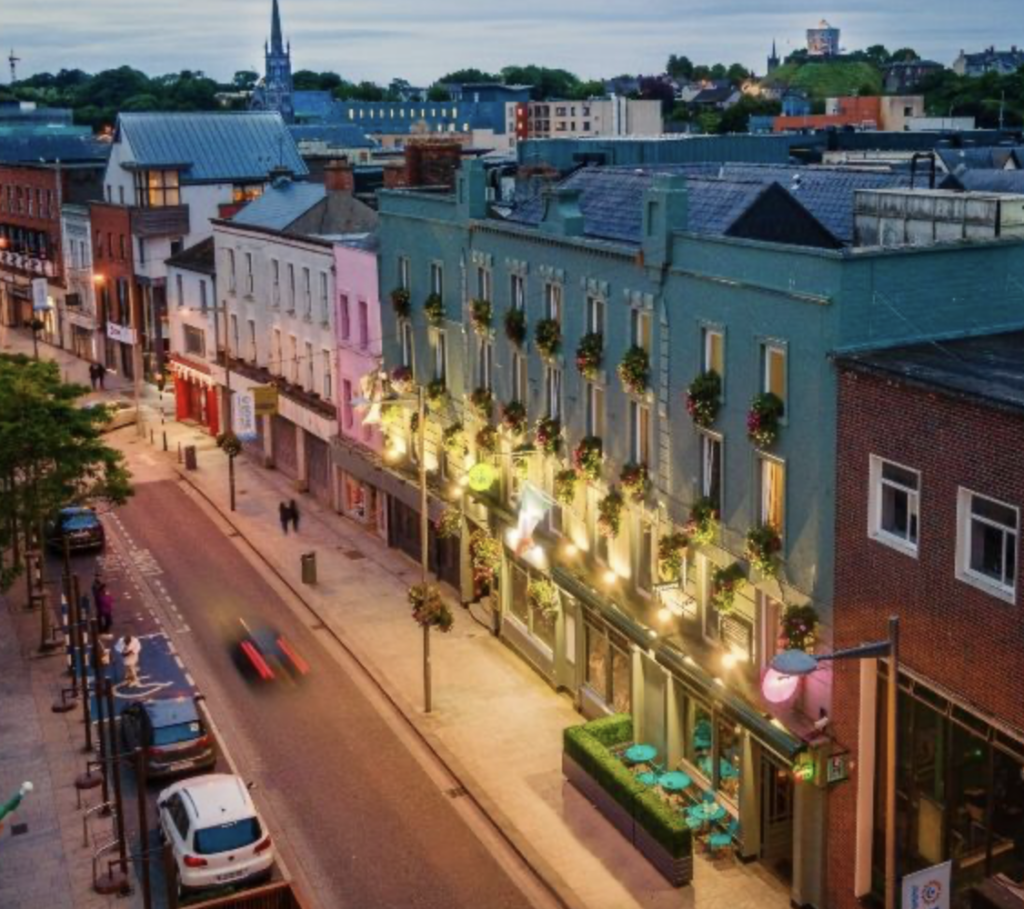
The Marcy has stood on West Street since the mid-1700s, and it wears that history the way an old friend wears their favourite coat — comfortably, unhurried, entirely unbothered by the passing centuries. For more than two hundred years this grand old lady of Drogheda has watched the town rise and change around her, welcoming travellers through doors that have never once stopped opening. She doesn’t announce herself. She doesn’t need to. Standing here, at the pulsing heart of Drogheda, is enough — hospitality isn’t something The Marcy does, it’s something written into her very foundations.
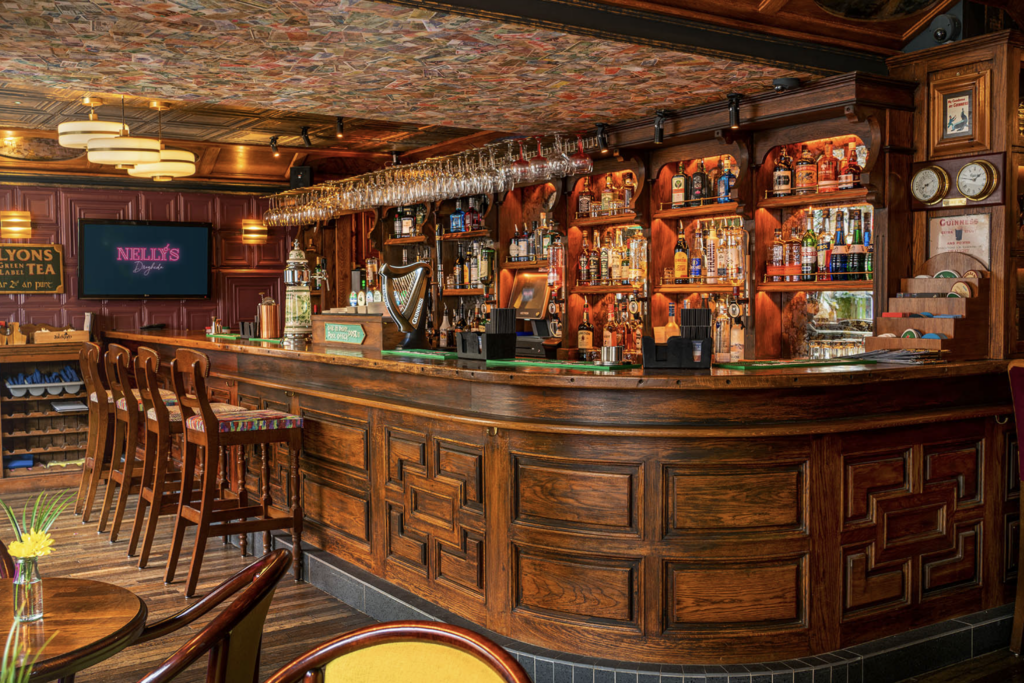
Step inside, though, and history gives way to something warmer still. Recently reborn as a vibrant boutique hotel, The Marcy has learned to hold two truths at once — heritage in her bones, comfort in her bloodstream. In Nelly’s Bar, old-town charm settles in beside classic pours and hearty plates, the kind of warm buzz that makes strangers feel like regulars within a single round. Upstairs, the rooms wrap heritage character around modern, quiet luxury, a place built not to impress you but simply to let you exhale. This is Drogheda’s beating heart made tangible — casual, generous, and entirely, unmistakably alive.
The Final Verdict
Seapoint doesn’t need to borrow prestige from its more famous neighbours. It has the wind, it has the water, and it has a closing stretch that will follow you home long after the round is over. It spends the outward nine asking patient questions and the inward nine demanding honest answers, and by the time you’re walking off the 18th, you understand exactly what Padraig Harrington meant — there really isn’t a weak link in the whole round.
Thirty-five minutes from Dublin Airport, on a stretch of coast where the Boyne Valley finally surrenders to the sea, Seapoint Golf Links is still waiting — patient, windswept, and entirely unwilling to let you forget it.
Thank you to Seapoint Golf Links and The Marcy Hotel for the photos used in this article.
At a Glance
- Location: 35 minutes from Dublin Airport, 15 minutes from The Marcy Hotel, Drogheda
- Designed by Des Smyth and Associates; first ball struck June 1, 1993; clubhouse opened 1994
- Championship links, Par 72, four tees ranging 5,644–7,150 yards
- Set across 260 acres of duneland along Termonfeckin Beach
- Owned and operated by Genesis Links, under the Carr Golf Group banner since 2021
- Host to the Irish PGA Championship, Irish Amateur Close, OFX Irish Legends (2023 & 2024), and the 2025 Flogas Irish Men’s Amateur Open
- Modern clubhouse with glass-walled lounge, terrace, and restaurant overlooking the 18th
- For more information, visit the Seapoint Golf Links website
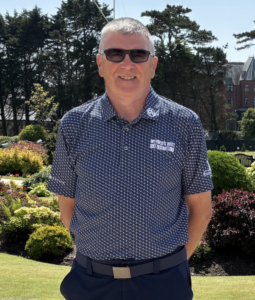
Jim Callaghan CCM is a former Club Manager with experience of overseeing several top Scottish Golf Clubs.
Now, as European Editor of Golf Operator Magazine and World’s Best Golf Destinations, he shares insights into club operations and his golfing adventures across Europe.
Jim is also an Ambassador for premium clothing brand Fenix Xcell Clothing and also for the Spanish local DMC, Costa Verde Golf and is host of @JimTheSeniorGolfer on YouTube.
If your club/resort or brand wants to reach over 450,000 golfers, contact Jim at [email protected] or call 0044 (0) 78522 88732
Featured Post

 0
0