The light arrives first.
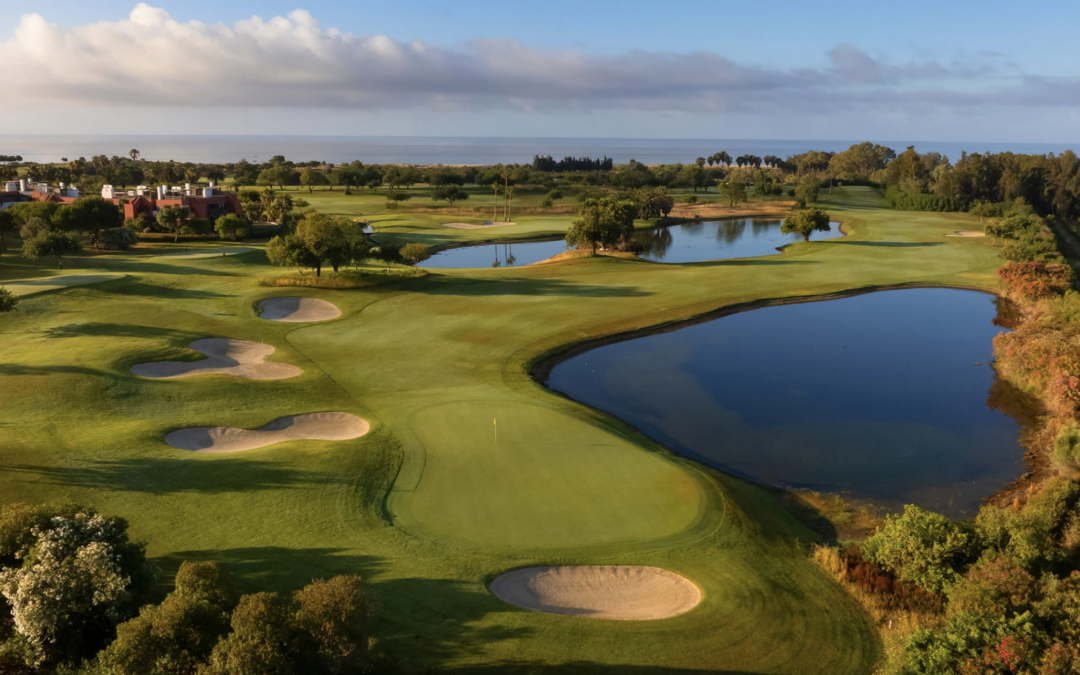
Before the clubhouse opens its doors, before the first tee shot, the Eastern Algarve begins to glow. A soft golden light spills across the fairways. Beyond the final green, the Ria Formosa stretches towards the horizon. Its waters shimmer beneath the morning sun.
A scattering of islands provides a natural barrier against the Atlantic. Beyond them, the beautiful curve of Cacela Velha beach completes the picture. It is difficult to imagine a more inviting setting for a round of golf.
I have played courses in many different countries. Some impress with their history, others with their architecture or championship pedigree. Very few make you stop and appreciate your surroundings before reaching the first tee.
Quinta da Ria achieved exactly that. There is something wonderfully unhurried about this corner of Portugal. The landscape encourages you to slow down. The sea breeze carries a hint of salt, while birdsong occasionally breaks the silence. For a golfer, it feels like discovering somewhere rather special.
And then, of course, there is the small matter of playing eighteen holes.
A Championship Golf Course Within a Natural Paradise
Designed by American architect Rocky Roquemore, Quinta da Ria opened in March 2002. It occupies an extraordinary position within the Ria Formosa Natural Park.
The championship layout measures 6,658 yards from the back tees. It plays as a par 72, with bent grass throughout the playing surfaces. The course occupies approximately 660,000 square metres of this protected landscape. Its gently undulating terrain slopes towards the lagoon. The Atlantic and its offshore islands provide a magnificent backdrop.
This is golf surrounded by nature rather than imposed upon it. Quinta da Ria has welcomed players of all abilities since opening. However, its tournament history demonstrates that it offers considerably more than attractive scenery.
The PGA EuroPro Tour visited in 2003 and 2004. The Portugal Algarve Seniors Open followed in 2005. The Ladies Open brought further competitive golf in 2008. There is another course here, Quinta de Cima. Its character is rather different, with winding streams, olive trees and carob trees. That deserves its own visit.
Today, however, our attention belongs to Quinta da Ria.
The Front Nine: Bunkers, Beautiful Views and Early Challenges
Quinta da Ria wastes little time introducing its strategic character. The opening nine holes feature some impressive bunkering. Large sand traps protect fairways and greens. They are positioned to punish careless decisions and reward thoughtful course management.
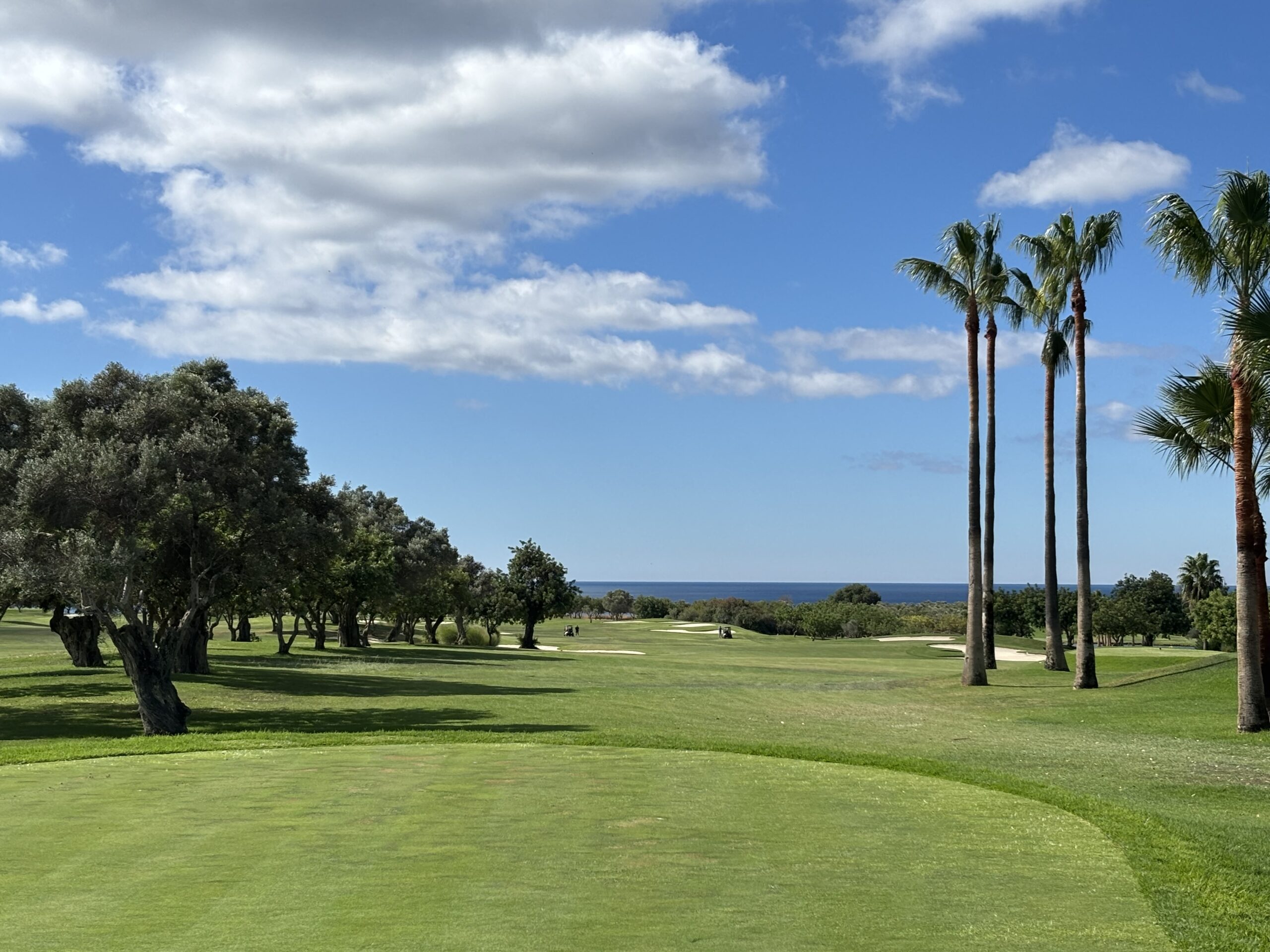
The first hole provides a relatively friendly introduction. At 521 yards, this par five offers an opportunity to settle into your round. Trees frame the left side of the teeing ground. Two bunkers sit towards the right-centre of the fairway. Finding the correct position opens several possibilities.
You can attempt to reach the green in two or choose a more conservative route. We opted for the sensible approach. A comfortable lay-up left a straightforward third shot. The pitch found the putting surface, and an opening par followed.
I was rather pleased with myself. For a brief moment, I entertained thoughts of a particularly successful round. Experience should have taught me better. Golf courses rarely allow you to become comfortable for too long.
The Fifth Hole: When the Angles Refuse to Cooperate
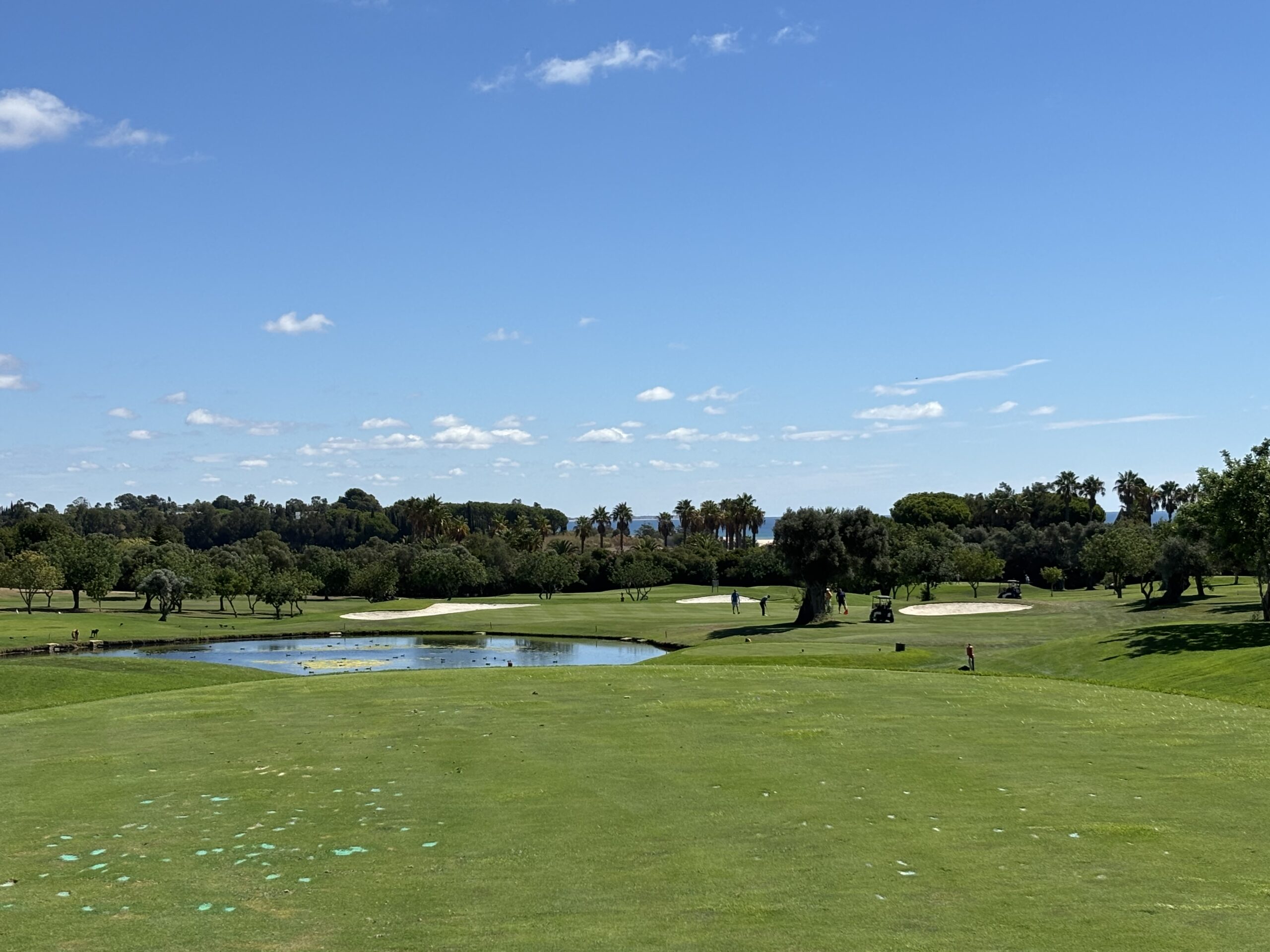
The first few holes passed pleasantly enough. Then came the fifth, a par three that initially left me scratching my head. From the tee, the angles looked decidedly unusual. The pin sat behind a tree on the right. The hole measured approximately 199 yards.
Carrying the tree and stopping the ball near the flag looked almost impossible. Naturally, that did not prevent me from attempting it. My tee shot found the tree and ricocheted right.
Thankfully, the nearby water remained untroubled. My golf ball, however, was considerably less fortunate. I failed to get up and down. It later became apparent that the normal teeing position sat further left. That made considerably more sense when viewing the hole again.
Sometimes golf requires imagination. On other occasions, it requires you to question your understanding of geometry. This was probably one of those occasions.
Nevertheless, the hole provided an interesting change of direction. It reminded me that Quinta da Ria demands attention, even when the scenery encourages distraction.
The Sixth Hole: A Beautiful Dogleg and a Reward for Patience
The sixth is a 490-yard par five that sweeps right through the landscape. Its sweeping dogleg presents an interesting challenge from the tee. Attempting to cut too much off the corner can quickly become expensive. The sensible option involves patience and careful positioning.
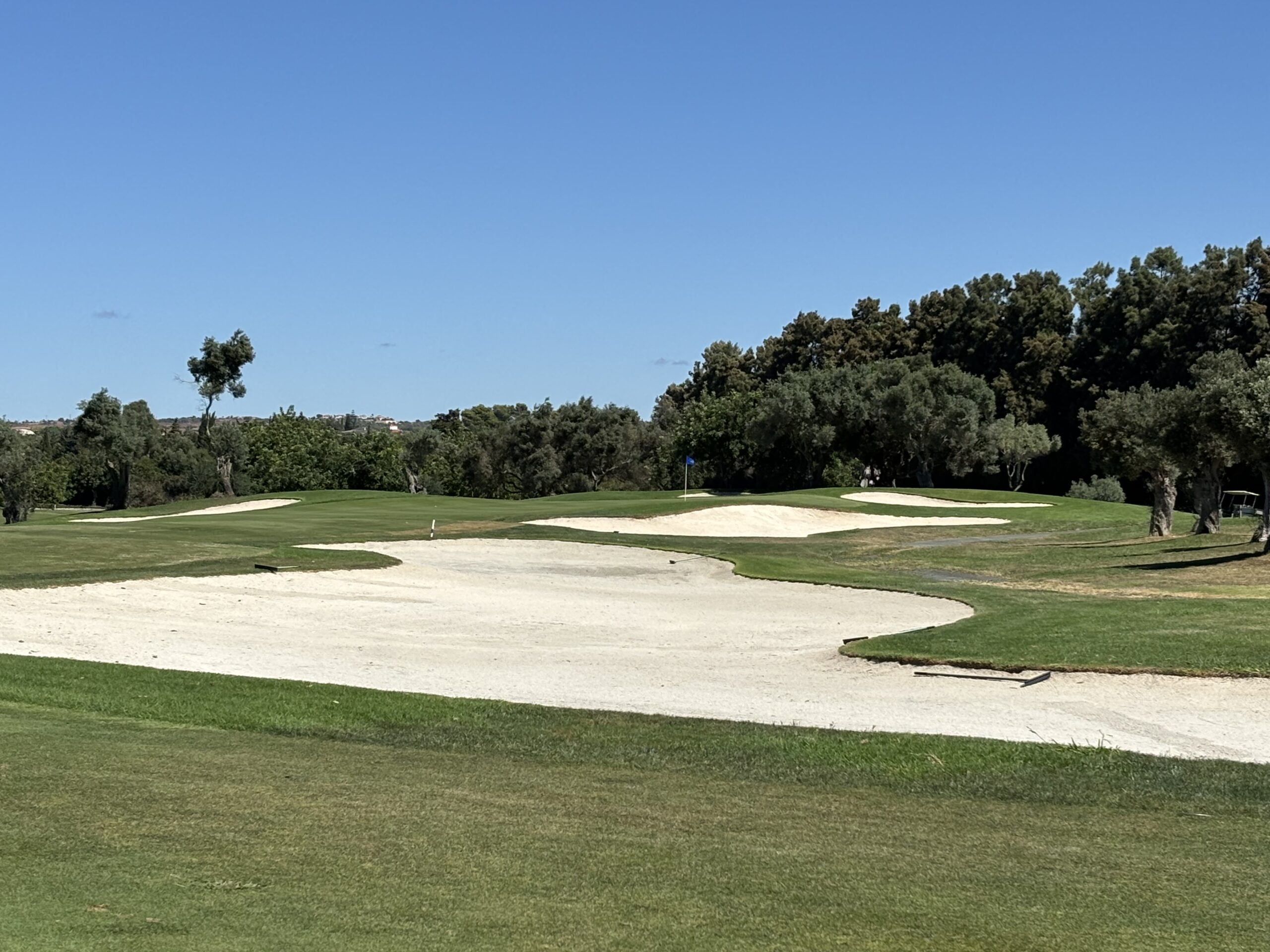
The preferred line is towards the left bunker. A controlled fade provides a good starting point. The second shot requires similar consideration. Another fade, played over the left edge of the substantial bunker, opens the route towards the green.
Fortunately, this was one occasion when my golf swing decided to cooperate. Two excellent shots left me on the putting surface. It was a satisfying achievement, particularly given the strategic demands of the hole.
Little did I know that the resulting birdie would be my only one of the day. I would happily have accepted a few more. However, golf has never been particularly generous when it comes to distributing birdies.
The sixth remains one of the memorable holes on the outward nine. It combines thoughtful design with a wonderful setting.
The Back Nine: Water, Out of Bounds and Bigger Decisions
After the turn, Quinta da Ria begins to show another side of its personality. Water becomes increasingly influential. The tenth, fourteenth and seventeenth all introduce additional hazards. Out of bounds also makes its presence felt. The views remain spectacular. However, the concentration required becomes considerably greater.
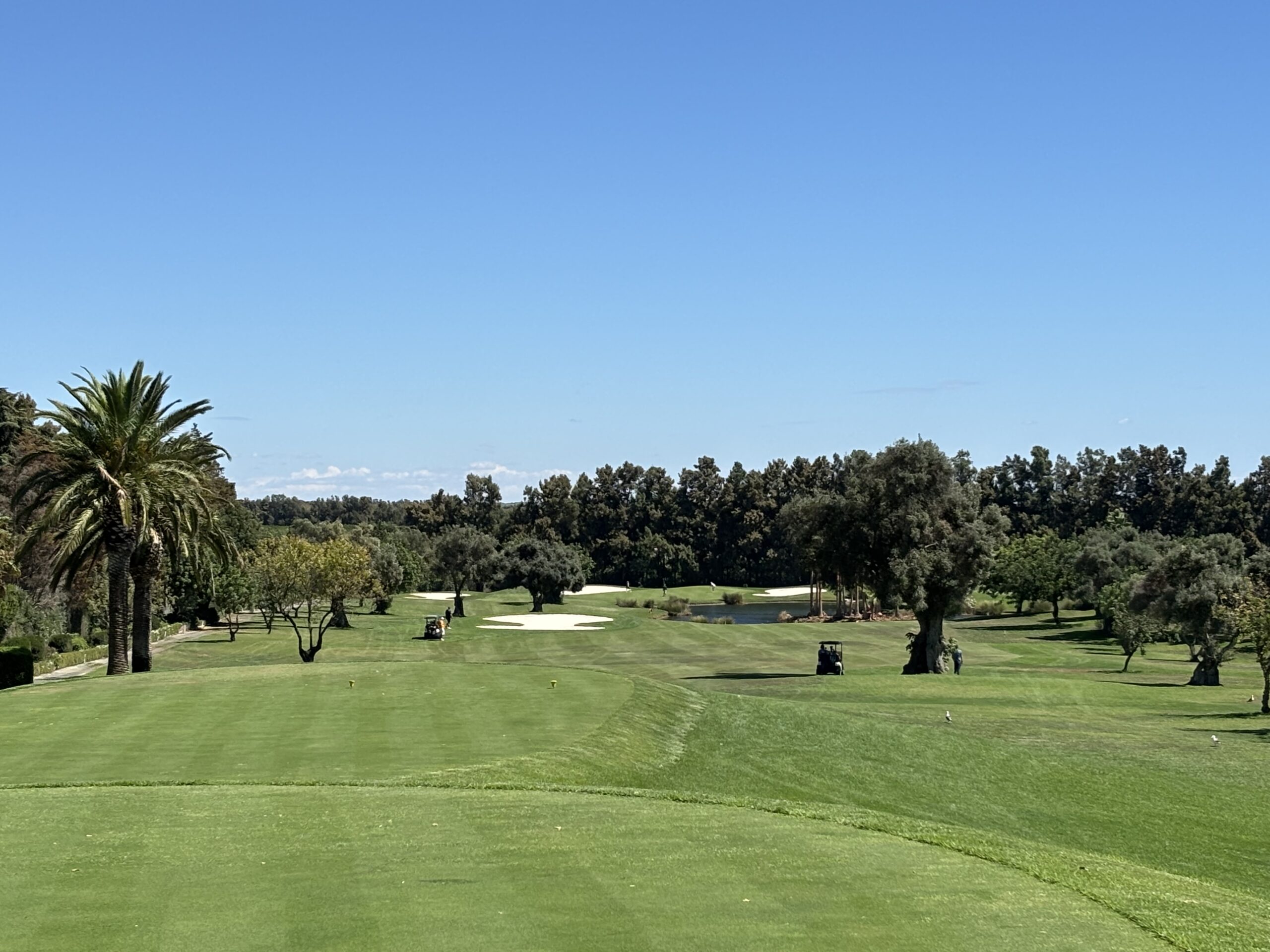
The tenth is arguably the toughest examination on the course. At 464 yards, this long par four demands respect from the outset. Out of bounds runs along the entire left side. It is an intimidating presence, particularly when standing on the tee.
Local knowledge clearly counts here. Some members regard this hole as a par five. Their preferred strategy involves laying up short and right of the fairway tree. That leaves a relatively straightforward wedge towards the green.
There is considerable wisdom in that approach. Attempting to reach the green in two brings additional dangers into play. The out of bounds behind the putting surface provides another reason for caution.
Naturally, I decided to have a go. My second shot cleared the water, although only just. Unfortunately, reaching the green remained beyond my capabilities on that occasion.I eventually walked away with a five.
Given the obstacles involved, I considered that a perfectly acceptable result. Sometimes knowing when to take your medicine is an important part of enjoying golf.
The Thirteenth: A Long Par Three With a Happy Ending
The number thirteen has an unfortunate reputation in many parts of the world. At Quinta da Ria, however, it provided one of my happier moments.
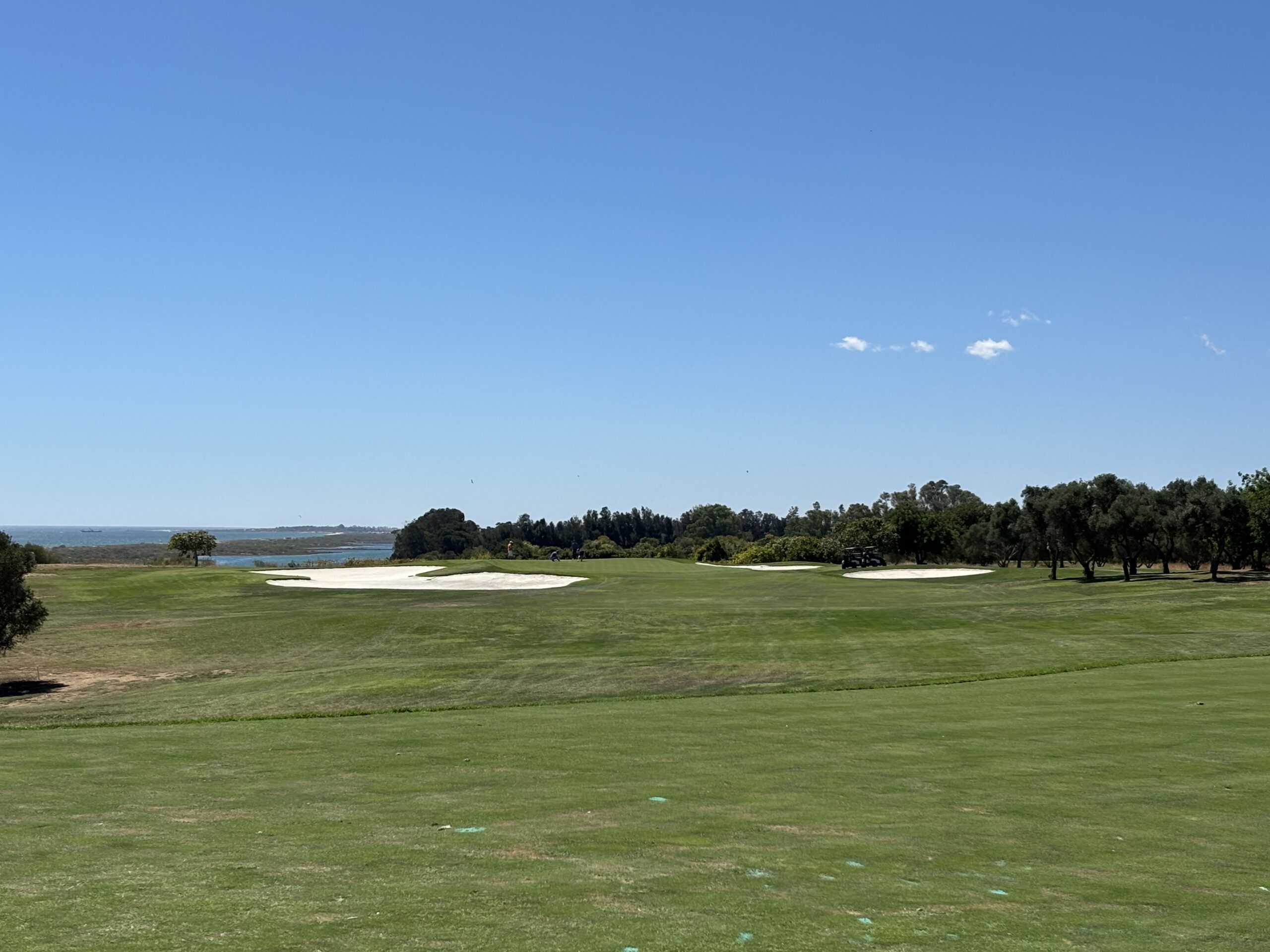
This is the longest par three on the course, measuring 215 yards. On our visit, a strong wind made the challenge considerably more interesting. There was little uncertainty about the club selection. My trusty three-wood was required.
Unfortunately, the shot found the large bunker protecting the left side. A delicate recovery was needed to give myself any realistic chance. The bunker shot came out beautifully, despite the challenging crosswind. It left approximately sixteen feet between my ball and the hole. For once, the golfing gods were smiling. The putt dropped, and an unexpected par followed.
It was one of those small victories that make a round memorable. Nobody remembers every ordinary par. However, a well-earned save from a difficult bunker tends to stay with you. Perhaps thirteen was not so unlucky after all.
The Seventeenth: Water, Wavering Confidence and a Missed Opportunity
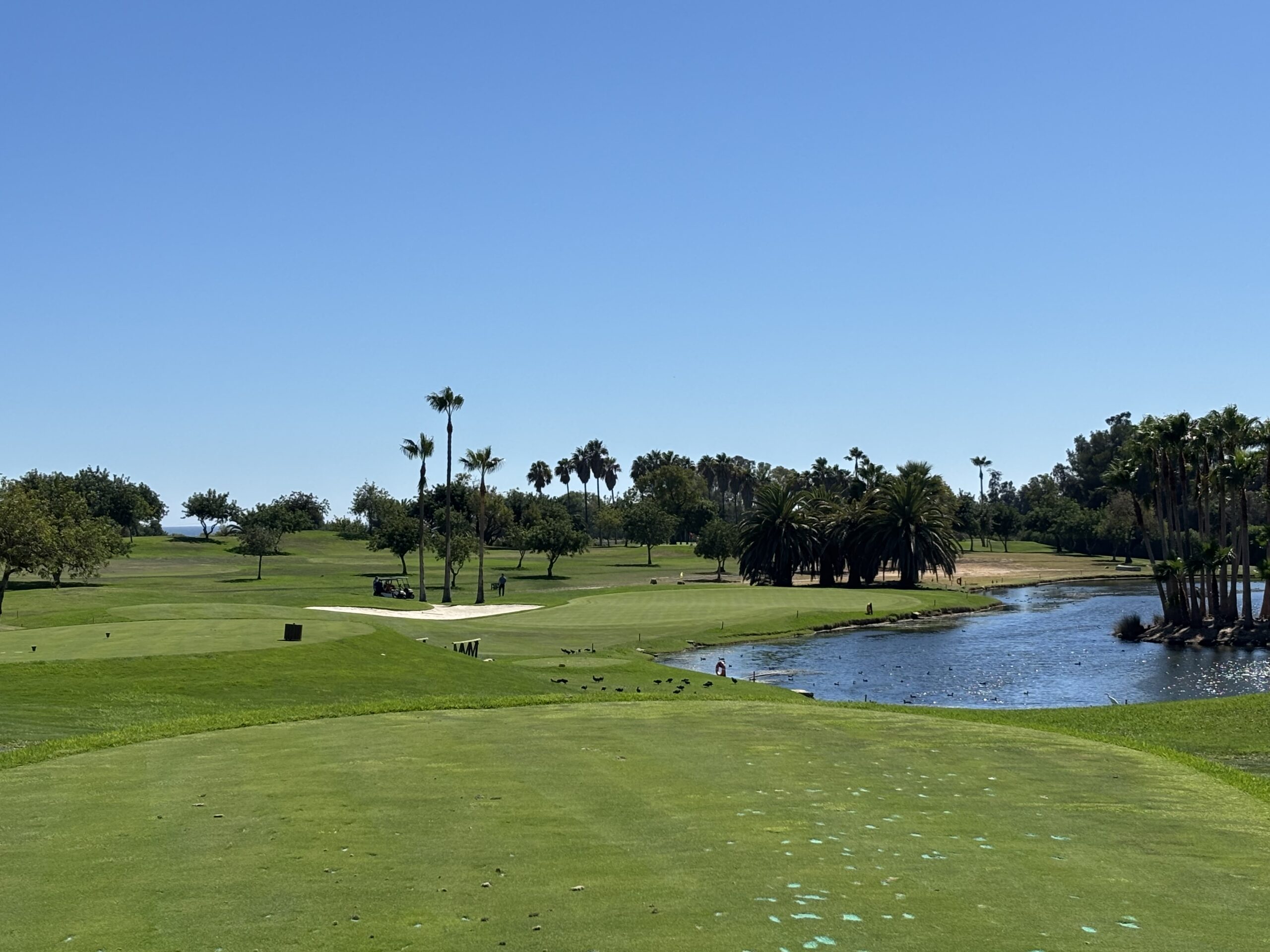
The seventeenth provides another memorable par-three challenge. At 177 yards, it requires a confident strike over water. By this stage, I was beginning to feel the effects of the round. Whether it was fatigue or simply a lack of courage, my tee shot headed left.
It avoided the bunker but finished short of where I wanted to be. The recovery shot was disappointing. A poor chip left me almost twenty feet from the hole. There would be no repeat of the thirteenth’s putting heroics. The putt missed, and I recorded a bogey. Perhaps I had used up my allocation of good fortune earlier.
Nevertheless, the hole provides an excellent challenge. Water creates a psychological barrier, while the surrounding landscape remains every bit as beautiful.
It is another reminder that Quinta da Ria rewards commitment and accurate execution.
Our Verdict: A Warm Welcome in an Exceptional Setting
Quinta da Ria provided a thoroughly enjoyable golfing experience. The course was in very good condition during our visit. Its combination of strategic challenges and natural beauty makes it an appealing destination.
What impressed us equally was the welcome. The caddie master, reception team and bar staff were all excellent. Everyone we encountered was friendly, helpful and genuinely pleased to see visiting golfers. That atmosphere continued after the round.
Sitting around the clubhouse, we noticed something particularly appealing. Golfers seemed genuinely happy with their experiences. There was plenty of conversation, laughter and the unmistakable satisfaction of a day outdoors.
Perhaps the Portuguese sunshine had something to do with it. Maybe the post-round refreshments played their part. Whatever the explanation, the atmosphere felt authentic.
For travelling golfers, these details matter. A beautiful course is important, but the welcome can make the difference between enjoying a visit and wanting to return.
Quinta da Ria delivered both.
It offers enough strategic interest to challenge accomplished golfers. Yet its generous setting and welcoming character make it accessible to visitors of different abilities. We left with excellent memories and one unfinished piece of business. The neighbouring Quinta de Cima course was still waiting for us.
Octant Praia Verde: Where the Pine Forest Meets the Atlantic
A memorable golfing holiday deserves somewhere equally special to stay. Our accommodation was Octant Praia Verde, a contemporary retreat tucked between the pine forest and the Atlantic coastline.
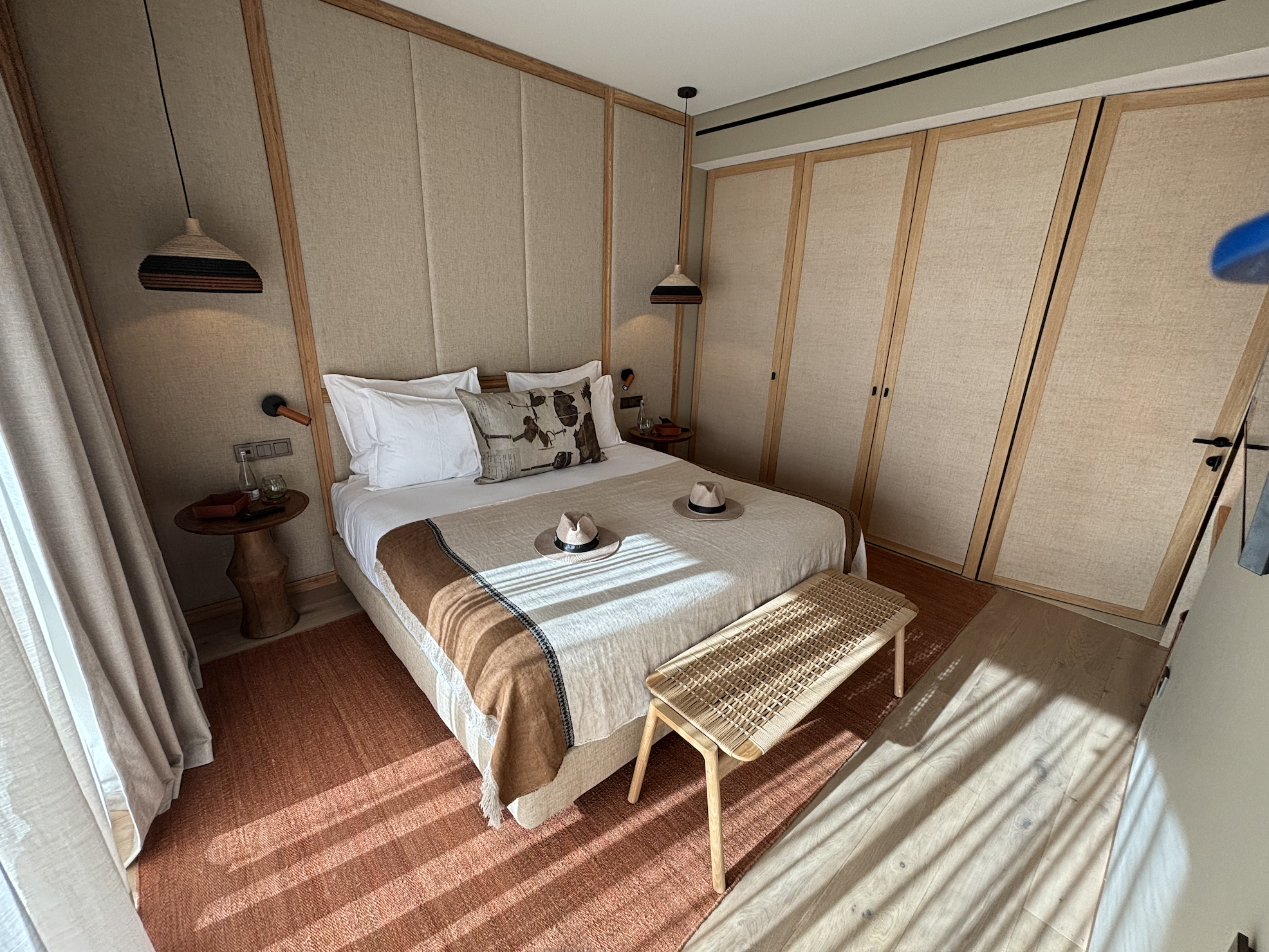
The hotel’s setting is its greatest luxury. Natural colours, thoughtful design and locally inspired details create an atmosphere of understated comfort. The rooms reflect the character of the region. Authentic decorative touches sit comfortably alongside contemporary furnishings.
If possible, request a room overlooking the sea. Morning light arriving across the water provides a wonderful start to the day. For something particularly special, the Praia Collection suites offer private terraces and plunge pools.
There is a reassuring absence of urgency throughout the property. Nothing feels hurried or unnecessarily complicated. After eighteen holes, that approach was particularly welcome. A wooden boardwalk leads guests through the pine trees towards the beach. The transition is wonderfully simple.
First comes the quiet of the forest. Then the brightness of the sand appears. Finally, the Atlantic announces itself through the sound of breaking waves. The hotel provides towels, shade and comfortable loungers. Horse riding along the shoreline is another experience available to guests. Picnic baskets filled with fresh local produce offer an alternative way to enjoy the coastline.
I chose the loungers. After a day walking the fairways, my legs had already made that decision for me. I settled down, listened to the waves and enjoyed doing absolutely nothing. It was difficult to argue with that particular choice.
À Terra: An Authentic Taste of the Eastern Algarve
Dining at À Terra continued the hotel’s connection with its surroundings. The restaurant draws inspiration from the land between the pine forest and the Atlantic. Its approach celebrates the flavours and character of the Eastern Algarve.
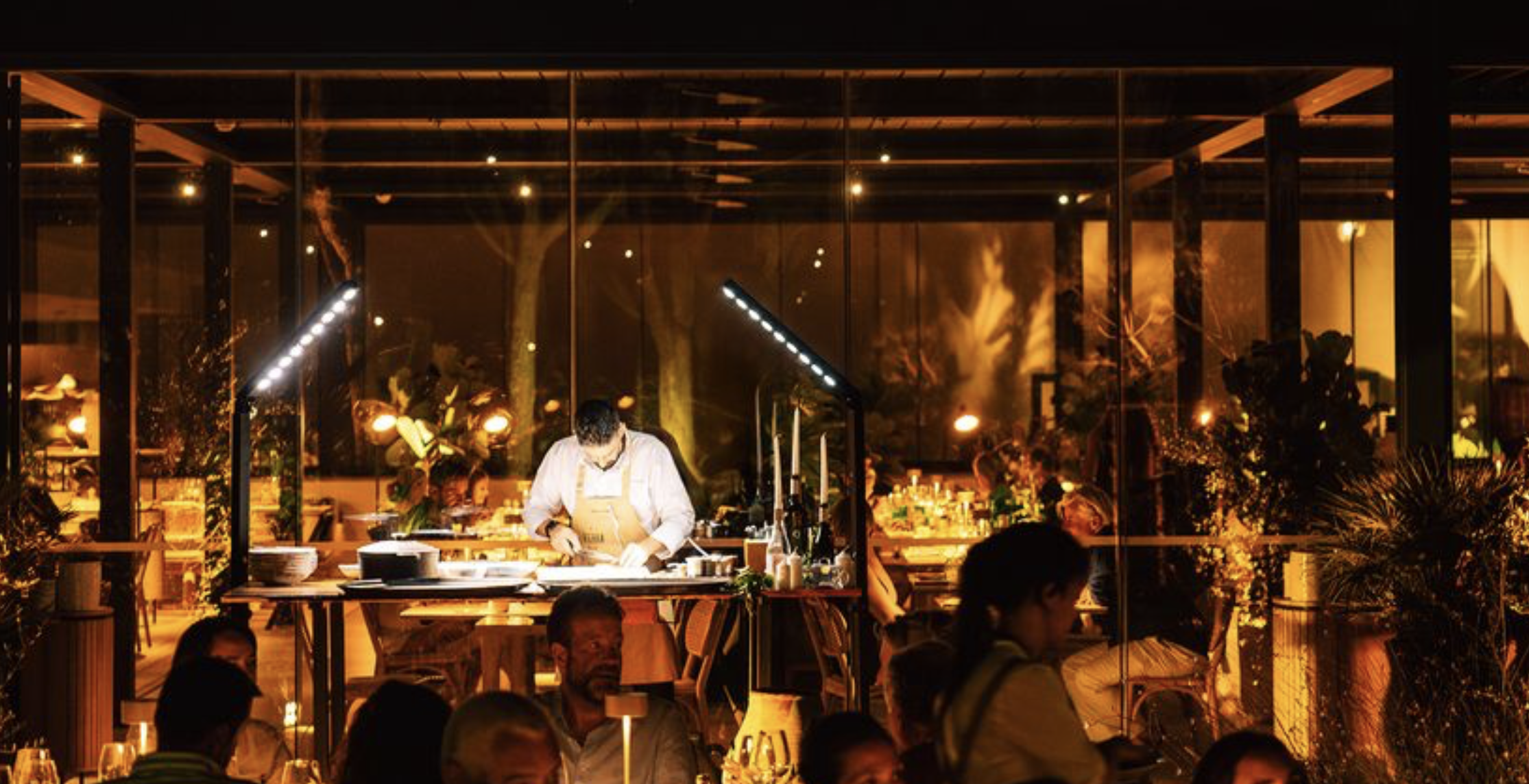
There is something appealing about experiencing a destination through its food. It provides another opportunity to understand the place beyond its golf courses and beaches. Dinner offered exactly that opportunity.
I found myself replaying the day’s round. The opening par, the unfortunate fifth-hole tree and that rather satisfying birdie on six all received consideration. Golfers rarely need much encouragement to discuss their rounds.
The hotel also caters for families travelling together. Its Kids Club provides opportunities for children to build, paint and create stories.
For guests wanting to explore further, private yacht excursions are available. One particularly appealing option travels from Vila Real de Santo António towards the islands of Ria Formosa. Those are the same islands visible from Quinta da Ria’s fairways. There is something rather satisfying about seeing the same landscape from two completely different perspectives.
From the golf course, it provides the backdrop to your round. From the water, it becomes the destination itself.
A Final Morning in the Portuguese Sunshine
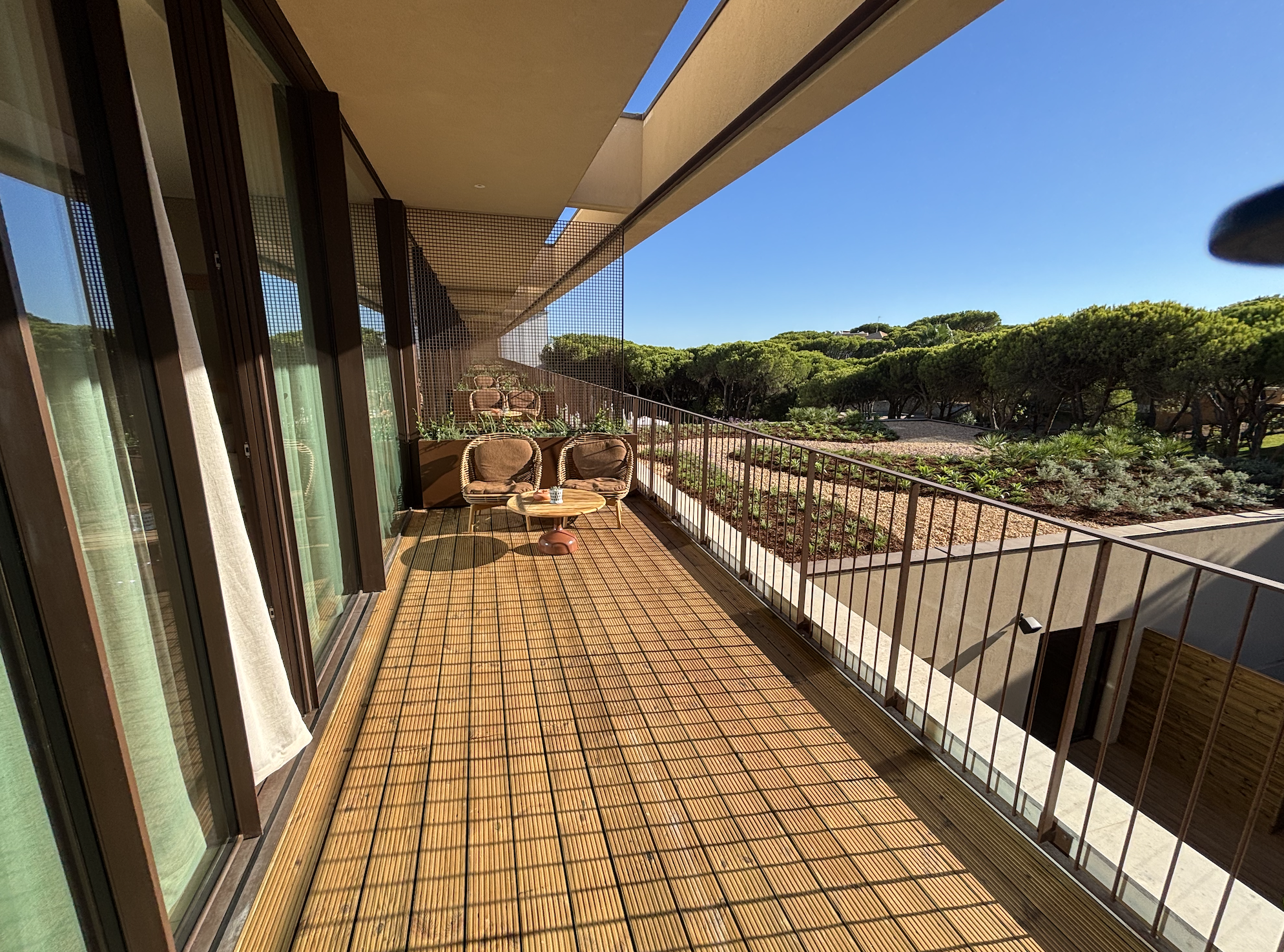
The following morning arrived without any particular urgency. We sat on our terrace, enjoying the Portuguese sunshine. The pine trees stood quietly around us, and the atmosphere was wonderfully peaceful. There was time to reflect on the visit.
Quinta da Ria had provided everything we look for in a golfing destination. An interesting course, beautiful surroundings and a genuinely warm welcome. Octant Praia Verde had completed the experience with excellent accommodation, wonderful surroundings and opportunities to enjoy the coastline.
I found myself thinking about returning. There was still the matter of Quinta de Cima. Having enjoyed its neighbour so much, I was keen to discover what the second course offered. Unfortunately, our itinerary had other ideas. Another golfing destination was waiting, and there was no time to extend our stay. That is sometimes the problem with golf travel. There are always more courses to discover than days available.
However, I left with a clear intention. We would return.
At a Glance: Essential Information for Visiting Golfers
- 36 holes of championship golf, Quinta da Ria and Quinta da Cima Golf Courses
- 45 minutes drive east of Faro Airport
- Excellent and extensive practice facilities
- Set within approximately 660,000 square metres within the Ria Formosa Natural Park.
- Lovely views towards the Atlantic, offshore islands and Cacela Velha beach.
- Welcoming clubhouse with excellent vibe and staff
- Golf bookings and green fees: quintadaria.com
- Recommended accommodation: Octant Praia Verde
Our recommendation: Combine rounds at Quinta da Ria and Quinta da Cima with a stay at Octant Praia Verde. Allow time to explore the coastline and enjoy the natural beauty of the Eastern Algarve.
Some golf courses are remembered for their championship history. Others stay with you because of the shots you hit. Quinta da Ria offers something more. It gives you eighteen holes in a landscape that makes you appreciate why travelling for golf is such a wonderful privilege.

Jim Callaghan CCM is a former Club Manager with experience of overseeing several top Scottish Golf Clubs.
Now, as European Editor of Golf Operator Magazine and World’s Best Golf Destinations, he shares insights into club operations and his golfing adventures across Europe.
Jim is also an Ambassador for premium clothing brand Fenix Xcell Clothing. He is also The Director of Golf for Scotland, for the Spanish lDMC, Costa Verde Golf and is host of @JimTheSeniorGolfer on YouTube.
If your club/resort or brand wants to reach over 450,000 golfers, contact Jim at [email protected] or call 0044 (0) 78522 88732
Featured Post
 0