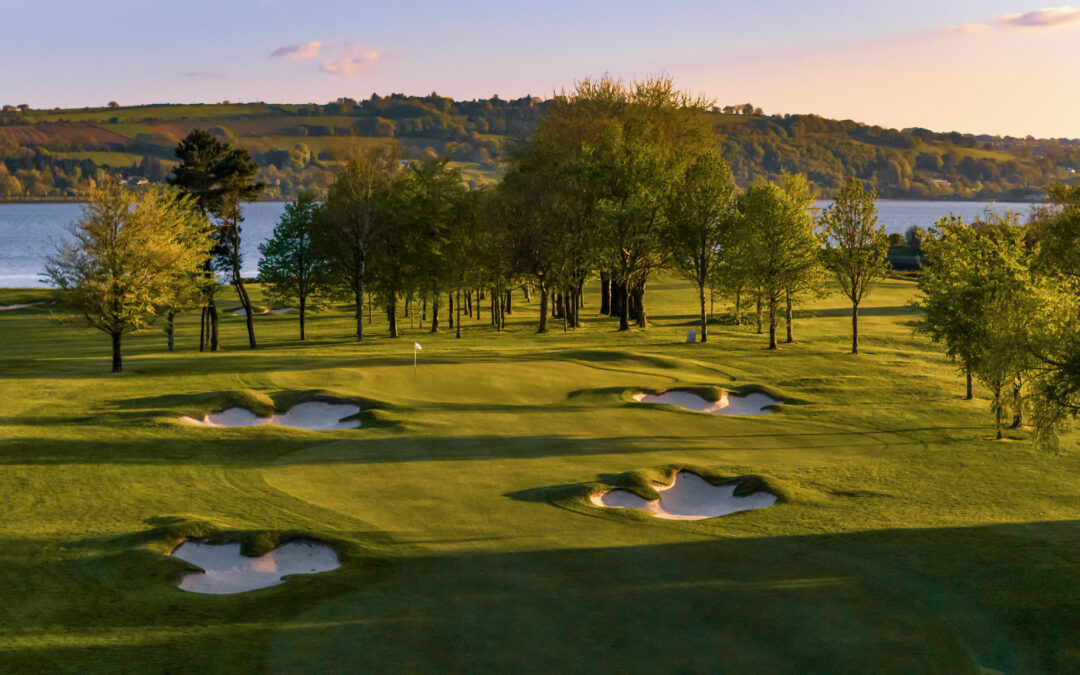
For the travelling golfer who understands that the greatest courses are not built — they are discovered.
Alister MacKenzie is buried in California. But if you want to find where his mind still lives — where his genius still breathes and plots and quietly outwits golfers a full century after he stood on this ground — you cross onto Little Island in Cork Harbour and you play eighteen holes until the light goes.
He will be with you the whole way round.
What 1888 Feels Like in Your Hands
There are courses in Ireland that arrived last decade, dressed in championship ambitions and marketing language, their fairways manicured to a standard that photographs beautifully and plays like a memory foam mattress. They are fine. Some are genuinely very good.
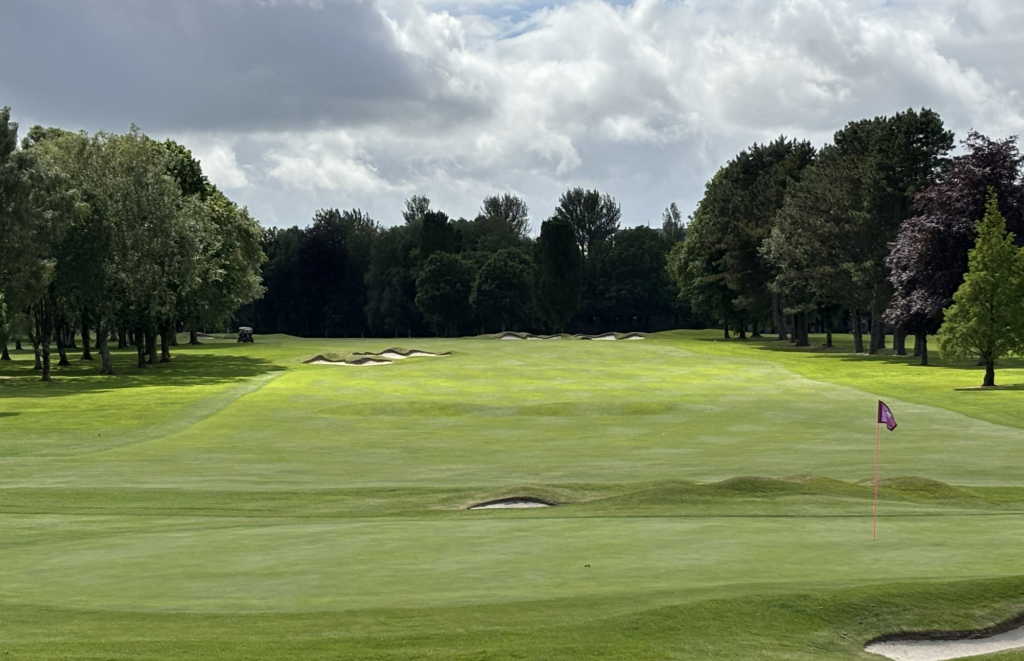
Cork Golf Club is something else. The club was formed in 1888 and has been located at Little Island since 1897, growing from humble beginnings as a four-hole course into a nine-hole layout by 1901, and a full 18-hole championship course soon afterwards. After the First World War, the club made its most consequential decision: entrusting a major upgrade to Dr Alister MacKenzie, then considered the most creative golf architect in Britain, who subsequently created such masterpieces as Augusta National, Cypress Point, Royal Melbourne and Pasatiempo. Design and construction were not to exceed £600.
Money Well Spent
What they received for that sum is a course that carries its MacKenzie lineage not as a boast but as a simple, settled fact. The kind of place that does not need to tell you it is special, because the first green will tell you itself — in its contouring, in the putt you misread, in the moment you crouch down to read it again and realise, with a mixture of admiration and frustration, that you are entirely out of your depth and completely, helplessly in love.
MacKenzie believed that the best golf courses should reward intelligent play over brute force. That strategy should matter more than length. That a golfer should be able to look at a hole and see multiple routes to the pin, each with its own risk and reward, none obviously superior, all requiring commitment. He was right then. Playing Cork Golf Club now, in an era when most new courses have abandoned those principles entirely, it feels like reading a great novel in a world that has forgotten how books work.
The Drive Onto the Island
Cork Harbour opens around you on the approach to Little Island — broad tidal stretches, old stone walls, wooded slopes, flashes of water between the trees and the railway lines that carry ordinary life past the gates of somewhere extraordinary. There is no grand entrance. No gatehouse designed to impress. The club has played host to major Amateur and Professional Championships over the years, including the Irish Open in 1932, Irish Professional Championships, and Irish Close Championships — and it has never once felt the need to mention any of it unless asked.
The air carries something here. It is not quite links air — not that salt-sharp coastal clarity — but something richer and older. The smell of heathland turf and limestone and the particular earthiness of ground that has been played over for more than a century by golfers who understood what they had found. By the time you reach the first tee, the world beyond the harbour has already receded. Little Island has you now.
A Course That Changes Its Face
What MacKenzie understood about Little Island — what he must have seen immediately when he walked this ground in the early 1920s — was that it was not one landscape but many. He did not try to iron those differences into a consistent whole, he celebrated themHe used them. He built a routing that moves through contrasting environments with the ease of a story that knows exactly where it is going.
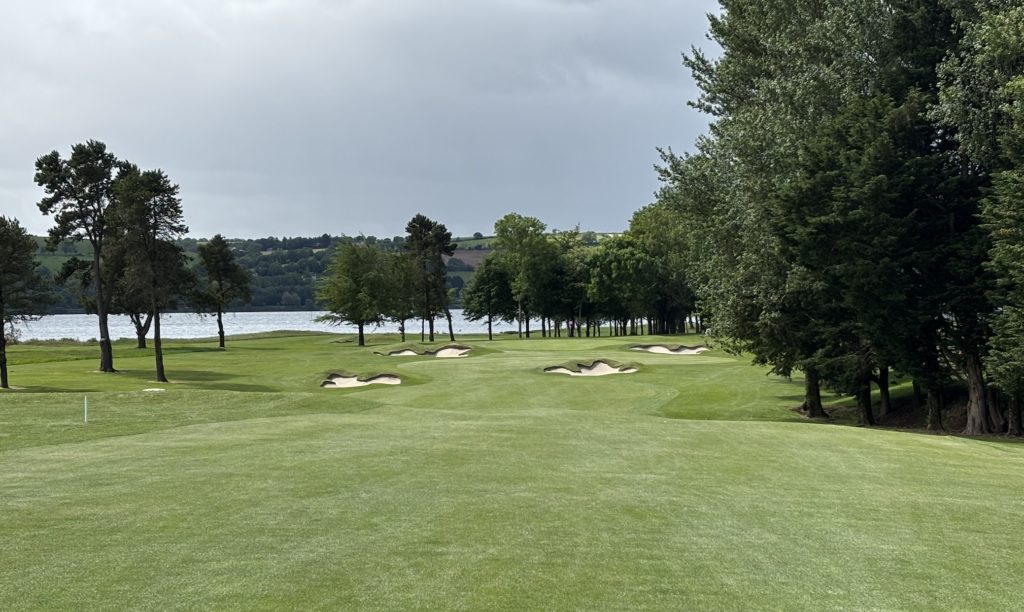
The design incorporated his signature undulating greens, large and free-form bunkers and substantial contouring. The opening holes climb gently through mature trees and rolling heathland, MacKenzie’s greens introducing themselves immediately — large, beautifully contoured, reading entirely differently at ten feet than they appeared from fifty yards. You will three-putt one of these early greens. Nearly everyone does. Do not be embarrassed. Be educated.
Then the course descends toward the estuary, and everything changes. Gorse thickens beside the fairways. The river presses close. The wind, which seemed absent in the trees, materialises from somewhere over the harbour and begins to make its opinions known. The terrain grows more rugged, more dramatic, more willing to punish the shot that was almost good enough.
And then — just when you think you understand what Cork Golf Club is — the quarry arrives.
The Quarry Holes: Golf on Another Planet
There is no adequate preparation for the quarry section. You can read about it, as you are doing now, and nod with understanding, and still arrive at the relevant tee and feel that you have walked through a door into somewhere entirely new.
Limestone walls rise abruptly around the routing. The terrain becomes ancient and industrial simultaneously — a reminder that this ground served a completely different purpose before golf claimed it, and that the land has not forgotten its former life. MacKenzie did not hide these features. He embraced them with the enthusiasm of an architect who understood that drama cannot be manufactured, only recognised and used.
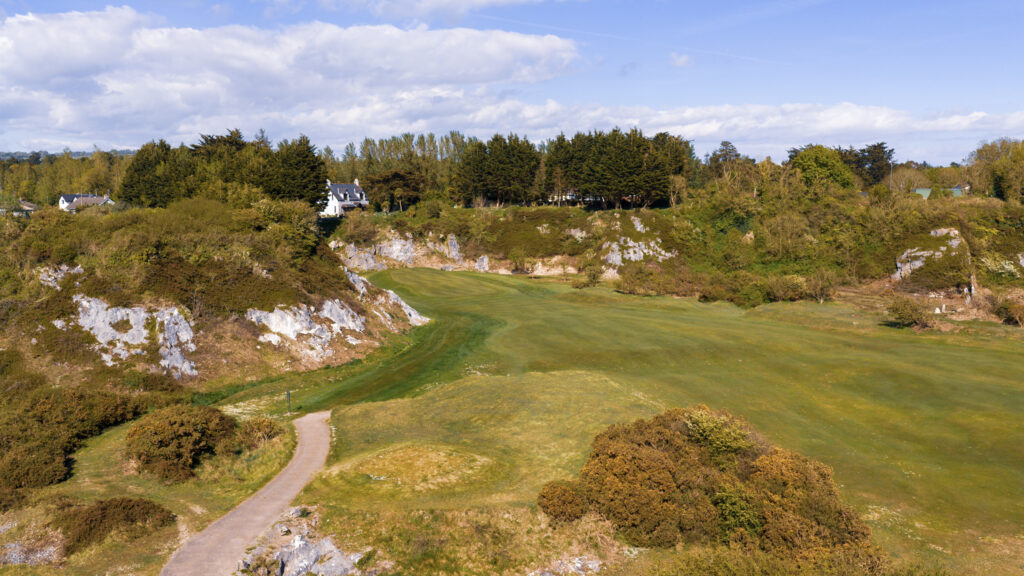
Before the quarry fully takes hold, the 6th hole earns its own chapter in the story of Little Island. Known as Spion Kop, it takes its name from a rocky hill in South Africa — the site of a battle during the Second Boer War on 24th January 1890 — and it served as the caddies’ lookout point when caddies were a regular feature at Cork Golf Club. That history is not merely decorative.
Standing here, with the harbour below and the course laid out in both directions, you understand why this elevated vantage point was chosen — by caddies scanning the ground ahead, and by MacKenzie himself, reading the land for what it might become. The hole demands a committed tee shot that respects the terrain as much as the distance. It is the kind of hole that rewards the golfer who pauses, looks, and thinks — exactly the golfer MacKenzie designed this course for.
Twenty-Five Feet Up and a World of Decisions
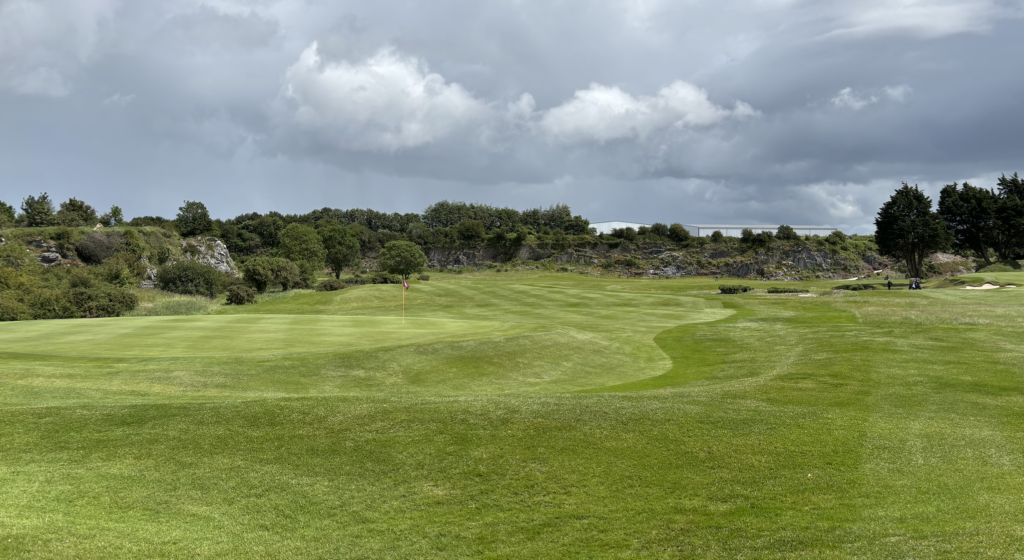
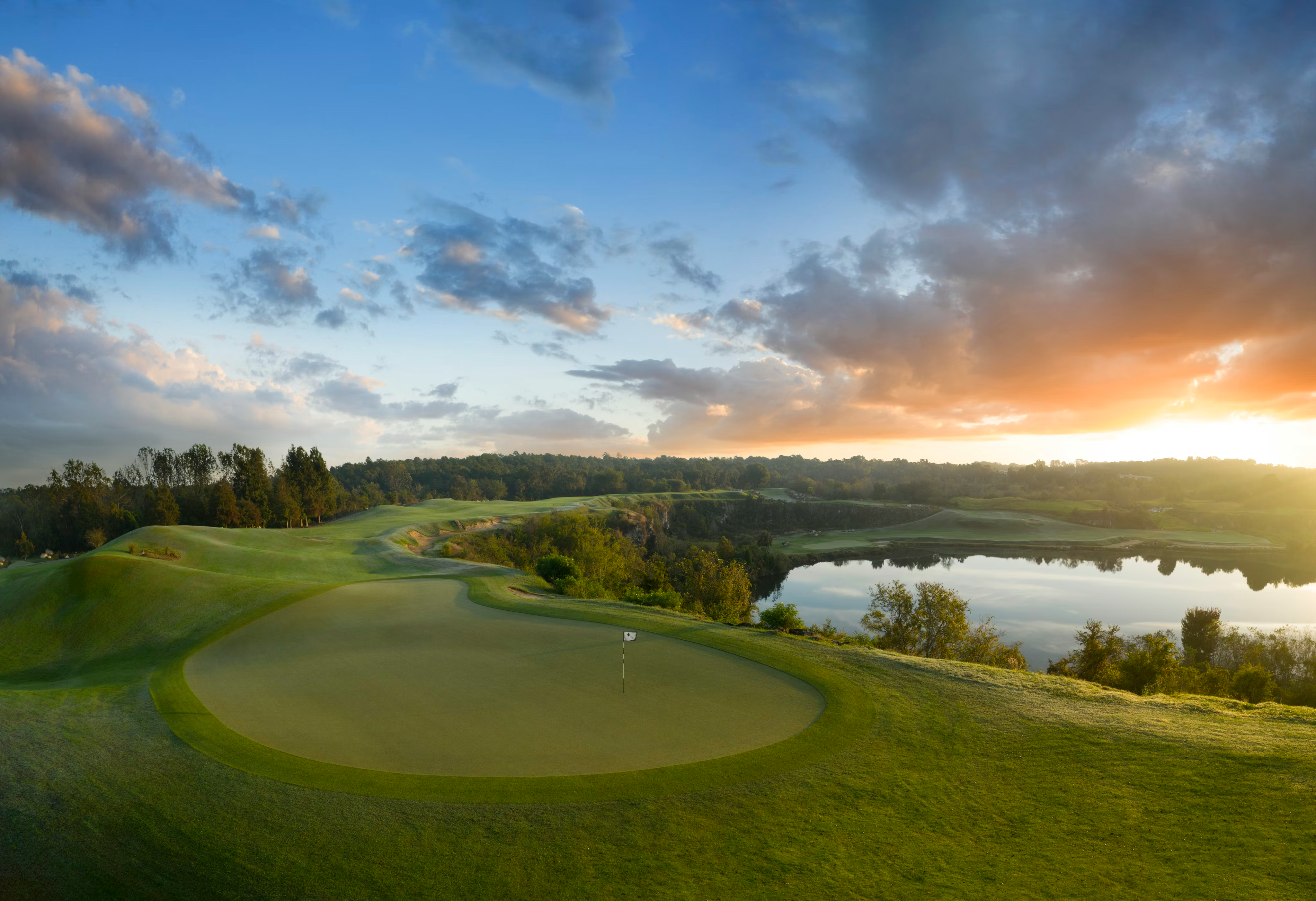
The 8th hole at Cork Golf Club is one of the most visually arresting and strategically demanding par fours in Irish golf. Playing 428 yards from the white tees, this sweeping dogleg immediately announces itself with a tee shot from an elevated platform.
From the tee, the view is both exhilarating and daunting. The brave and the bold will instinctively be drawn to the left side of the fairway, and rightly so. It is from here that the ideal angle to the green opens up. But MacKenzie, ever the strategist, does not give this advantage away freely. Threatening gorse and well-positioned fairway bunkers lurk on the left, punishing any drive that strays too far from the intended line. It is a classic risk-reward proposition: commit to the aggressive line and the hole yields its secrets; waver, and the consequences are swift and costly.
More Drama on Your Approach
The approach to the 8th green at Cork Golf Club is one of the most deceptive challenges on the entire course. At first glance, the absence of greenside bunkers, one of only two greens on the course without this traditional MacKenzie defence, might suggest a degree of mercy from the architect. It does not.
The towering rock face that rises dramatically behind the putting surface immediately seizes the eye and the imagination, looming over the scene with an almost theatrical menace. Yet it is largely a visual distraction, not a genuine threat to the golf ball. The real danger is far more subtle and far more punishing. The large two-tier green demands absolute precision in both club selection and landing zone, It is pure MacKenzie, the course smiling at you with open arms while quietly picking your pocket.
The Holes That Make the Journey Worth It
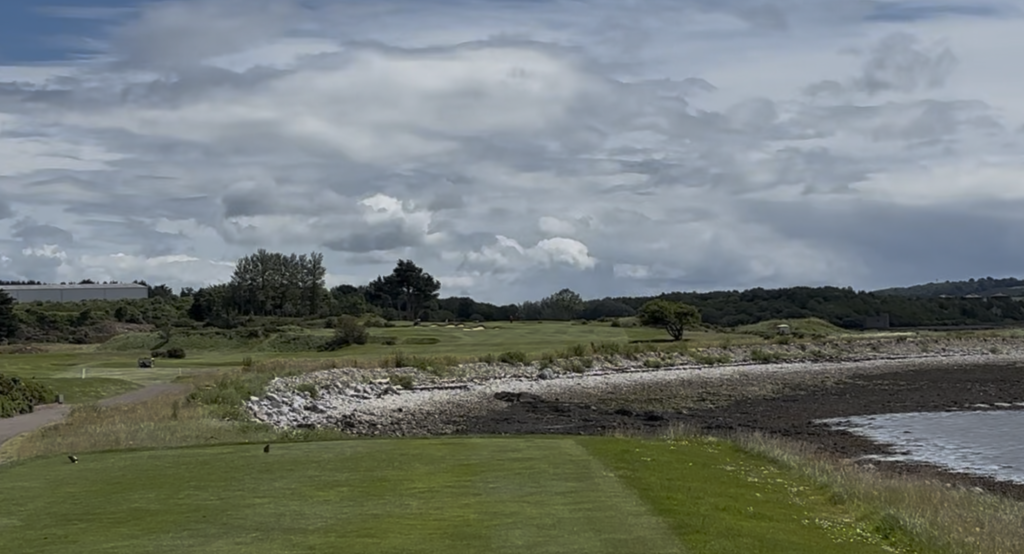
The par 4 4th is the course’s great declaration — one of the finest inland par fours in Ireland, full stop. Playing beside the estuary, the tee shot demands a bold carry over the shoreline to find the fairway. The approach into a narrow green with the harbour wind rising is not a shot you play on autopilot. It is a shot you commit to, or you don’t. The consequences of hesitation are clearly visible in the greenside bunkers to your left. The hole is visually stunning in the way that only truly strategic holes can be. Beauty and threat occupying exactly the same space, inseparable from each other.
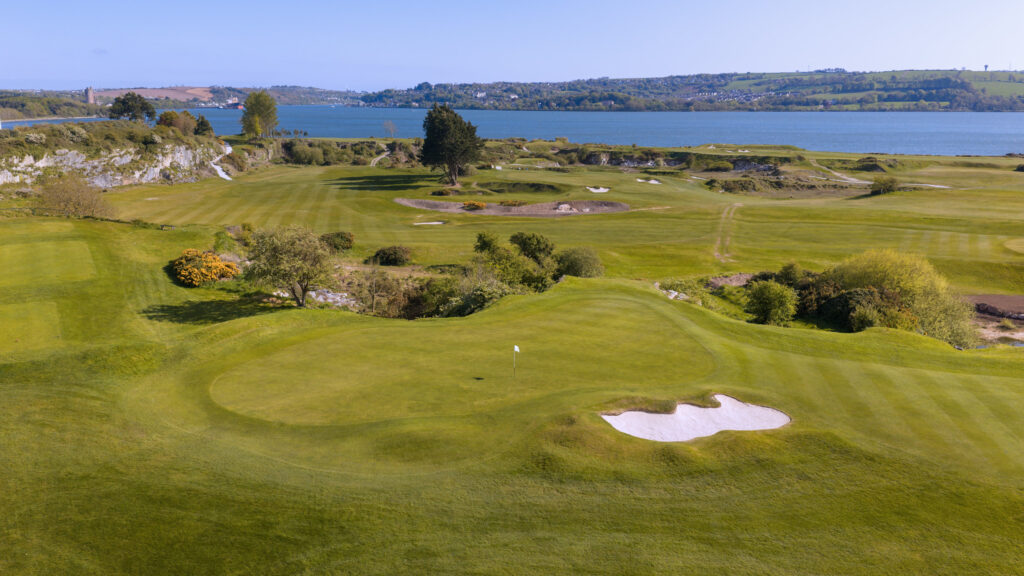
The par 5 11th curves around the quarry edge with a green perched near its rim like a thought left deliberately unfinished. MacKenzie’s strategic complexity is total here. There are decisions to make at every stage of the hole, and none of them is without consequence. Beside the fairway stands a Spanish Chestnut tree, marking the spot where Seve Ballesteros drove during his visit to Cork Golf Club on 15th August 1983. Seve birdied the hole and went on to shoot a bogey-free four under par 68. It is the kind of detail that Cork Golf Club accumulates naturally — history settling into the landscape like sediment, quietly, over time.
The Closing Grip
MacKenzie understood something about momentum and tension that many modern course designers have forgotten. The closing stretch at Cork Golf Club does not ease. It tightens. A sequence of demanding par fours occupies the final holes, each requiring concentration and commitment, the course holding onto your full attention until the very last shot drops and releases you, finally, back into the ordinary world.
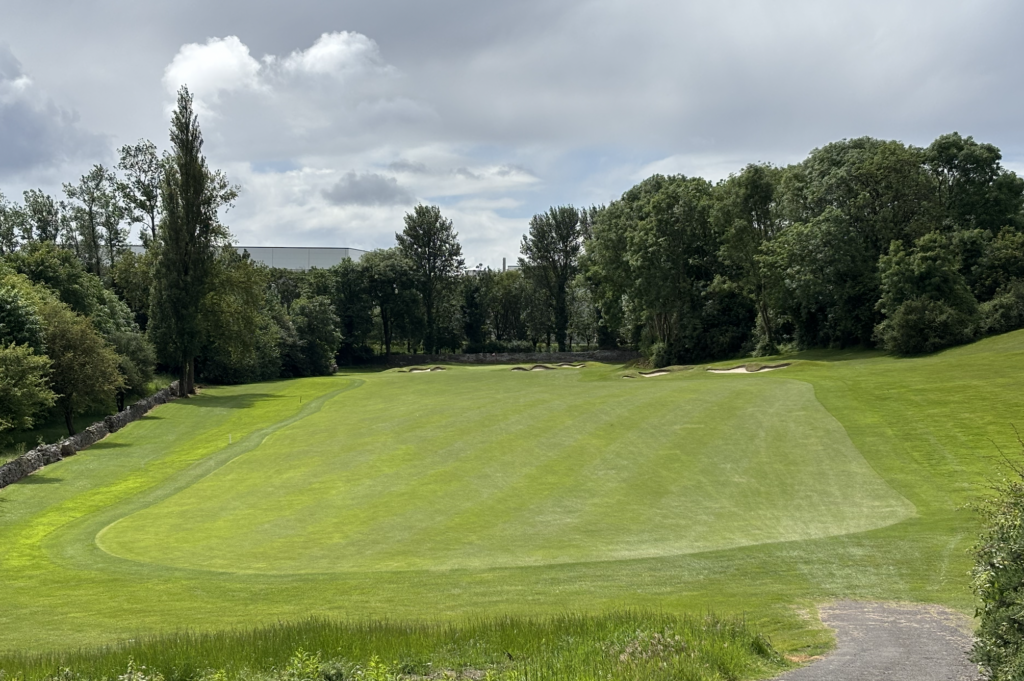
The 17th hole is one of the most talked-about holes in the closing stretch of what is widely regarded as one of Ireland’s finest MacKenzie designs. Part of a relentless finish of five consecutive par fours that begins at the 13th. The 17th arrives when legs are tiring and scores are on the line, precisely the kind of pressure MacKenzie loved to engineer.
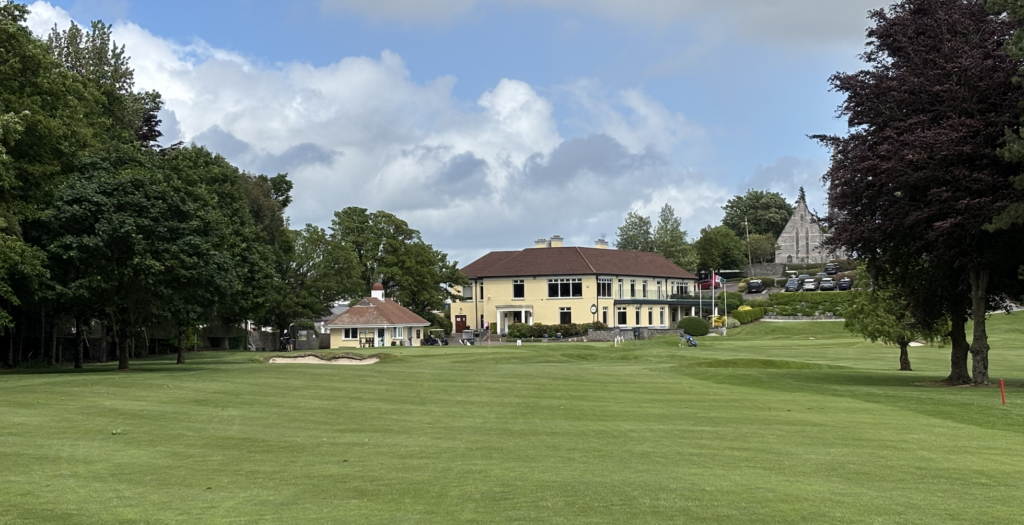
The 18th is firmly in the category of holes that demands a quality tee shot at minimum and a precise approach to the green. This ensures that no round at Cork can be rescued without a fight to the very end. The hole particularly suits a golfer who can shape a left-to-right fade, suggesting a tee shot that calls for controlled ball flight rather than brute force. Classic MacKenzie thinking, where strategy and execution matter as much as power.
You will walk off the 18th green slightly differently than you walked onto the first tee. Something will have shifted. You will not immediately be able to name it. MacKenzie happened to you. And Little Island. And more than a century of golfers who stood on these same tees, faced these same angles, misread these same greens, and walked away with the same feeling you now carry.
The World Beyond the Gate
Cork Golf Club exists within one of Ireland’s richest regions for the curious traveller. Cork City is minutes away. The English Market and its extraordinary food culture, the traditional pubs and independent restaurants, the narrow streets that carry the energy of a city that has always known its own value. Cobh sits across the water, its colourful harbour-front and maritime history. Titanic’s final port of call — wearing its story with quiet dignity. Fota Island and its wildlife park lie close. Kinsale and the coastal routes of East Cork offer afternoon drives of genuine beauty. Midleton Distillery, for those whose interests extend beyond golf, makes a case for Irish whiskey that is difficult to argue with.
What MacKenzie Left Behind
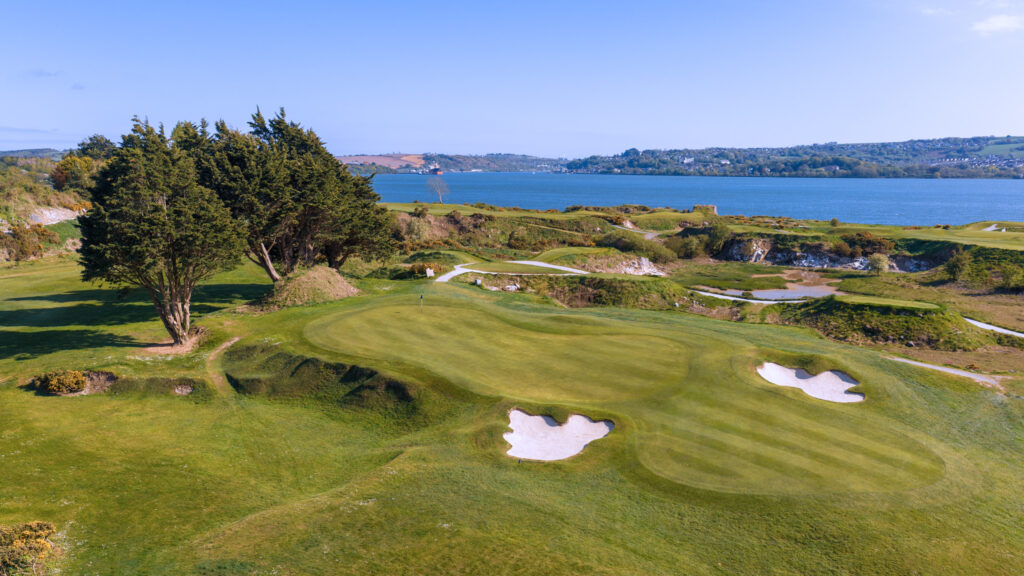
There are more famous courses in Ireland. There are more photographed ones, more celebrated ones, more courses that appear on the global lists that people consult when planning these journeys. Cork Golf Club is not competing with any of them. It does not need to. It is a championship course sculpted from historic limestone quarries and unfolding along the banks of Cork’s inner harbour. A place where Alister MacKenzie’s design intelligence survives intact, where the terrain is unlike anything else in the country. And where golf and landscape have been in conversation for so long that they have become fluent in each other’s language.
Playing here feels like stepping into a living chapter of golf architecture history. Not as a museum exhibit, but as a fully alive, completely demanding, strategically inexhaustible golf course. It will beat you in the same ways today that it beat the best players in Ireland a hundred years ago.
Go. Cross onto Little Island. Let the limestone walls rise around you. Let MacKenzie’s greens reveal their secrets one misread putt at a time.
Some places teach you something about golf. Cork Golf Club teaches you something about what golf was always supposed to be. That is a different lesson entirely. And it is worth every mile of the journey.
At a Glance
- An Alister MacKenzie designed 18 hole championship parkland course
- Pristine golf course with undulating greens
- Excellent practice facilities
- Large comfortable clubhouse with warm welcoming staff
- Well stocked professionals shop with helpful and welcoming staff
- Location: just under 3 hours drive from Dublin and a 15 minute drive from Cork City Centre
- For information about tee times and pricing, visit the Cork Golf Club website here
- Best time to visit: May to September
Thank you to Peter Loughnane, the General Manager at Cork Golf Club for hosting us. Thank you to all the staff at Cork Golf Club for looking after us. Aerial photos courtesy of Cork Golf Club.
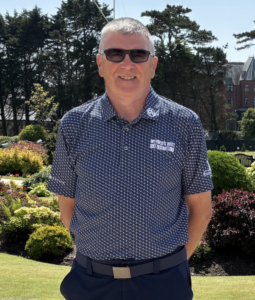
Jim Callaghan CCM is a former Club Manager with experience of overseeing several top Scottish Golf Clubs.
Now, as European Editor of Golf Operator Magazine and World’s Best Golf Destinations, he shares insights into club operations and his golfing adventures across Europe.
Jim is also an Ambassador for premium clothing brand Fenix Xcell Clothing and also for the Spanish local DMC, Costa Verde Golf and is host of @JimTheSeniorGolfer on YouTube.
If your club/resort or brand wants to reach over 450,000 golfers, contact Jim at [email protected] or call 0044 (0) 78522 88732
Featured Post

 0
0