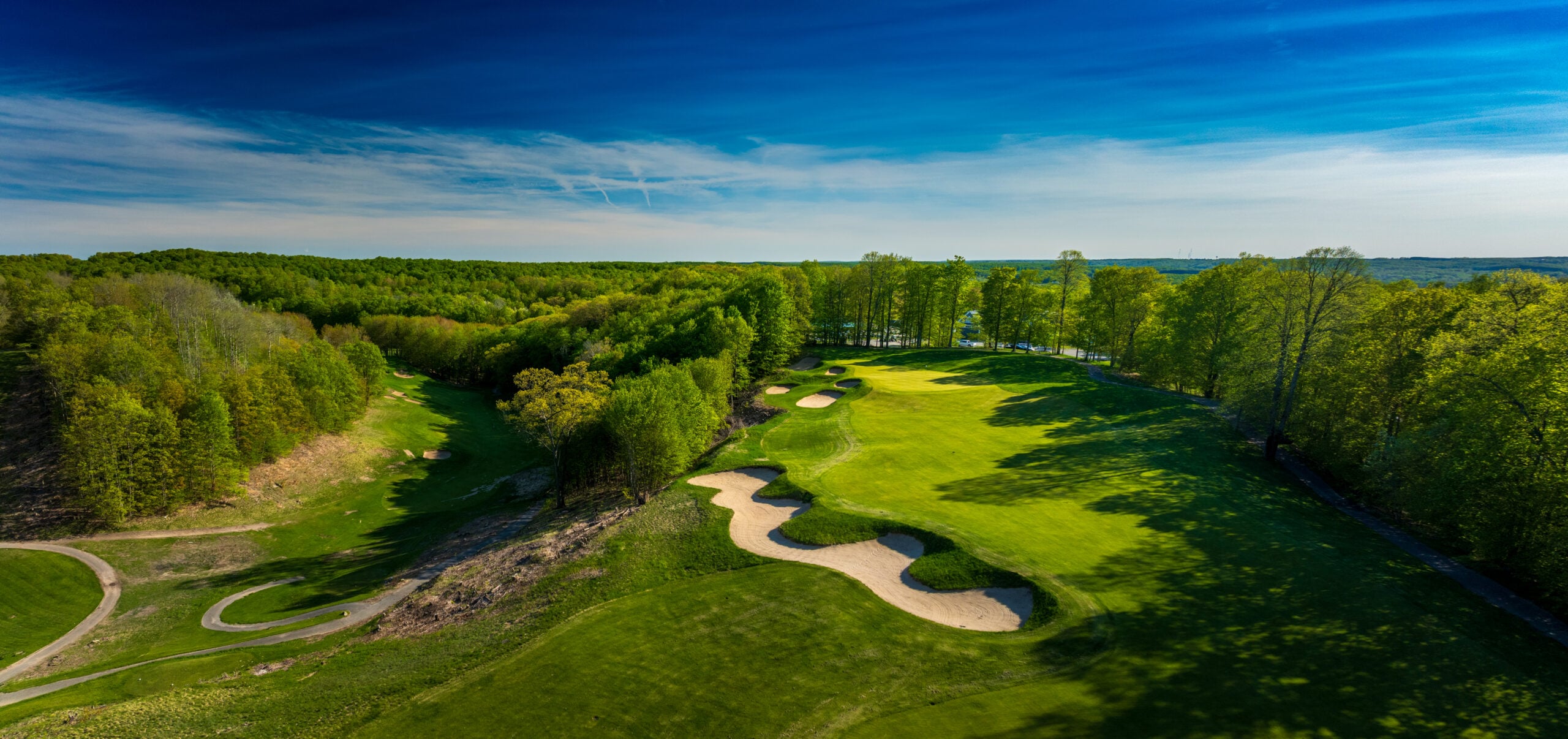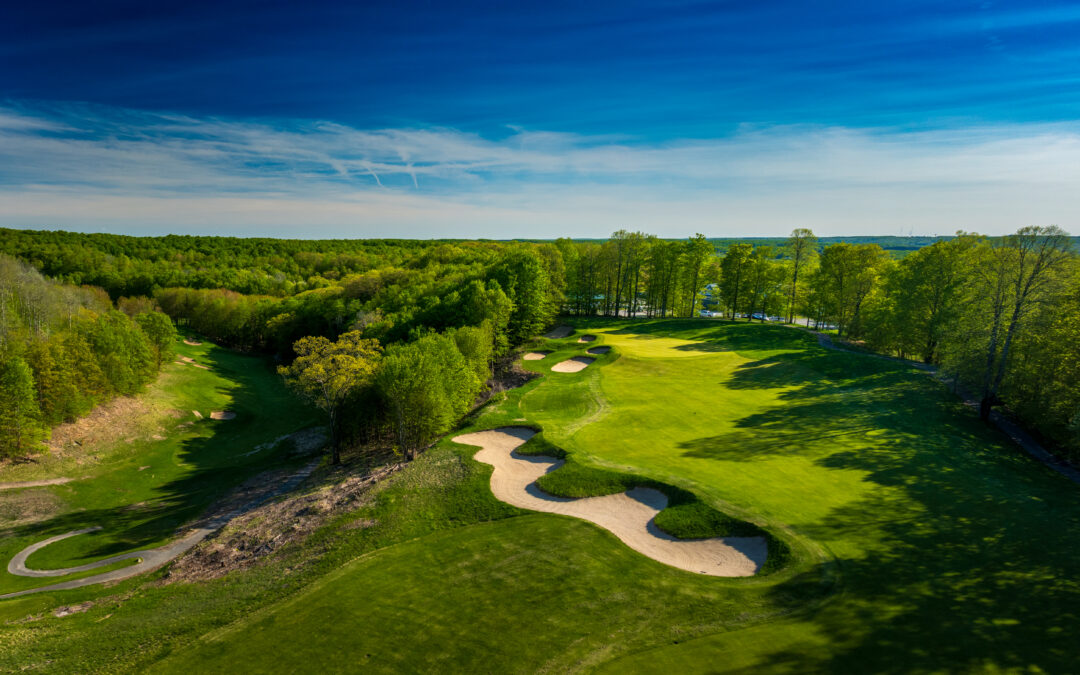
There is a moment on the drive into Treetops when the landscape begins to shift, and you realize—almost subconsciously at first—that this is not going to be a typical golf trip. The road narrows, the trees close in, and the terrain begins to roll in a way that feels more like the Appalachians’ foothills than anything most people associate with Michigan. Then, just as quickly, it opens, revealing long views across the Pigeon River Valley, and with that comes the first real indication of what makes this place so compelling.
Treetops does not feel like it was constructed in the traditional sense. Instead, it feels as though it was uncovered, as though the golf was always here waiting to be revealed rather than imposed upon the land. That distinction matters because it shapes everything that follows. In an era where many resorts try to impress immediately—leaning on scale, luxury, or spectacle to make a fast impact—Treetops takes a more patient and ultimately more effective approach. It builds on you gradually. The first-round intrigues you, the second deepens that intrigue, and by the third you are no longer evaluating the property so much as you are immersed in it, with the outside world fading in a way that feels increasingly rare.
What completes that first impression is not just the landscape, but the way the resort settles into it. The lodge feels warm rather than formal, the kind of place where you exhale instead of check in, and the accommodations are comfortable without trying too hard. Rooms are designed as much for recovery as for rest, with balconies and windows that keep drawing your attention back toward the valley. There is a quiet satisfaction in coming off the course, stepping into a space that feels familiar within minutes, and knowing that the next round is already waiting somewhere just beyond the trees. It feels less like arriving at a resort and more like arriving somewhere you are meant to slow down.
The Land: The Silent Star of the Experience
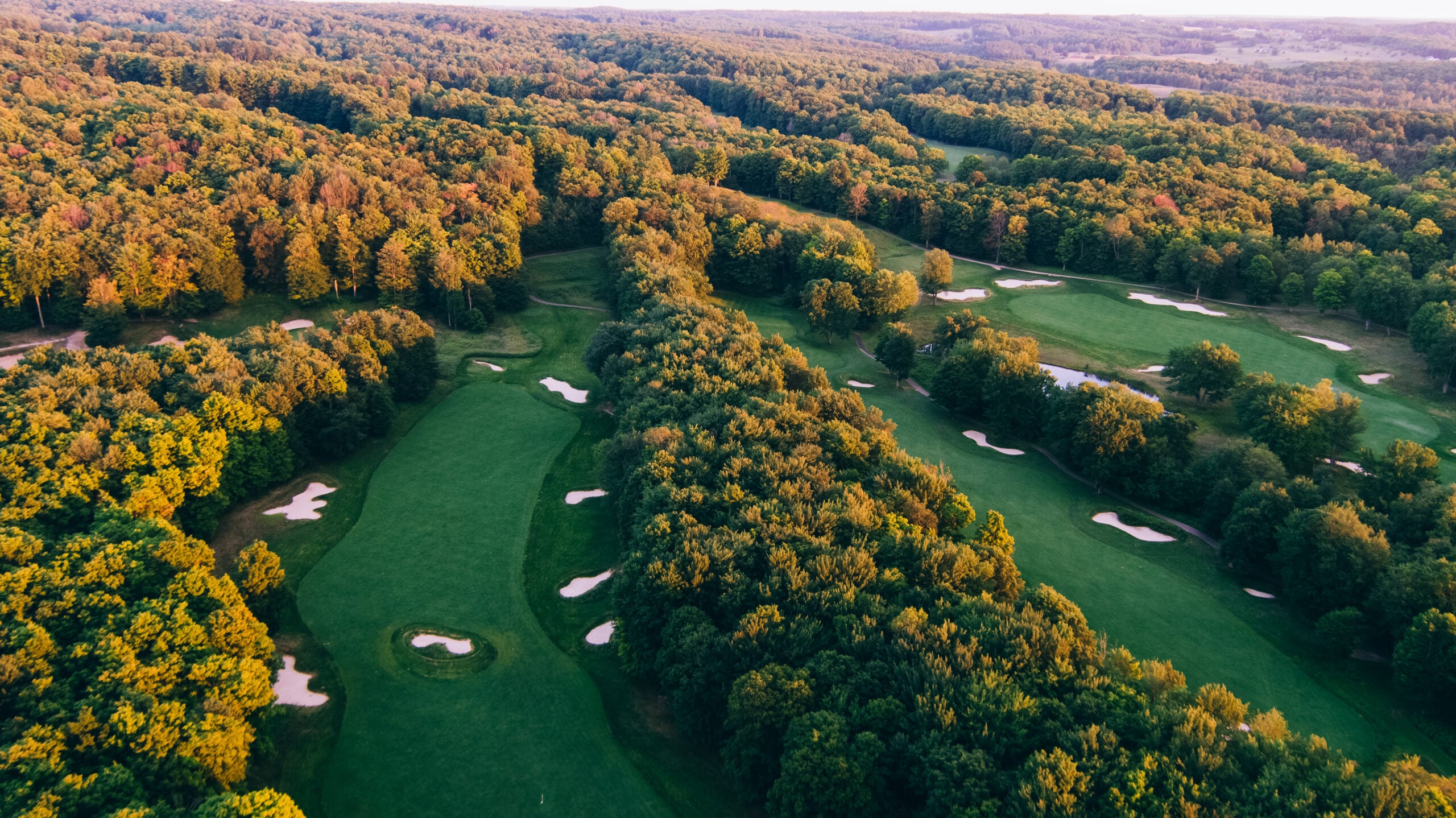
The land is the foundation of everything at Treetops, and it is what enables the resort to achieve what many destinations cannot. Northern Michigan offers a natural environment that is both visually dramatic and inherently calming. The air carries a clarity that subtly changes your pace, encouraging you to move a little slower and pay a little more attention. Summer days stretch deep into the evening, often allowing time for an extra loop or a longer drink after the round. At the same time, the fall transforms the entire property into something almost cinematic, with layers of red, gold, and burnt orange wrapping every fairway.
You notice the details as the day unfolds. The sound of the wind moving through the trees becomes part of the experience, as does the way the temperature drops just enough in the late afternoon to make you reach for a pullover. The stillness between shots takes on a presence of its own. This is not just scenery; it is atmosphere, and it becomes part of the trip’s rhythm in a way that is difficult to replicate.
None of this is manufactured. The elevation changes are real, the corridors through the trees are natural, and the long views are earned rather than cleared. Treetops does not attempt to compete with the land. It allows the land to lead, and in doing so, it creates something that feels increasingly rare in modern golf travel—authenticity without effort.

No Groundhog Day Golf at Treetops
There is a quiet frustration in modern golf travel that rarely gets acknowledged. You book a resort with multiple courses expecting variety and discovery, only to find repetition. The courses may have different names and different scorecards, but the visual patterns feel the same, the rhythm rarely changes, and by the second or third round there is an unmistakable sense that you have already played this experience before.
That predictability is exactly what Treetops avoids.
Each course is built from a completely different perspective, offering a distinct philosophy about how the game should be played and experienced. One course demands execution, another invites trust, another teaches through subtle design, and another simply allows you to enjoy the game without pressure. You are not making small adjustments from round to round; you are recalibrating your entire approach.
If you plan the trip correctly, that contrast becomes one of the defining elements of the experience. The Masterpiece is best played when your focus is sharp and your energy is high, while the Premier is ideal for settling into a second-round rhythm where timing and flow matter more than force. The Signature rewards patience and thoughtful decision-making, and the Tradition provides the perfect opportunity to step back and simply enjoy the game. By the time you have played all five courses, there is no sense of repetition. Instead, there is a clear appreciation for how varied and engaging golf can be when it is done properly.
The Masterpiece: Where the Game Tests You — And Reveals You
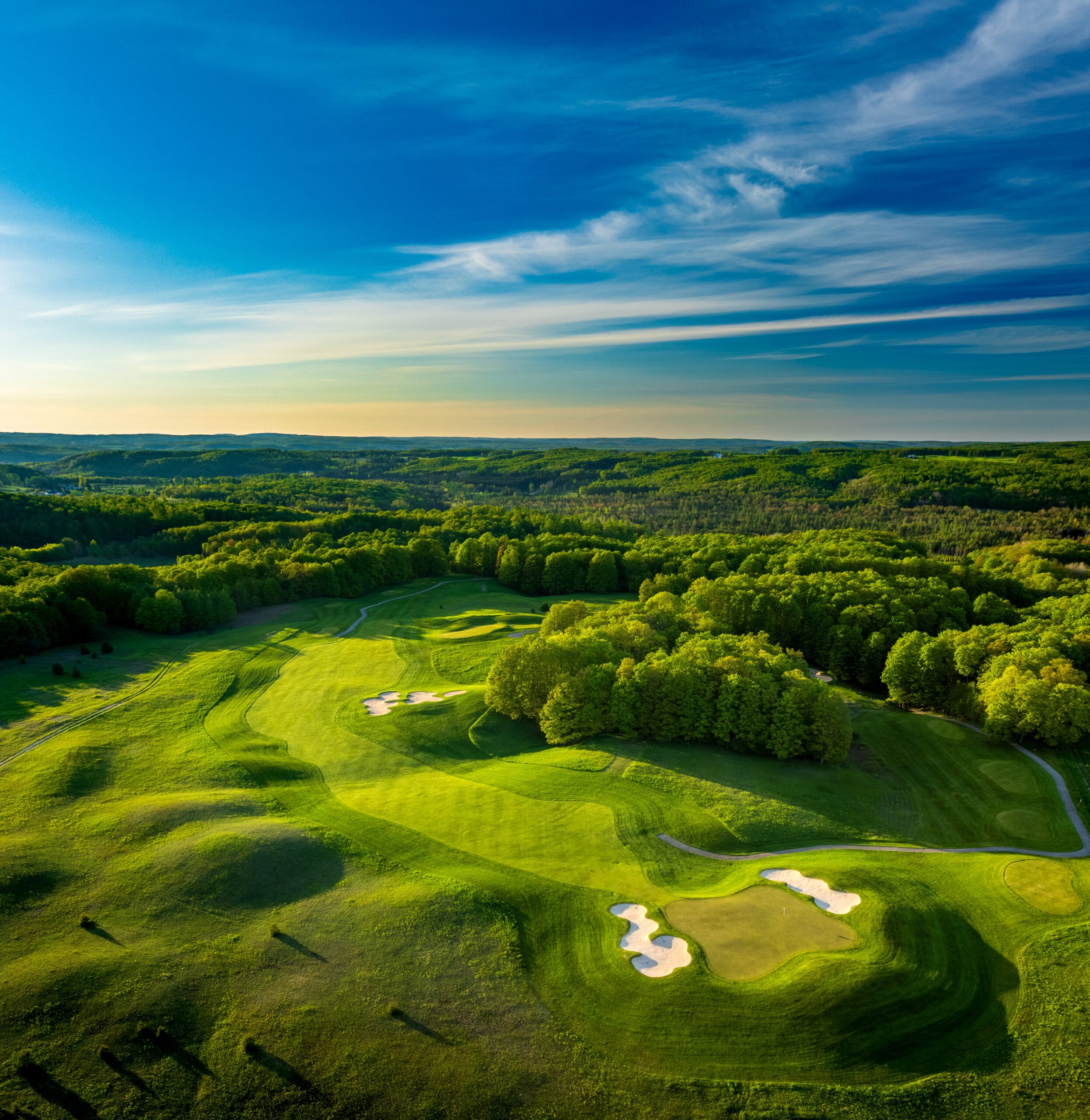
Robert Trent Jones Sr.’s Masterpiece establishes its intent immediately, and it does so without subtlety. Elevated tees drop into valleys framed by dense forest, and the carries—both real and perceived—require complete commitment. There is a downhill par three where the green sits quietly below, surrounded by trees, and for a moment everything feels suspended, from the club in your hands to the silence before the swing.
The course does not rely on trickery, nor does it attempt to disguise its challenge. Everything is presented clearly, which in many ways makes it more demanding because success depends entirely on execution. At some point during the round, the realization becomes unavoidable that this is not a course you simply manage. It is a course you confront. You either step into the shot with conviction or you do not, and the outcome reflects that decision with complete honesty.
The Premier: Where the Game Slows Down — And Starts to Make Sense
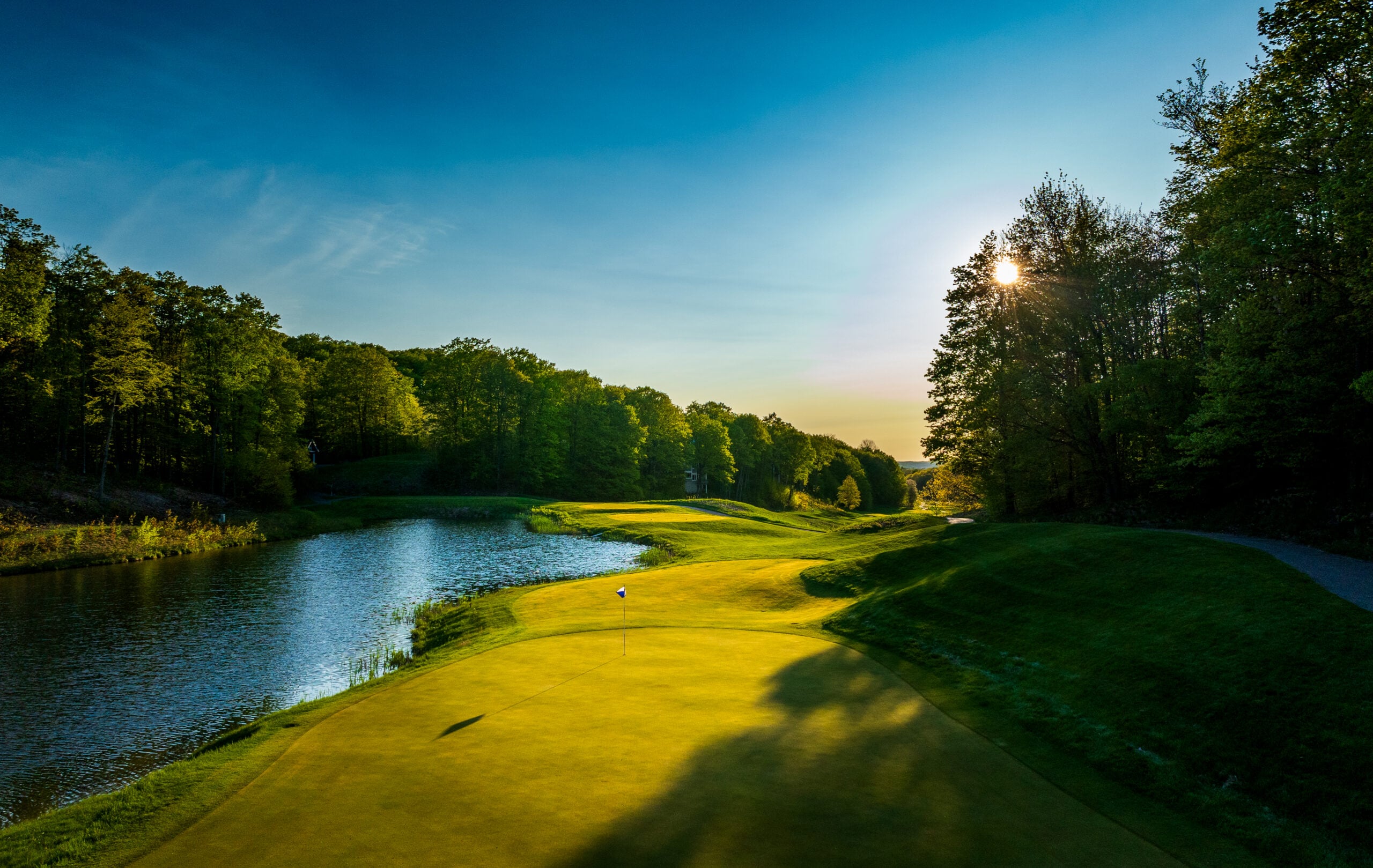
The transition to the Premier is immediate and noticeable, not because it is significantly easier, but because it feels more intuitive. Tom Fazio uses the land in a way that quietly guides your decisions, creating visual cues that help you understand the correct play without forcing it. Fairways subtly gather well-struck shots, greens open from the proper angles, and the entire course begins to feel coherent in a way that builds confidence.
There are holes where the fairway bends gently through the trees, and if you trust what you see rather than trying to manufacture a different shot, the hole unfolds naturally. This sense of clarity changes the way you play. Your swing becomes freer, your decisions more confident, and by the end of the round you are not just satisfied with your performance but aware of why it worked.
The Signature: Where You Start to See the Game Differently
Rick Smith’s Signature course introduces a more thoughtful and instructional element to the experience. It does not overwhelm you with difficulty, but it consistently asks for better decisions. Tee shots call for specific shapes, approach shots reward positioning, and greens invite a level of creativity that encourages you to think beyond the obvious.
As the round progresses, you begin to see those options more clearly. You start to recognize the intended shots earlier, and as that recognition grows, so does your trust in those decisions. The result is a subtle but meaningful shift in your game. Without any conscious effort to change your swing, you find yourself playing more effectively, guided by design rather than force.
The Tradition: Where the Game Slows Down — And Feels Like Golf Again
The Tradition offers something many modern courses overlook entirely: a natural sense of flow. The fairways are welcoming, the greens are receptive, and the movement from hole to hole feels unforced and intuitive. This is where the pressure begins to ease and the game returns to something more familiar and enjoyable.
Late in the day, as the light softens and the pace slows, the experience becomes less about score and more about presence. Conversations stretch between shots, matches become lighter in tone, and the simple act of playing begins to take precedence over performance. It is an essential balance in the overall experience, ensuring the trip never becomes one-dimensional.

Threetops: Where the Trip Comes Alive
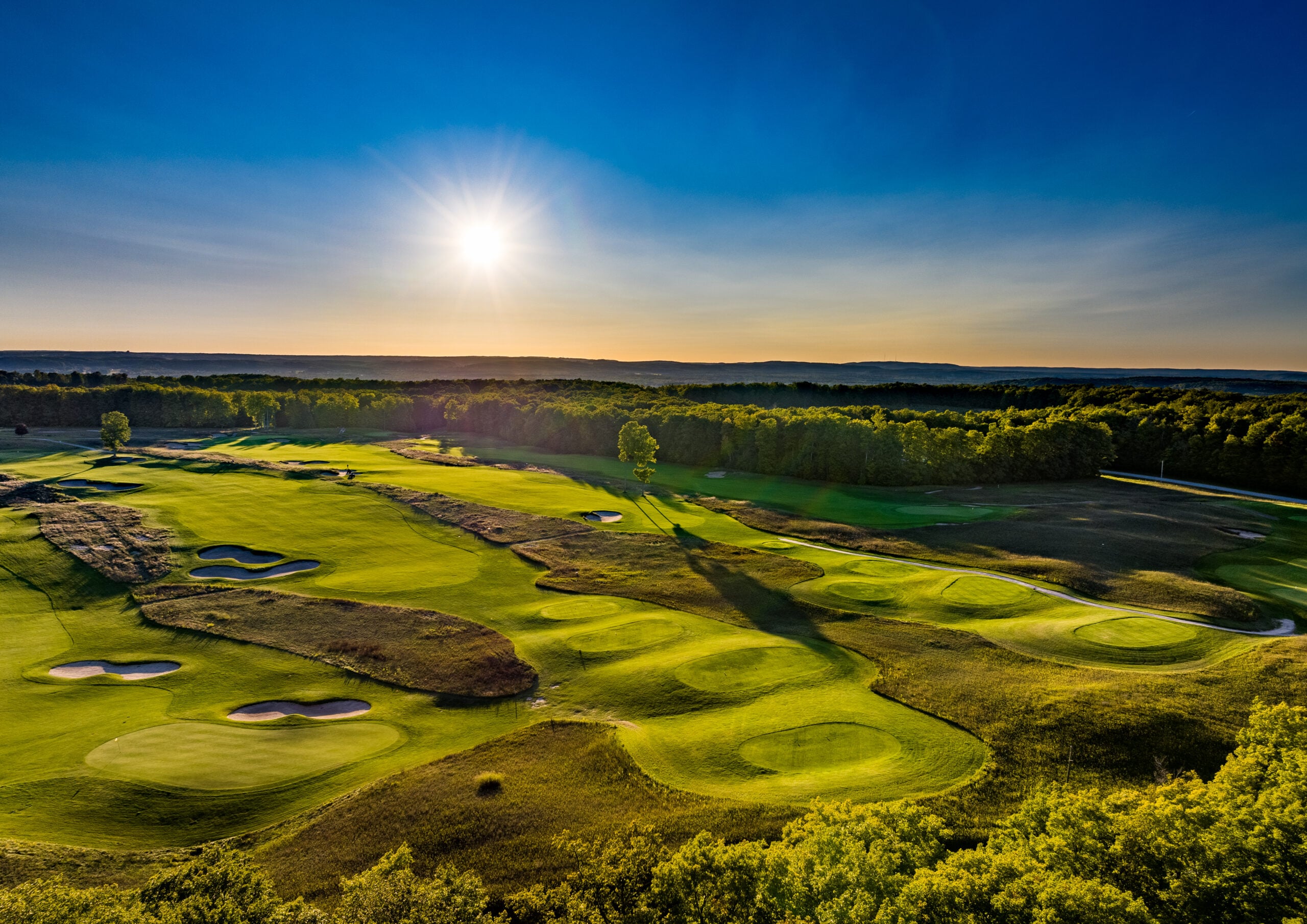
Perched high above the valley, Threetops serves as the emotional center of the Treetops experience. It is not simply a par-three course but a setting where the energy of the trip shifts noticeably. Each tee shot carries across open space, each green feels exposed and visible, and the shared nature of the experience brings everyone into the moment.
The seventh hole remains one of the most recognizable in golf entertainment, as it was here that Lee Trevino made his million-dollar hole-in-one during the ESPN Par-3 Shootout. That moment continues to resonate, but what defines Threetops is not just its history. It is the way each group contributes to the atmosphere, with players watching one another’s shots, reacting together, and sharing in the outcome.
The Rhythm: Where the Trip Becomes Something More
The rhythm of a Treetops trip extends well beyond the golf itself. Mornings begin with anticipation, and thirty-six holes quickly become the standard rather than the exception. Afternoons transition naturally into conversation, with rounds replayed and stories refined with each retelling.
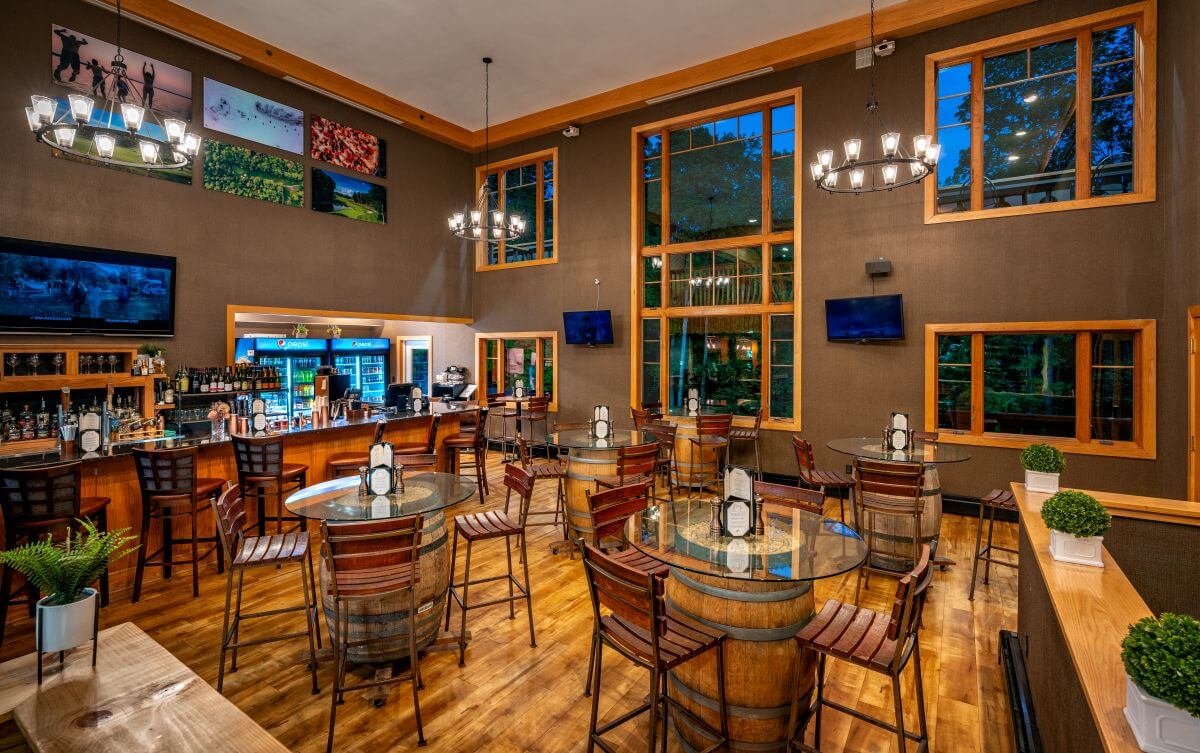
By evening, the bar becomes a central gathering place, where the experience takes on a different dimension. A strong selection of Michigan craft beers and microbrews gives the space a distinctly local character, offering everything from lighter, refreshing options to more complex and full-bodied choices. The bar fills with energy as groups begin to mix, conversations move between tables, and the shared experiences of the day create an easy sense of connection.
The food complements this atmosphere perfectly, leaning toward hearty, satisfying options that feel appropriate after a long day on the course. Whether it is something from the grill or a well-earned meal shared with friends, it adds to the sense that the entire day has been thoughtfully constructed. For those seeking a quieter end to the evening, the spa provides a restorative alternative, while others retreat to their rooms, stepping onto balconies as the last light fades across the valley.
It is in these moments that the trip begins to take on a deeper meaning. The rounds themselves may begin to blend, but the individual experiences—the shots, the conversations, the atmosphere—become more defined and more memorable.
What Treetops Gets Right
Many golf resorts offer multiple courses, excellent conditioning, and impressive scenery. Far fewer understand how to create contrast, build rhythm, and turn a collection of rounds into a cohesive and memorable experience.
Treetops succeeds because it does not rely on a single defining feature. Instead, it builds gradually, allowing each round and each moment to contribute to a larger whole. By the end of the trip, you are no longer evaluating the resort in terms of individual components. You are reflecting on an experience that feels complete, balanced, and distinctly its own.
And that is ultimately what sets Treetops apart.
Featured Post

 0
0