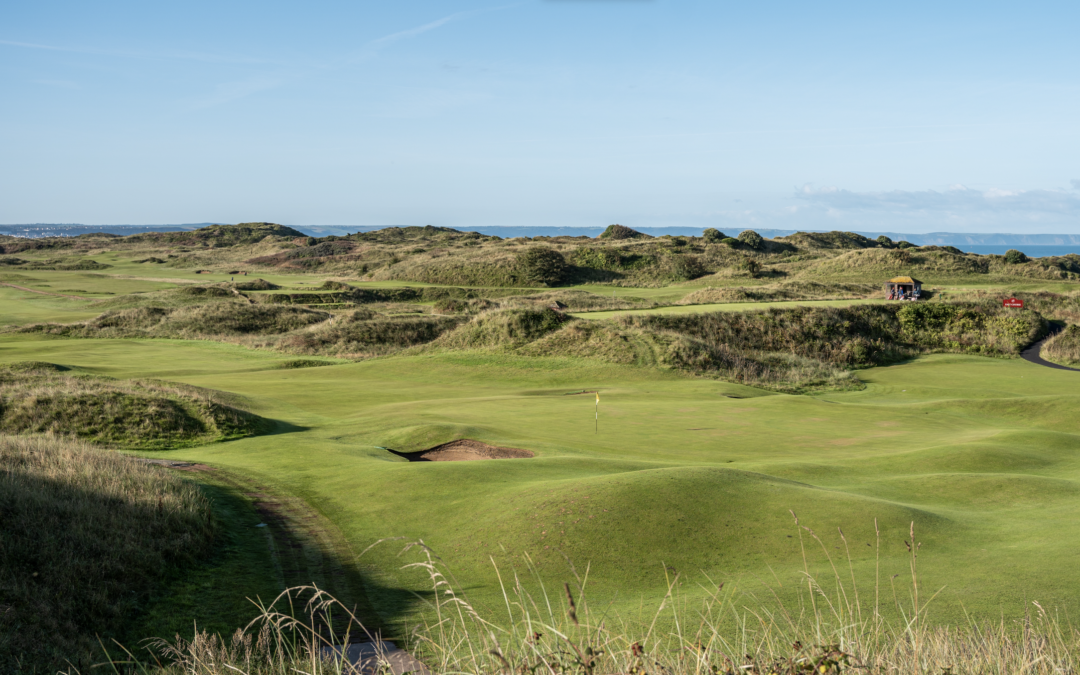
Saunton Golf Club has rested quietly along the North Devon coastline for well over a century, though somehow it feels far older than that. There are courses that appear designed, shaped, engineered into existence by modern ambition — and then there are places like Saunton, where the golf seems simply to have emerged naturally from the land itself. Founded in 1897, the club occupies a magnificent stretch of linksland beside Braunton Burrows, one of the largest dune systems in Britain and surely one of the purest settings for golf anywhere in the world. Long before rankings, championships, and glossy magazine features arrived, golfers were walking these rumpled fairways with the Atlantic wind at their backs, testing themselves against the same restless landscape that still defines the course today.
Over the decades, Saunton has earned the admiration of architects, professionals, and seasoned travellers who understand the game at its most authentic. Herbert Fowler laid the foundations of the East Course with characteristic subtlety, later refined by Frank Pennink, but neither man sought to overpower the landscape. They understood what the finest golf architects always understand — that true links courses are discovered rather than constructed. The dunes at Braunton Burrows dictate the rhythm here. The wind shapes the strategy. The fairways roll and fold through the terrain as though they have always belonged.
Experience Matters
At sixty-five years of age, having spent more than four decades chasing golf across the UK and Ireland, Europe, America and beyond, I find myself appreciating courses like Saunton more with every passing year. In younger days, perhaps I searched too often for spectacle — towering dunes, dramatic ocean carries, postcard moments designed to dazzle immediately. But the older I get, the more I value courses with patience. Courses with quiet authority. Courses that reveal themselves slowly, layer by layer, until somewhere around the back nine you realise you’re walking a truly exceptional piece of golfing ground.
Saunton East is exactly that kind of course. The first impression is almost understated.
You leave the clubhouse and step into a vast natural landscape where the outside world seems to disappear remarkably quickly. Braunton Burrows stretches endlessly across the horizon — rolling dunes softened by marram grass, sandy paths winding between hollows shaped by centuries of Atlantic weather. There is no sense of theatre here. No forced grandeur. And yet, standing on that opening tee with the wind brushing across your face, you feel something increasingly rare in modern golf — authenticity. On the way to the first tee you pass the first tee on the West course. We didn’t have time to play that course but it looks impressive.
East is Best
The East Course does not announce itself dramatically in the opening moments. It doesn’t need to. There’s a quiet confidence about the place, the sort that comes only with age and substance. Saunton knows exactly what it is.
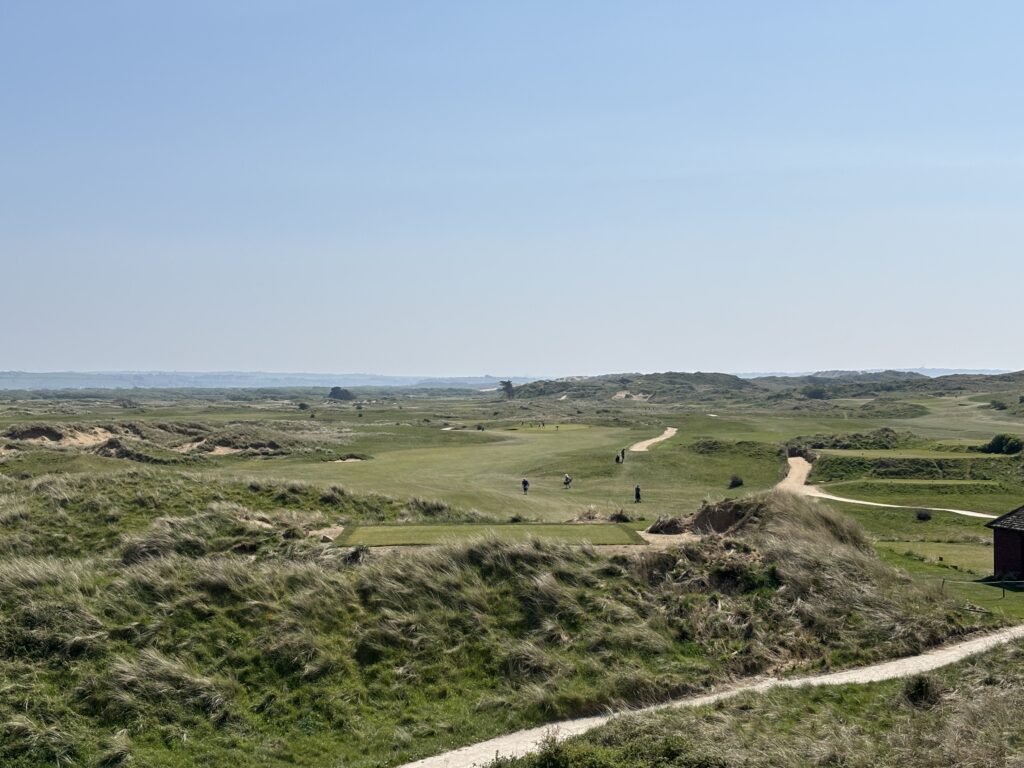
Your opening tee shot
The opening hole is a proper introduction to links golf in its purest form. A long par four, 464 yards with an elevated tee, frequently played into the prevailing wind, it demands immediate commitment. The fairway appears generous enough from the tee, but appearances at Saunton can be deceiving. Position matters enormously. Drift even slightly out of place and the approach becomes infinitely more awkward, the angles tightening, the contours beginning to work subtly against you.
It’s classic links architecture — strategic rather than theatrical. That, to me, is real links golf.
Tough and Unforgiving
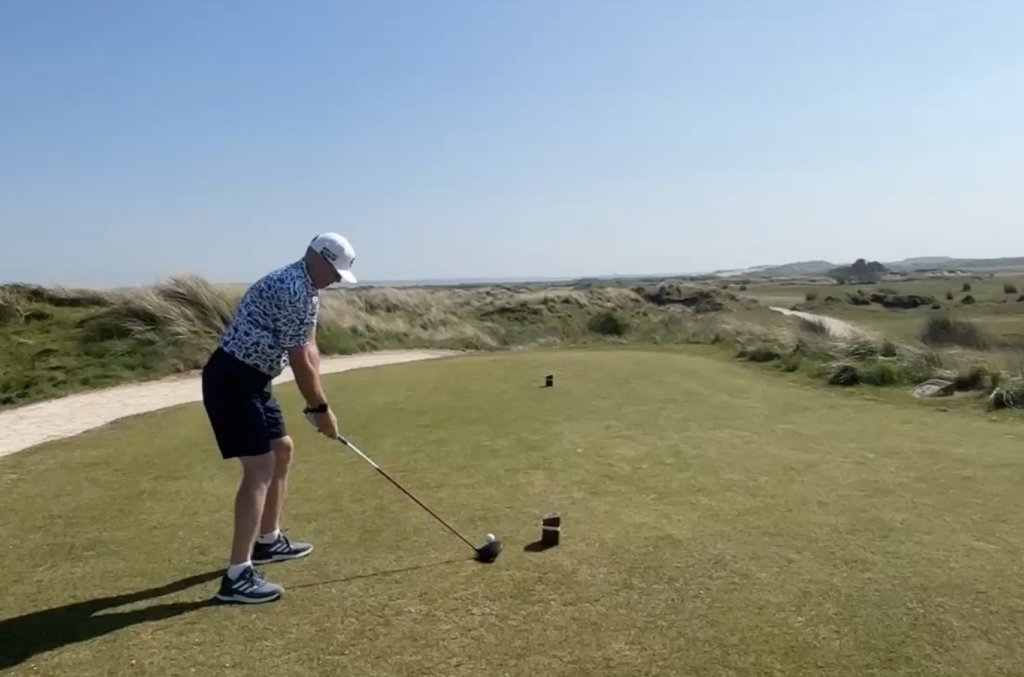
The blind tee shot on the 4th
The 4th hole captures the soul of Saunton East beautifully. Nothing about it feels forced or exaggerated. Standing on the tee, much of the fairway disappears beyond the folds of the dunes, leaving you to trust your eye and commit fully to your chosen line. In the changing light and ever-present wind, picking the correct angle is far from straightforward.
We played it straight into the breeze, the sort of heavy Atlantic wind that seems to gather strength as the hole unfolds. Even after a solid drive, there was still a long iron left into the green — a wide target on paper, yet far less inviting when approached from distance on firm running links turf. It’s the kind of hole where par feels honestly earned, not gifted, and one that quietly reminds you how demanding true links golf can be without ever appearing unfair.
You begin to realise that Saunton’s greatest strength lies in its restraint.
A 115 yards “Tiddler”
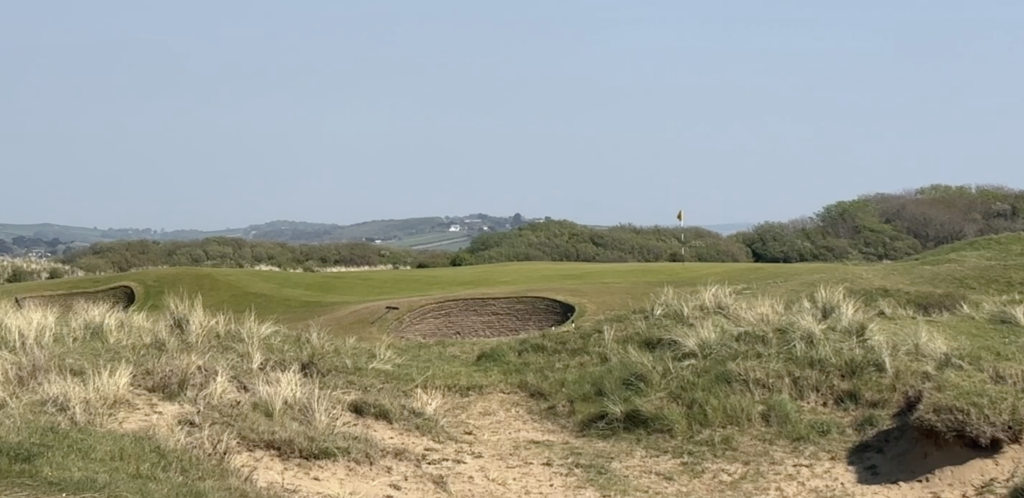
The short 5th hole
By the time you reach the short par-three 5th, appropriately named “Tiddler,” the course has your full attention. It’s one of those deceptively simple holes that links golf produces better than any other form of the game. Standing on the tee, the wind swirls uncertainly between the dunes, making club selection feel more like educated guesswork than science. The green appears inviting enough until you miss it slightly and discover the tightly mown run-offs and awkward recoveries waiting patiently nearby.
There’s nowhere to fake your way around Saunton East. Every shot asks a question.
The wonderful thing is that the course never becomes exhausting or unfair. Some championship links can leave you feeling battered by the constant examination, but Saunton maintains a certain rhythm throughout the round.
The Unique Experience of Braunton Burrows
Walking these fairways, you become increasingly aware of the landscape itself. Braunton Burrows is unlike almost anywhere else in British golf. The scale of the dunes creates an extraordinary sense of isolation. There are moments during the round where you can look in every direction and see nothing but fairways, sand hills, rough grasses, and enormous open sky. Golf feels wonderfully small here, humbled by nature rather than imposed upon it.
The light across the Burrows changes constantly. Clouds drift in from the Atlantic, shadows sweeping slowly across the dunes before sunlight suddenly breaks through again, turning the fescue fairways golden for a few brief moments. It is deeply atmospheric golf. The sort of place where you find yourself pausing between shots simply to absorb your surroundings. And always, there is the wind. Not always violent, not always severe, but always present.
Like every great links course, Saunton East changes personality entirely depending on the conditions. A hole that requires a long iron one day might demand little more than a wedge the next. Fairways that appear wide and generous suddenly tighten psychologically when the breeze freshens off the Atlantic. The same course can feel entirely different within the space of a single afternoon. That unpredictability is part of the magic.
Relief at the Turn
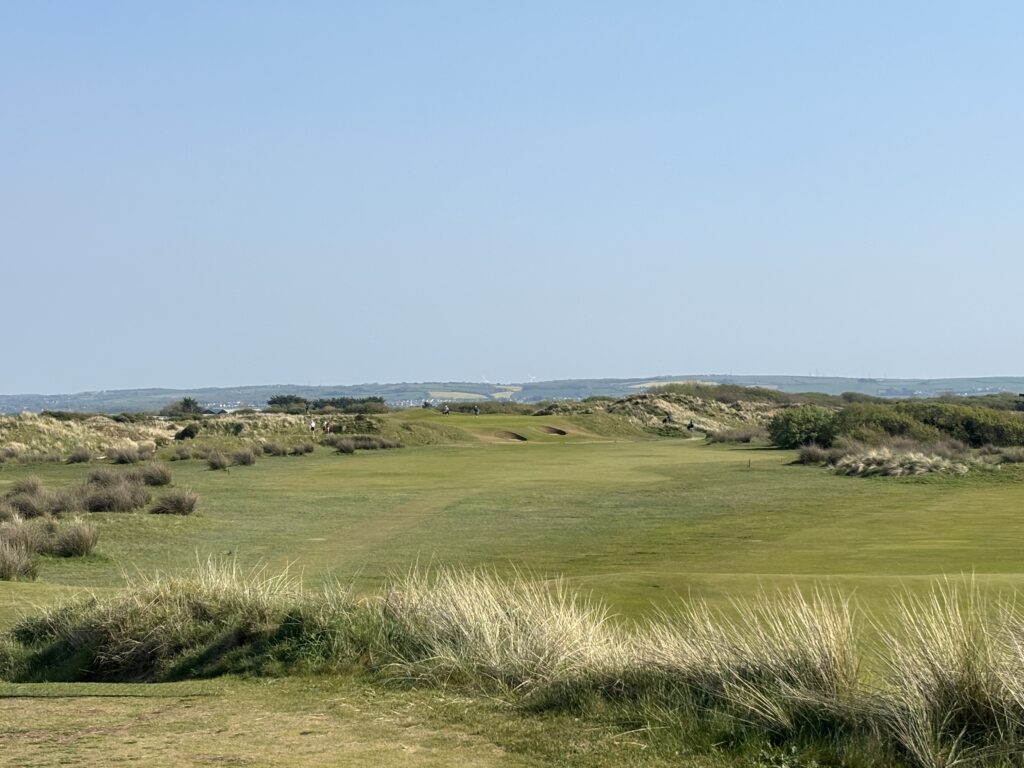
The 10th hole
This hole demands proper judgement. Two well-placed bunkers guard the entrance to the green, and with the hole usually playing into the wind, they sit exactly where doubt begins to creep into the mind. The temptation is to force something heroic, but Saunton rarely rewards impatience. The green itself sits raised within the dunes, and the safest play is to leave a full shot into the target whenever possible. That extra control allows you to flight the ball properly and hold the upper level of the putting surface.
Anything landing beyond the flag can quickly become troublesome. Long is the one place you simply cannot afford to miss, leaving a tortuous pitch back down towards the green from awkward, tight links turf. If you cannot comfortably carry the bunkers with conviction, the wiser choice is to lay up short and trust your wedge game. Like so many holes at Saunton East, restraint and sound judgement are rewarded far more often than ambition.
“Saddle” Up
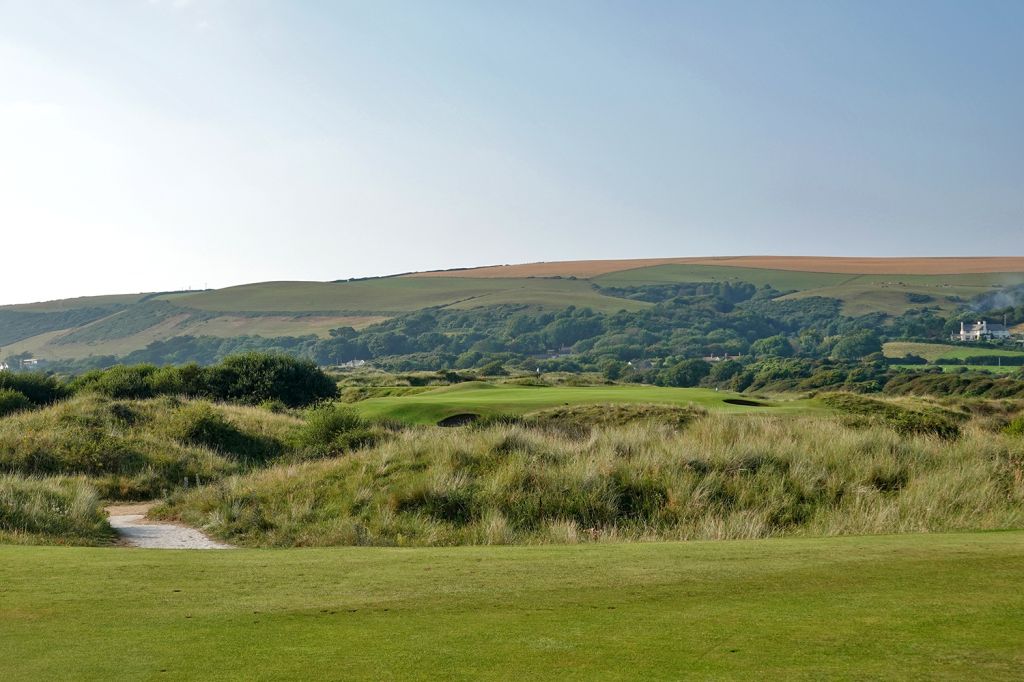
The 13th hole. Photo courtesy of Saunton GC
The short par-three 13th “Saddle”, is another wonderful example of Saunton’s understated brilliance. On paper it appears straightforward enough, but links golf is played as much in the mind as through the swing itself. Depending on the wind, the hole can feel inviting one moment and deeply uncomfortable the next. Standing over the shot, you feel the uncertainty creeping into your decision-making. Commit fully and you might walk away with birdie. Hesitate, and bogey arrives quickly.
From here, the course begins to tighten its grip. The stretch from the 14th through 16th is among the strongest sequences anywhere on the property. These are proper links par fours — not outrageously long by modern standards, but endlessly demanding in their subtlety. By this stage of the round, fatigue often begins to creep quietly into the swing, especially when the wind has been constant all day. Saunton understands this perfectly. The fairways appear slightly narrower. Approaches become harder to judge. Recovery shots require imagination, touch, and patience.
These holes belong to an older style of golf. There’s no interest here in modern power hitting. Saunton East rewards thoughtfulness, strategy, restraint, and experience. You can sense Fowler’s philosophy running through the course — built not through artificial hazards, but through natural movement in the land itself. Then comes the wonderful 17th.
Simple “Goodban”
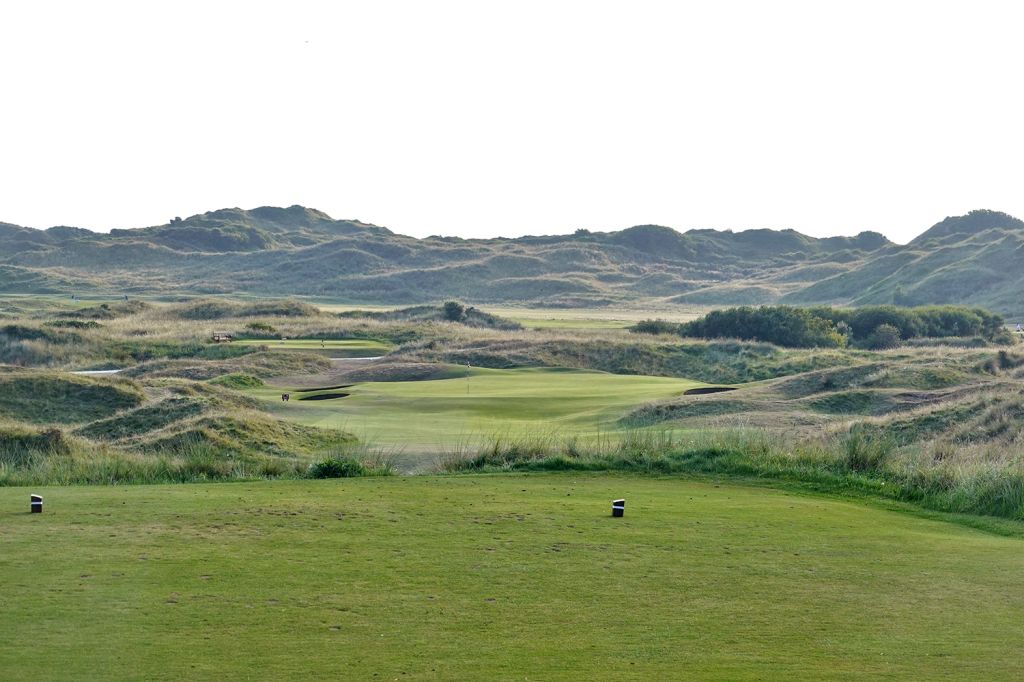
The 17th. Photo courtesy of Saunton GC
“Goodban” is a long par 3. From the whites it plays 186 yards and is often played directly into the Atlantic breeze, it is one of the purest tests on the course. Standing on the tee, exposed entirely to the elements, there is nowhere to hide. No tricks. No shortcuts. You simply have to choose your club, trust your strike, and commit to the shot fully.
The 18th then brings you home with quiet dignity, a fitting conclusion to a course that never once feels the need to show off. By now, Saunton East has worked its way under your skin completely. Not through one spectacular signature hole or dramatic ocean view, but through something far more enduring — consistency of character.
That, ultimately, is what great golf courses possess. Character.
I’ve been fortunate enough to play many of the world’s finest links over the years. St Andrews, The Strand at Portstewart, Royal Birkdale, Ballyliffin, Turnberry — courses that live permanently in the memory of anyone who loves the game. Saunton East belongs comfortably in that company, even if it speaks in a quieter voice than some of its more celebrated rivals.
Final Thoughts
I am so glad to have played Saunton East and now on reflection, am disappointed about not having the time to play the West course. By all accounts it is just as strategically challenging course as the East. Having two excellent courses must be a delight for Saunton’s membership. If I lived anywhere near these courses, I would have no hesitation in joining. Maybe that is my biggest takeaway and regret from visiting Saunton. I just live too damn far away from this golfing heaven…..
At a Glance
- 36 holes of outstanding championship links
- Large well stocked professionals shop
- Friendly atmosphere and welcoming staff
- Lovely clubhouse with outside seating
- Just over a two hour drive from Bristol
- Three hours 45 from Heathrow Airport
- Visit the Saunton Golf Club website here

Jim Callaghan CCM is a former Club Manager with experience of overseeing several top Scottish Golf Clubs.
Now, as European Editor of Golf Operator Magazine and World’s Best Golf Destinations, he shares insights into club operations and his golfing adventures across Europe.
Jim is also an Ambassador for premium clothing brand Fenix Xcell Clothing and also for the Spanish local DMC, Costa Verde Golf and is host of @JimTheSeniorGolfer on YouTube.
If your club/resort or brand wants to reach over 450,000 golfers, contact Jim at [email protected] or call 0044 (0) 78522 88732
Featured Post
 0
0