Wilderness Club: Golf at the End of the Road in Montana
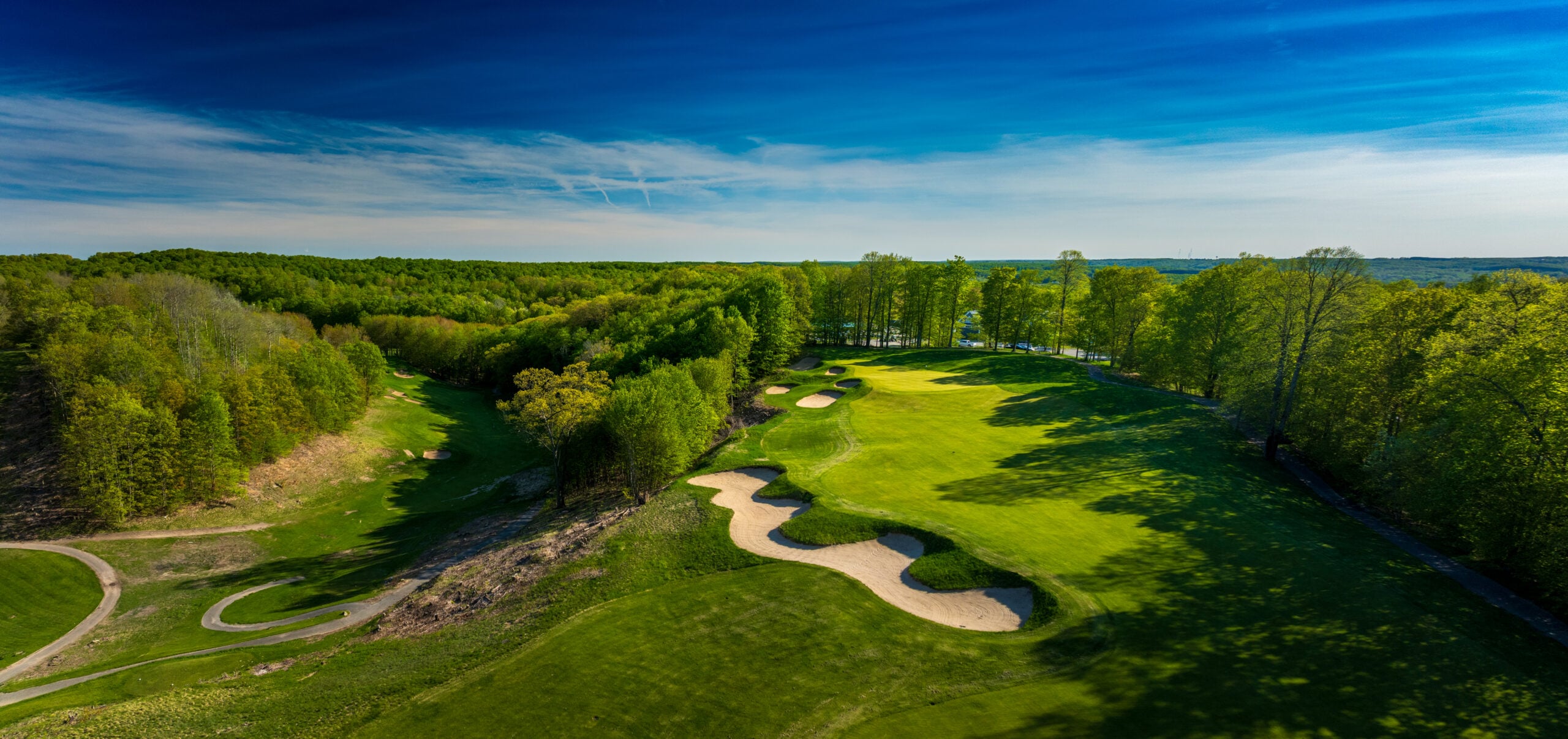
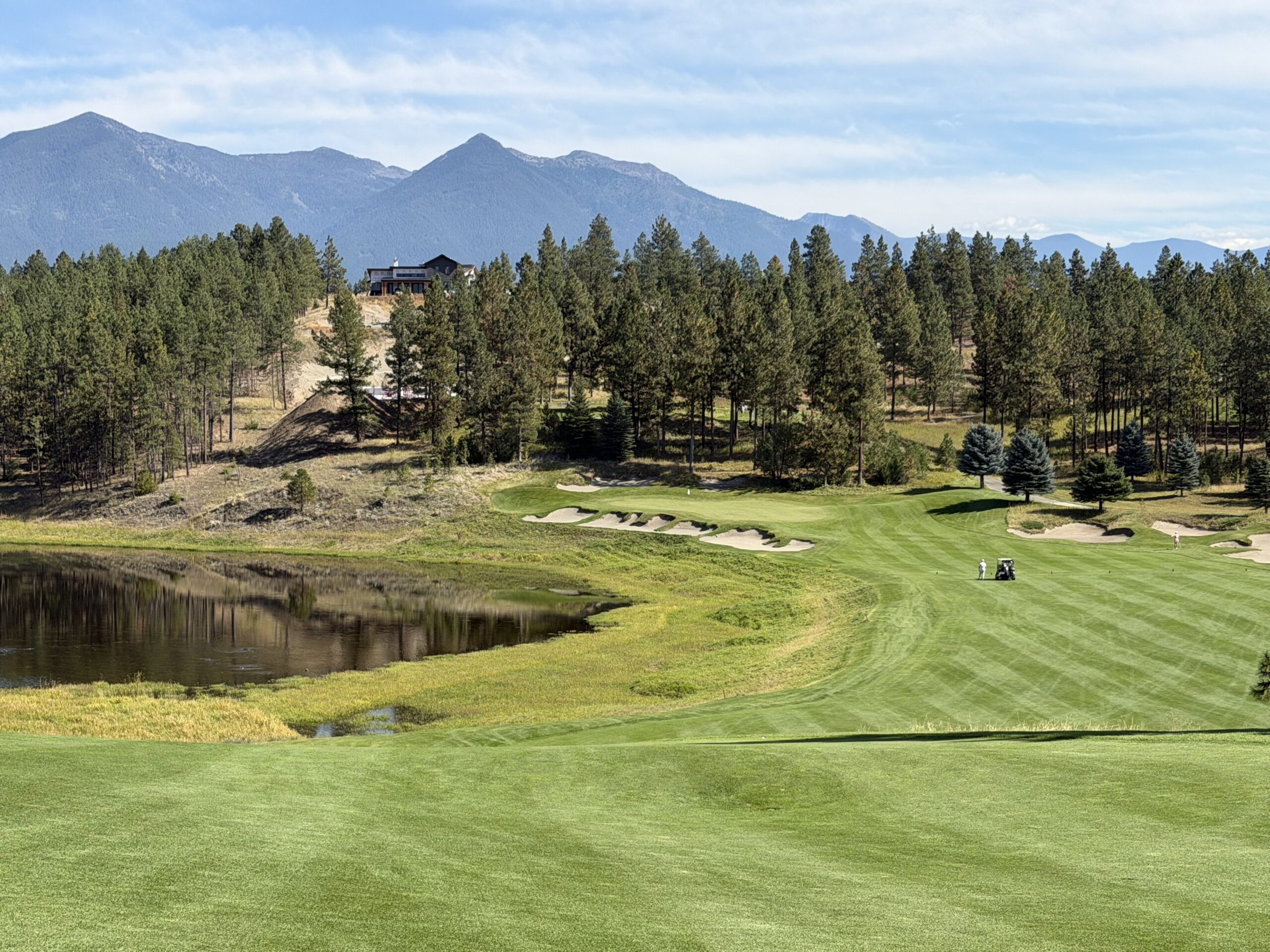 The 12th captures the course’s beauty with its backdrop of trees, mountains, and lakes.
Some golf resorts sit beside the interstate, twenty minutes from an airport, surrounded by Starbucks, strip malls, and six places to buy a hamburger. Wilderness Club is not one of them, and that’s much of its appeal.
Tucked into the far northwestern corner of Montana, just outside the small town of Eureka and only a few miles from the Canadian border, Wilderness Club requires a little commitment to reach. Somewhere along the way the traffic disappears, the towns shrink, the forests thicken, and the mountains grow considerably larger. By the time you pull in, you understand why someone looked at this piece of Montana and decided it would be a wonderful place to build a serious golf course.
The Long Way Round
I flew from London to San Francisco, drove up to Sacramento for a member-guest, picked up a buddy, then carried on north through Bend, Oregon, and Walla Walla, Washington, playing Pronghorn and Wine Valley Golf Club along the way. The highlight was the Columbia River, the road winding beside it for mile after mile through an enormous western landscape. It was tremendous fun, although I wouldn’t recommend quite that much driving to everyone.
The Sensible Route
For everyone else, the simplest option is to fly into Glacier Park International Airport at Kalispell, about 75 minutes away, pick up a rental car, and head north through some beautiful northwest Montana scenery. Missoula and Cranbrook, British Columbia, are alternatives, although both mean a longer drive and, in Cranbrook’s case, a border crossing.
Don’t think of the drive as an inconvenience; it’s the first part of what Wilderness Club is offering. Up here, traffic congestion means the occasional pickup truck in front of you. In a world where everyone is permanently connected, permanently interrupted, and apparently incapable of eating dinner without checking a telephone seventeen times, that kind of distance is becoming a genuine luxury.
Big Sky Country
Montana calls itself Big Sky Country, and I had always assumed that was the sort of thing a tourism board says because it sounds better than Very Large State With Not Many People. It isn’t. Somewhere on the drive north, the sky really does get bigger, and I’ve never quite worked out why. Maybe it’s because the mountains frame it on every side, like a painting given a larger canvas. Perhaps it’s the blue, which up here is so deep and so clean it looks slightly fake, the kind of color a photographer would be accused of adjusting. Or perhaps it’s simply that nothing gets in the way: no high-rises, no billboards, no haze, just forest, mountains, and a great deal of sky sitting on top of them. Whatever the reason, you notice it the moment you get out of the car, and you keep noticing it all the way around the golf course.
The air helps too. It’s clean and cool and smells faintly of pine, and the mornings have a crispness that makes you want to be outside, which is a useful quality in a place built around golf. But what struck me most was the silence. Not the polite quiet of a country club, where you can still hear a leaf blower two fairways over if you listen carefully, but real silence: no traffic, no planes overhead, no motorbikes, nothing at all. Standing on a tee early in the morning, the loudest thing in Montana is your own practice swing. Most of us have forgotten what that sounds like. Or rather, doesn’t.
Pioneer Country
You don’t have to go looking for Montana’s pioneer history; some of it is on the golf course. To the left of the seventh hole, an old homestead barn is slowly folding in on itself in a meadow of long grass and sagebrush, with the Ponderosa pines standing behind it as though waiting patiently to take the land back. Somebody once cut those logs, raised that roof, and tried to make a living out here through Montana winters, without central heating, a pickup truck, or a grocery store within a day’s ride. It’s hard to look at it without a certain respect.
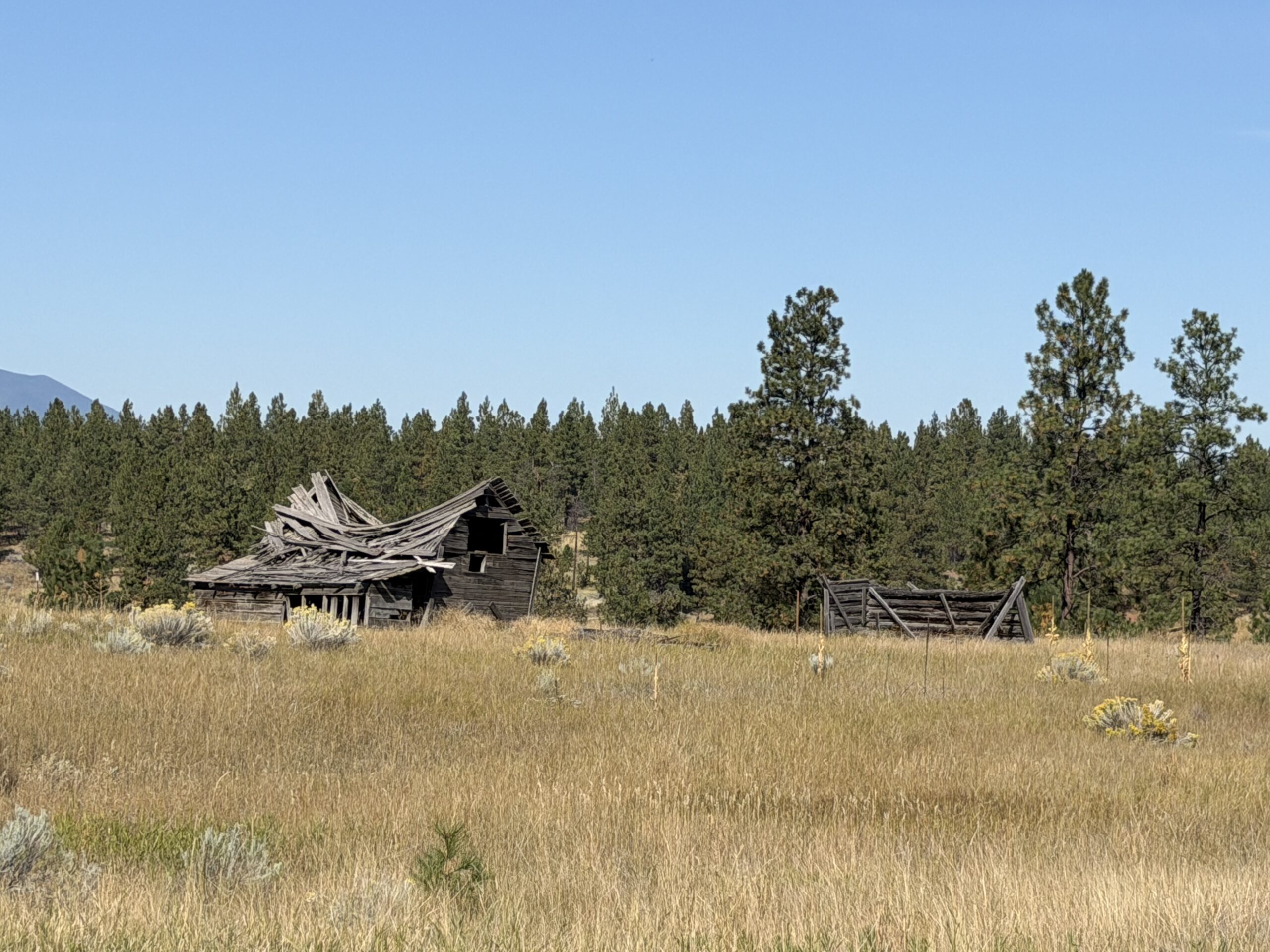 Glance to the left on the 7th hole and try not to think of your favorite Western
There’s still a trace of that pioneer spirit about this corner of Montana, in the small towns, the self-reliant people, and the general understanding that the land sets the terms rather than you. Wilderness Club, with its fast greens and heated pools, is a far more comfortable version of frontier life, but on the seventh hole you’re playing right past the original.
The original residents haven’t gone anywhere either. One morning, right on the third tee, a young mule deer buck watched me from the undergrowth with the expression of a local who’d seen plenty of golfers and hadn’t been impressed by any of them yet. Out here you don’t so much visit nature as share a postcode with it. Nobody needs to schedule a wildlife experience or sell you a guided nature walk; you simply open the door, and it’s there.
Wilderness Club is in the middle of nowhere, and I mean that as a compliment. No marketing agency dreamed up the name. It’s a description.
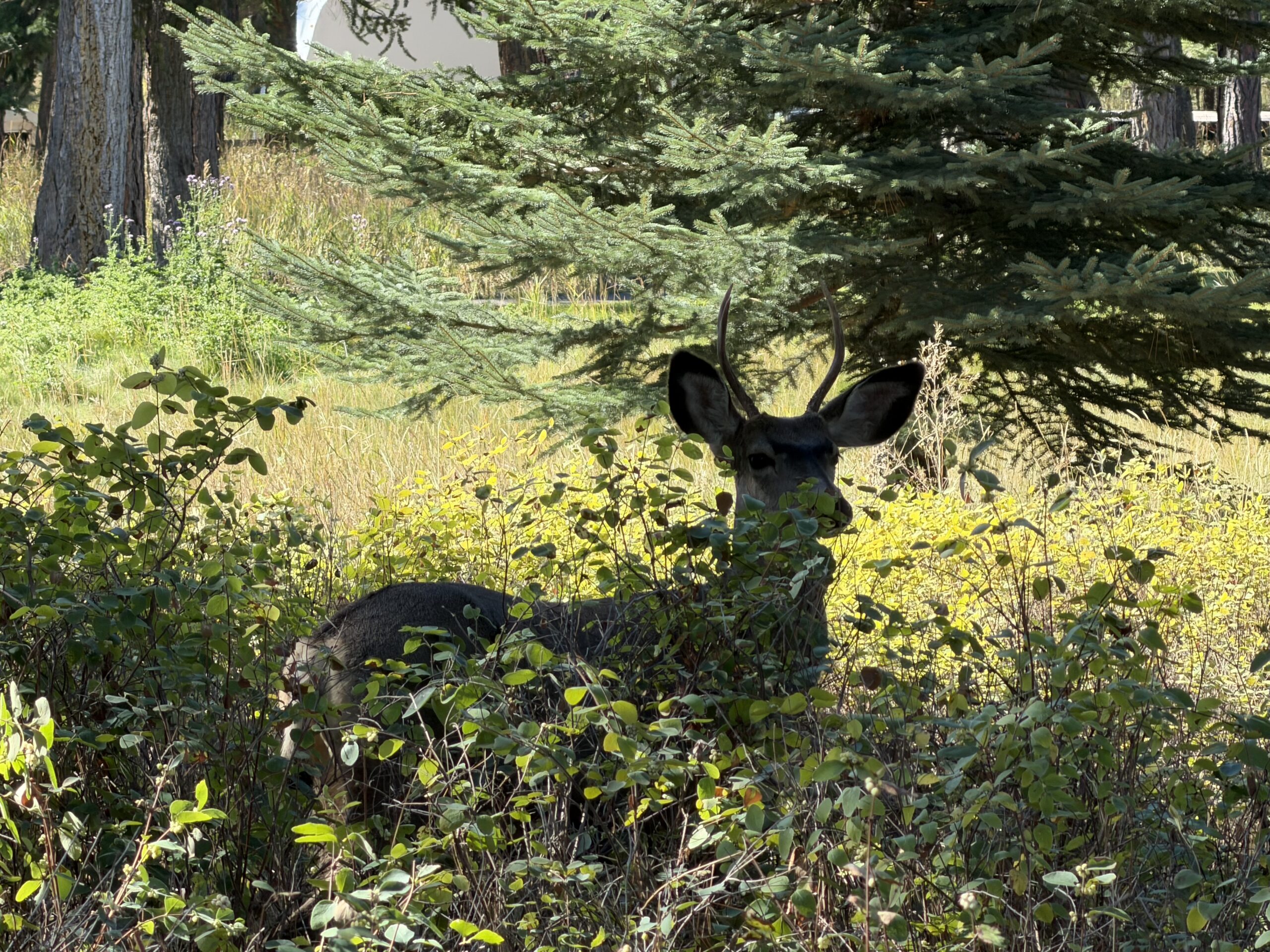 Wildlife abounds and adds to the beauty of your experience
Golf in the Wilderness
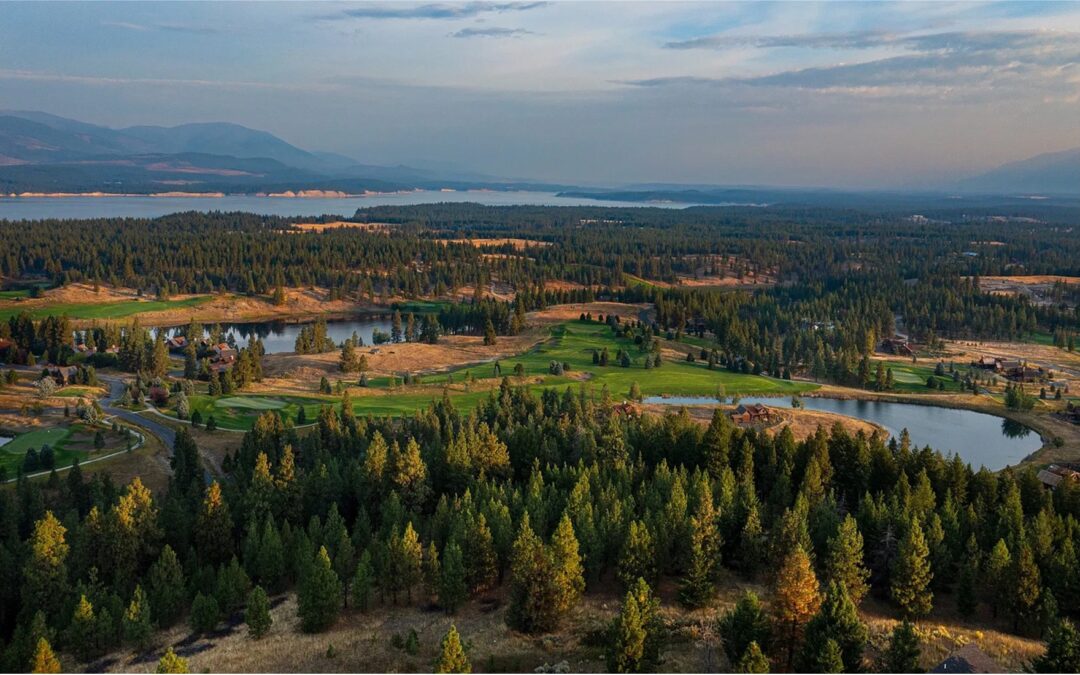
The property’s centerpiece is the championship course designed by Sir Nick Faldo with architect Brian Curley, which opened in 2009. Faldo was given something most golf architects would happily trade several committee meetings and a small portion of their fee for: a vast piece of naturally beautiful land. The course moves through Ponderosa pine forest, open meadows, lakes, streams, and native sandy areas, with the mountains providing a constant backdrop.
The course feels as though it belongs here rather than having been imposed on the landscape. Modern golf development has an unfortunate habit of moving half a mountain to create something that supposedly looks natural. At Wilderness Club, Montana had already done most of the decorating, and Faldo was smart enough to leave it alone.
The fairways are generous in most places, but this isn’t a resort course where you can spray the driver around while admiring the scenery. Much of the challenge comes from positioning, bunkering, water, and the green complexes, all of which become far more demanding from tees a little too ambitious for your ability. Fortunately, with tees ranging from 5,400 yards to more than 7,200, there’s no reason to torture yourself. The conditioning is excellent. The ball sits up on lush fairways, and the greens are fast and true without being unreceptive. A well-struck iron lands and holds, which is precisely what you want when the greens are running at that kind of pace.
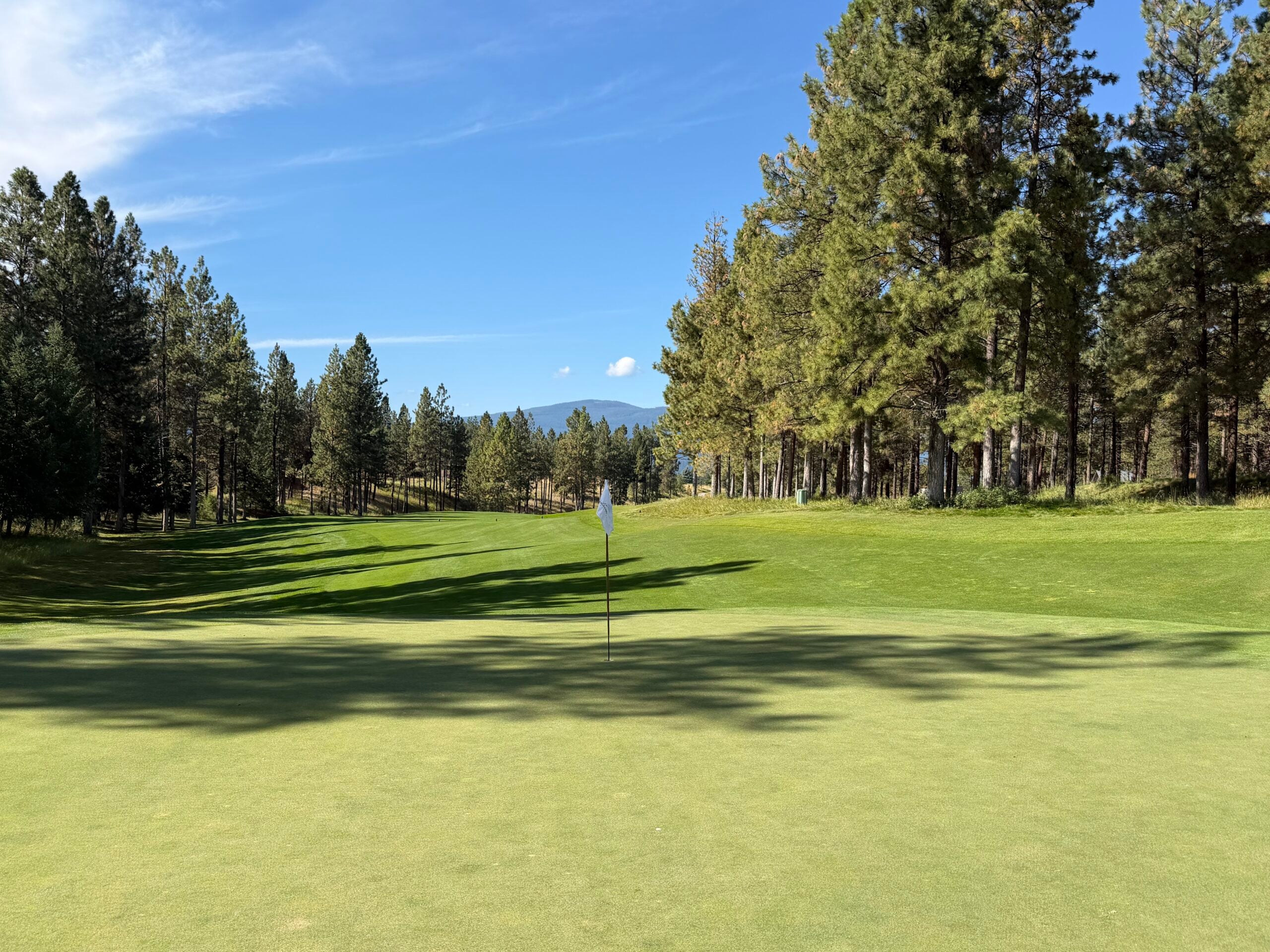 The 4th hole tightens things up after a generous start from the tee.
The Front Nine Quickly Gets Your Attention
The opening holes introduce you to the course without beating you over the head, but by the fourth, Faldo begins tightening the screws. It’s an attractive but tight par four framed by towering Ponderosa pines, where accuracy from the tee matters far more than hitting your driver another seven yards.
Find the fairway and the hole is manageable, although the approach into a pronounced two-tiered green still demands attention. Start wandering among the trees, and Montana suddenly becomes considerably less picturesque. It’s a very good golf hole because it asks you to make decisions without resorting to artificial tricks.
Then comes the fifth, one of my favorites on the course: a short par three played across a pond to a green wonderfully framed by the landscape, the kind of hole where you should stop for a moment and enjoy the view before attempting to ruin it with your golf swing.
Get the distance right and birdie is possible, but the water dominates your thoughts from the tee, and a large bunker behind the green catches anyone who gets overly enthusiastic trying to clear it. There is room to bail out right, but visually the hole encourages you to take on the flag, which is exactly what a good short par three should do.
After the seventh and its old homestead, the course heads into its best stretch.
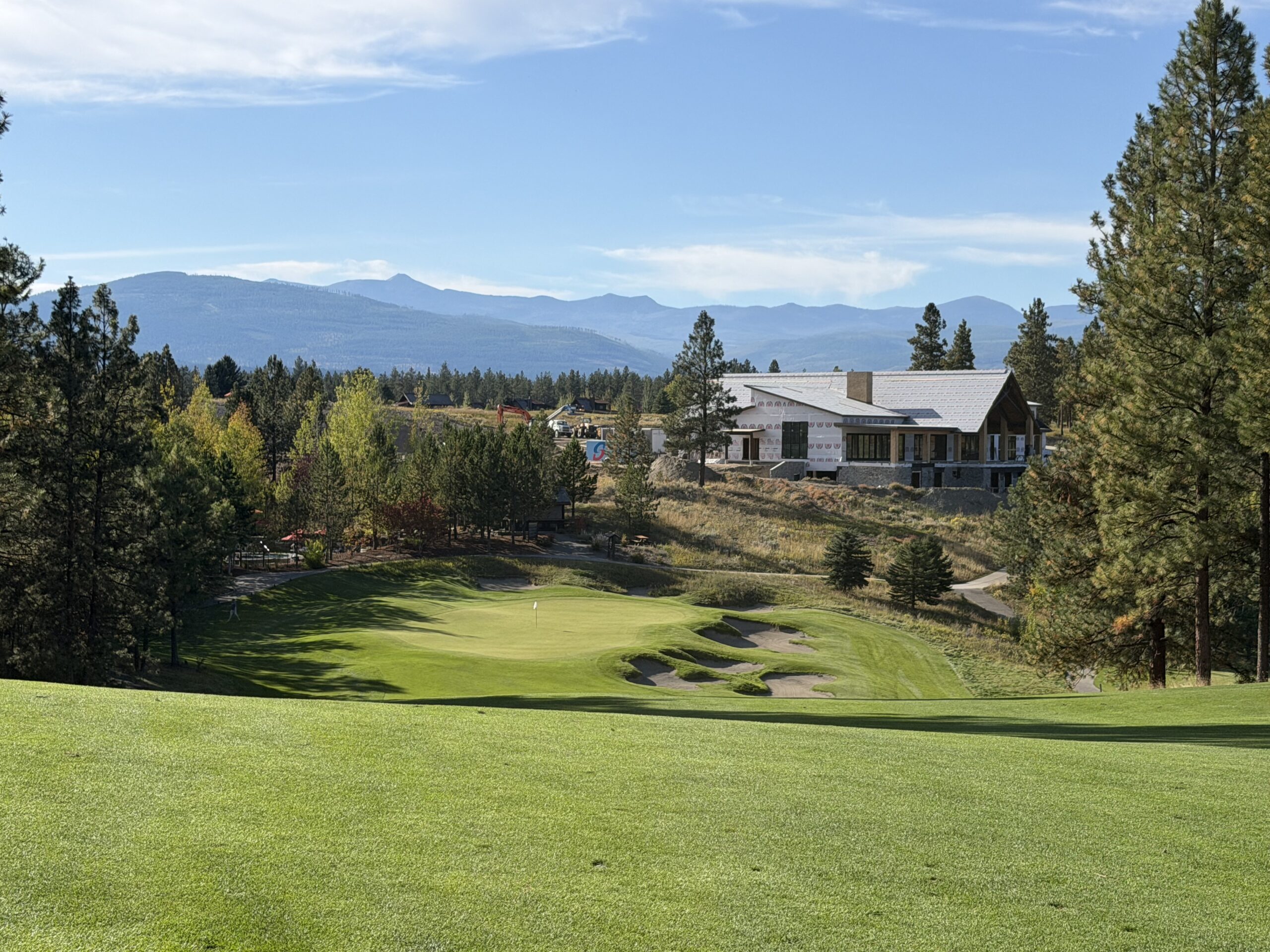 The downhill par 4 ninth offers a well-protected green and a look at the new clubhouse
Nine Through Thirteen: The Heart of the Course
For me, the ninth through the thirteenth is the finest golf on the property. The ninth plays sharply downhill toward the new clubhouse, which is due to open by summer 2027 and, even unfinished, looks superb, perched above the green with the lake, the beach, and the mountains spread out below. It’s one of those places where the golf course and the landscape seem designed for each other.
The tenth is a terrific short par four played from an elevated tee, where a hybrid short of the pond is probably the sensible choice. The eleventh is a classic dogleg right before the course produces another memorable view at the twelfth, a steeply downhill par five with the mountains laid out beyond. The thirteenth is a short but extremely pretty par three and a fitting finish to this stretch.
This is where Wilderness Club really shows off, combining elevation, water, mountain scenery, and strong architecture in a way that has you looking at the view as often as the yardage book. Many of your best shots will be taken with a camera.
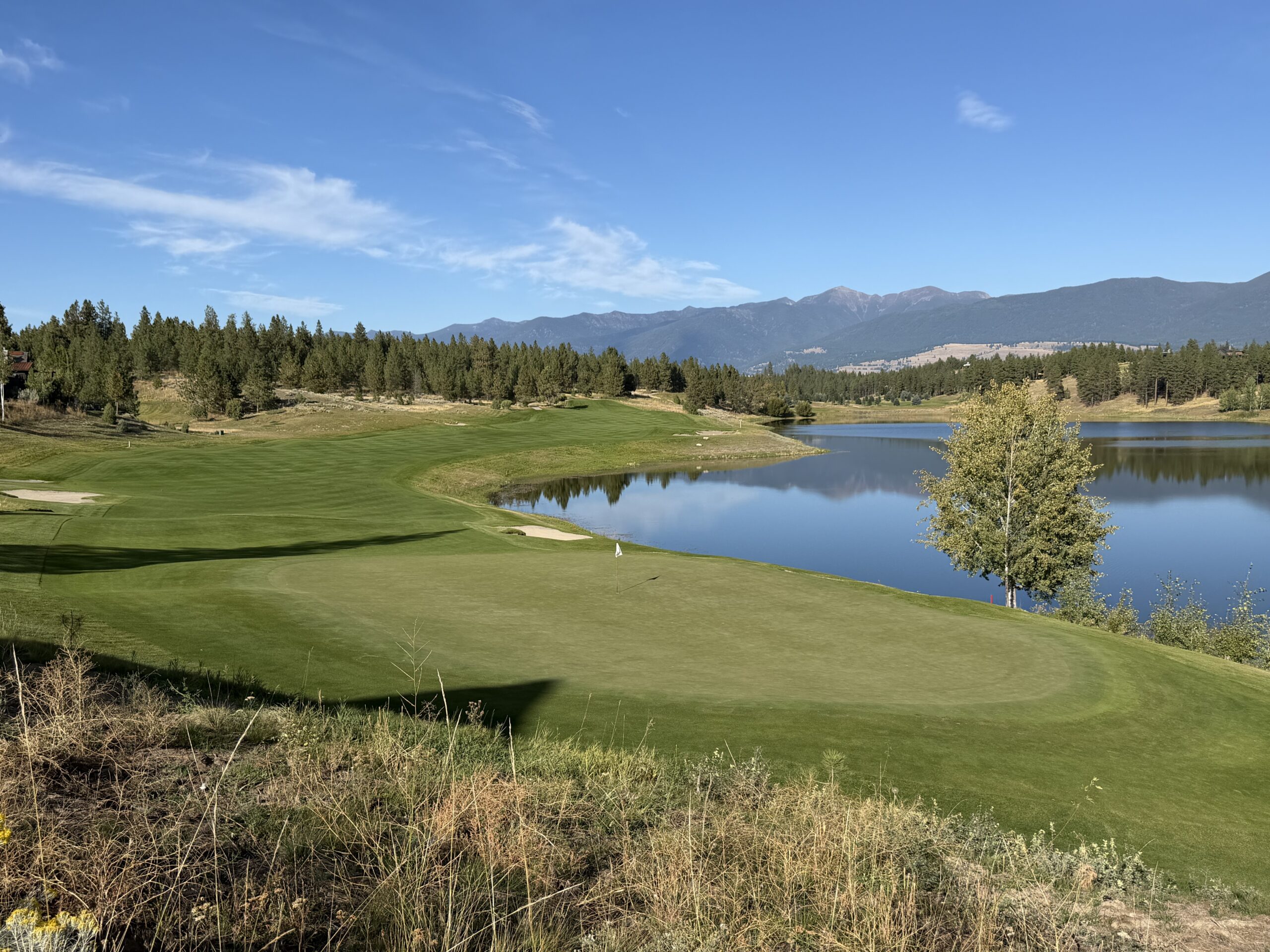 The 18th finishes your round in style with a risk-reward par five that snakes around the lake
A Strong Three-Hole Finish
Sixteen, seventeen and eighteen provide a suitably dramatic conclusion. Sixteen is a long par four doglegging left around the lake from an elevated tee, with enough trouble in view to make you think carefully about how aggressive you want to be. Seventeen is an excellent mid-length par three, and the eighteenth is a strong finishing par five, again working around the lake and protected by plenty of bunkering as you approach the green.
Once the clubhouse opens, its elevated patio deck will look directly down on the eighteenth green. Anyone arriving there with a match on the line will have the lake, the bunkers, and the pressure of the shot to contend with, plus a patio full of people enjoying a drink and watching every swing. It should make for some excellent viewing and, I suspect, the occasional entertaining finish.
Practice Facilities Worth Arriving Early For
One thing that doesn’t get enough attention is the practice facility, which is far more substantial than the obligatory strip of grass some resorts optimistically describe as a practice area. The facility includes a large all-grass driving range, a 9,000-square-foot putting green, and a 7,000-square-foot pitching green with a deep-faced bunker and enough room to work on virtually every shot from inside 50 yards. Top-quality practice balls are waiting when you arrive.
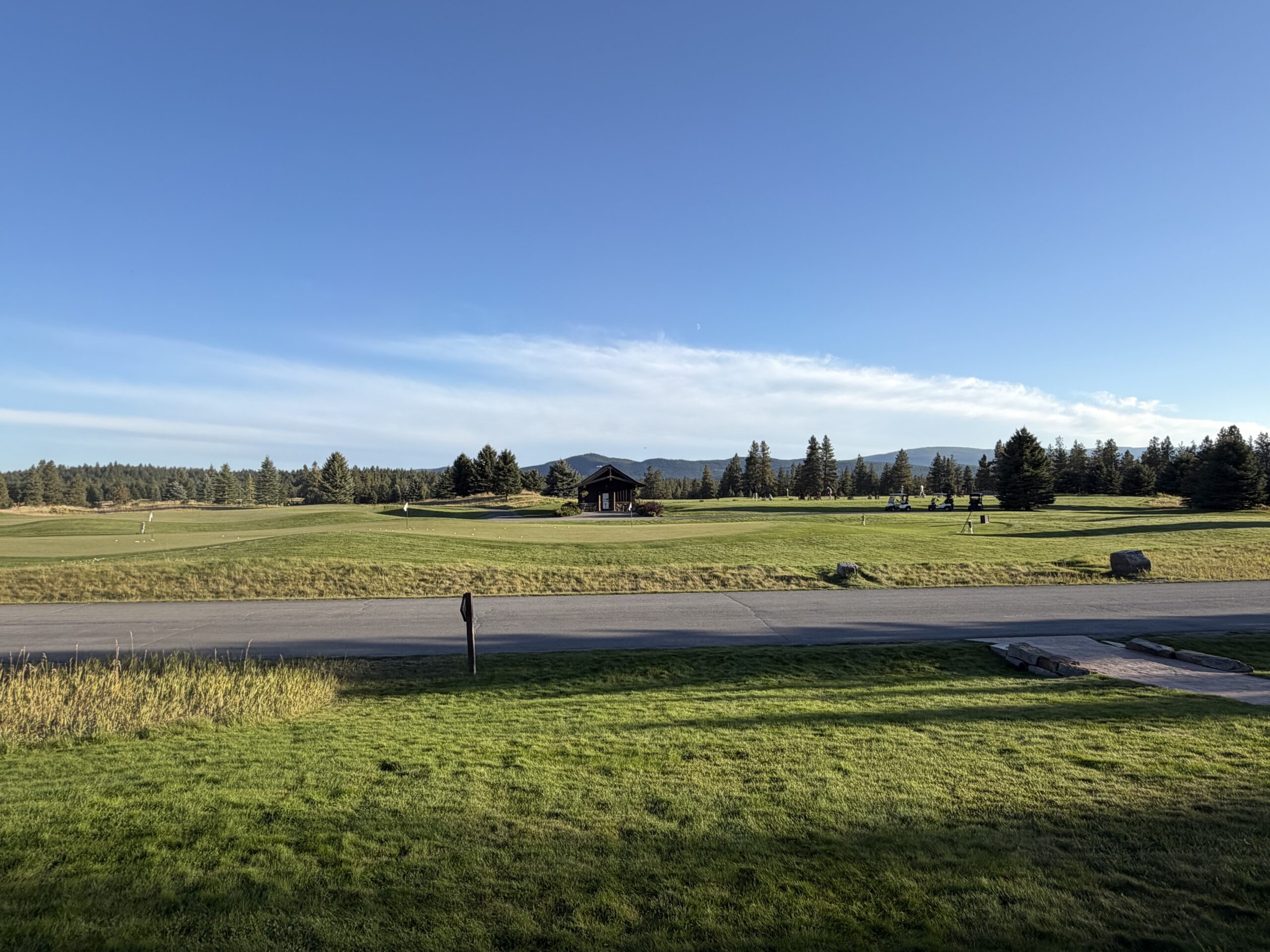
For golfers who enjoy practicing, admittedly a slightly strange subset of the human population, you could happily spend a couple of hours here. More importantly, it says something about the ambition behind the place. This isn’t somewhere designed to entertain resort golfers for eighteen holes. It’s a proper golf community.
Escalante Golf and the Next Chapter
The Wilderness Club’s timing was unfortunate. Conceived as an upscale residential golf community, the course opened in 2009, in the wreckage of the 2008 financial crisis. Escalante Golf’s arrival in 2024, through a joint venture with owner and developer Brian Ehlert, brought additional resources to execute the original vision. Founded in 1991, the Fort Worth company owns and operates around two dozen upscale clubs across 16 states, including Pumpkin Ridge, Sonoma Golf Club, Black Diamond Ranch, and Kingsmill Resort. Tellingly, it spent the years after 2008 buying good clubs while others were selling, and it holds properties for the long term. It has committed more than $15 million here, including rebuilt bunkers, a new liner for Wilderness Lake and the new clubhouse. Better still, Escalante seems to understand that the Faldo course and the Montana setting are the product. No rebranding exercise, just serious investment and the good sense to otherwise stay out of the way.
Escalante has talked publicly about taking the club fully private in the near future. For now, visiting golfers can still stay, play, and book a tee time, but I wouldn’t wait too long.
A Place to Stay, or a Place to Own
Wilderness Club covers roughly 550 acres, and the real estate runs from golf cottages and semi-custom homes to multi-generational houses, plus custom homesites overlooking the course, the lake, and the mountains. For some buyers, it will be a summer escape from the heat of Arizona, Texas, or Florida; for others, a second home, a retirement plan, or eventually the place they live.
Building a custom home in Montana is a wonderful idea right up until you’re eighteen months into a discussion with an architect about window placement. For anyone who would rather skip that part, Escalante has built a limited number of move-in-ready spec homes, priced at the time of writing from just over $1 million to a little under $2 million. The one on Wilderness Club Drive, for example, is a four-bedroom cedar cabin with a covered porch, an attached garage, and views across the golf course to the mountains, and it comes fully furnished right down to the linens, the rugs, and the kitchenware. In other words, you could arrive with a suitcase and your golf clubs and be on the first tee the next morning.
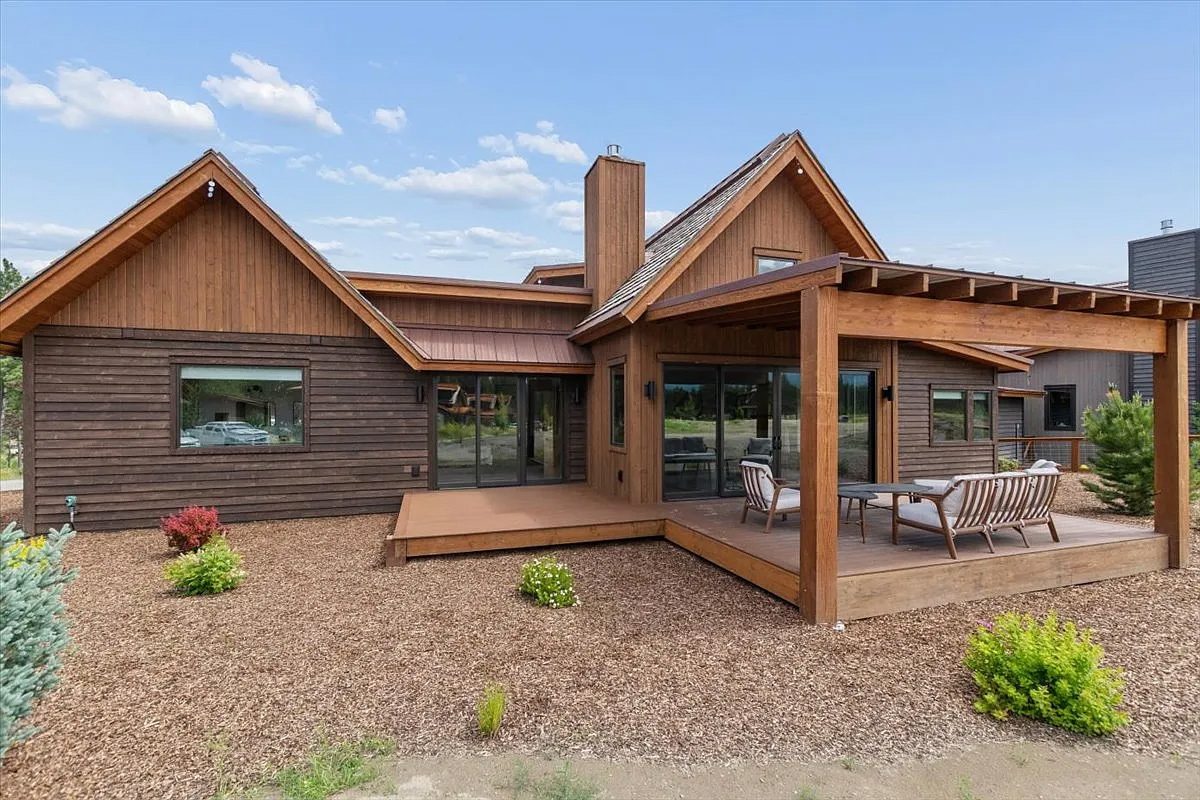 The Wilderness offers several ready-to-move-in residences in multiple styles
It’s also a short walk from the pool, the sports park, and the new clubhouse, and only steps from the national forest, with a trail out to an overlook of Lake Koocanusa. That’s a reasonable summary of the whole proposition: the golf course on one side, a few million acres of Montana on the other, and not much in between except your front porch.
Ownership comes with the 21-acre Wilderness Lake and its private beach, kayaking and paddleboarding, pools, a water park with a 250-foot slide, pickleball, fitness facilities, and walking trails, which is a polite way of saying the non-golfers in the family will be fine. You’re not really buying square footage and a golf membership. You’re buying a rather spectacular piece of Montana, with somebody else cutting the grass.
Beyond the gates, Lake Koocanusa, Glacier National Park, and Whitefish can all become part of a larger northwest Montana trip. The most successful modern golf destinations have worked out that the easiest way to attract more golfers is to give everyone else a reason to come along, and Wilderness Club gives them plenty.
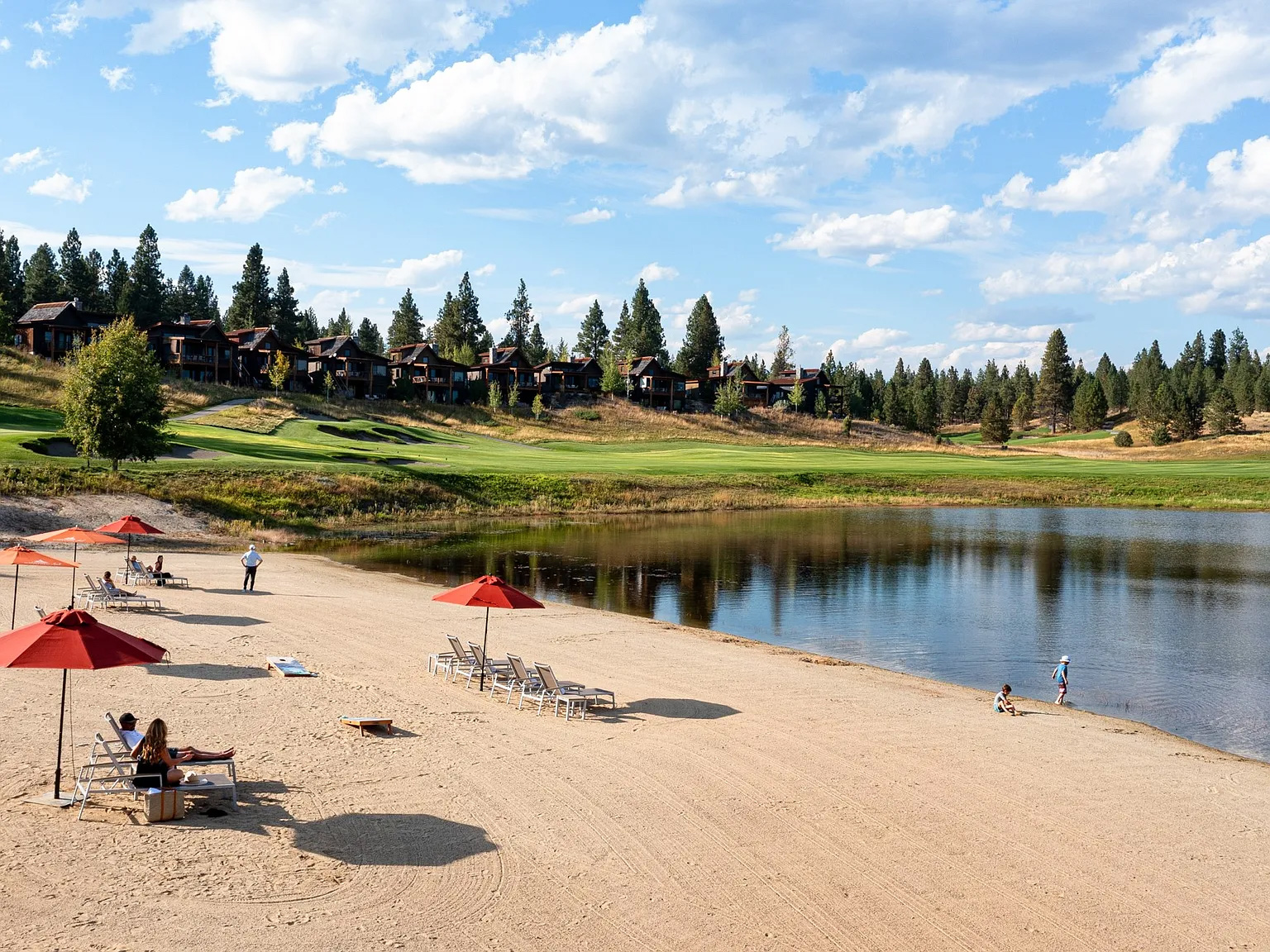 Golf is just the beginning of the adventure at The Wilderness Club
Worth Every Mile
The Faldo course is very good, the practice facilities are outstanding, the scenery is exceptional, and the broader recreational and residential offering makes this far more than another remote golf course with a few cabins beside it.
What makes it particularly interesting today is the sense that its best years are still ahead. After surviving its unfortunately timed launch, the property now has money going into the ground, a nearly finished clubhouse, and a growing residential community. After a long detour, Wilderness Club is becoming what it was always meant to be.
After more than forty years traveling the world and playing more golf all over the world, I rarely remember every bunker, every green, or what I shot on the back nine. I remember the places that felt different from everywhere else, and Wilderness Club is firmly one of them. It’s remote, slightly improbable, beautifully maintained, and surrounded by an enormous amount of Montana that looks as though nobody has figured out how to build a condominium tower on it yet. Here’s hoping nobody ever does.
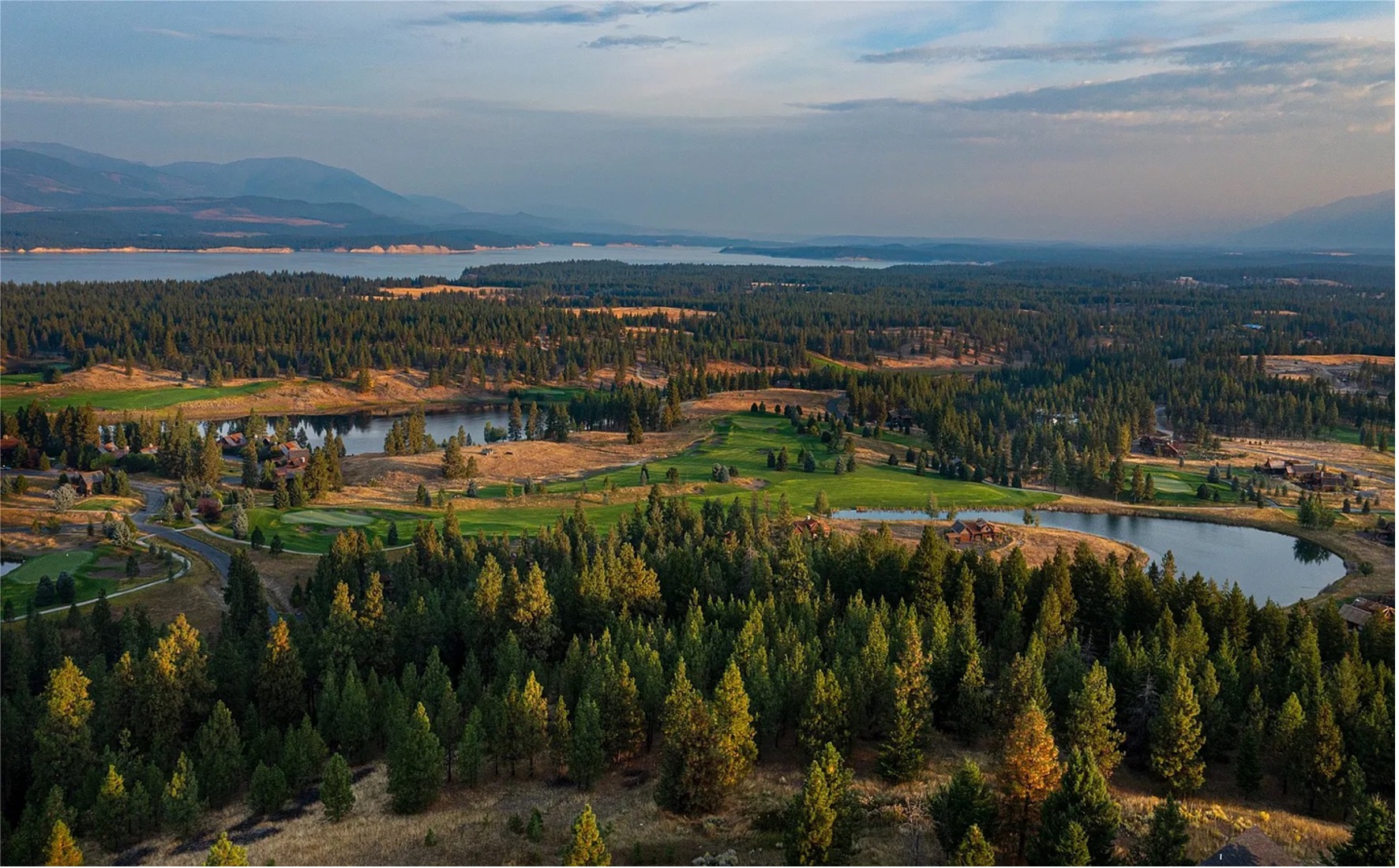
World’s Best Golf Destinations – Wilderness Club, Eureka, Montana
Golf: Sir Nick Faldo design (with Brian Curley), 18 holes, opened in 2009, more than 7,200 yards from the championship tees.
Access: Currently open to [resort guests / visiting golfers]; check before booking.
Getting there: Glacier Park International Airport at Kalispell, about 75 minutes away.
Beyond golf: Real estate ranges from golf cottages to custom homesites, plus Wilderness Lake, a private beach, a water park, pools, pickleball, and extensive practice facilities.
More information: www.thewildernessclub.com
Featured Post
 0