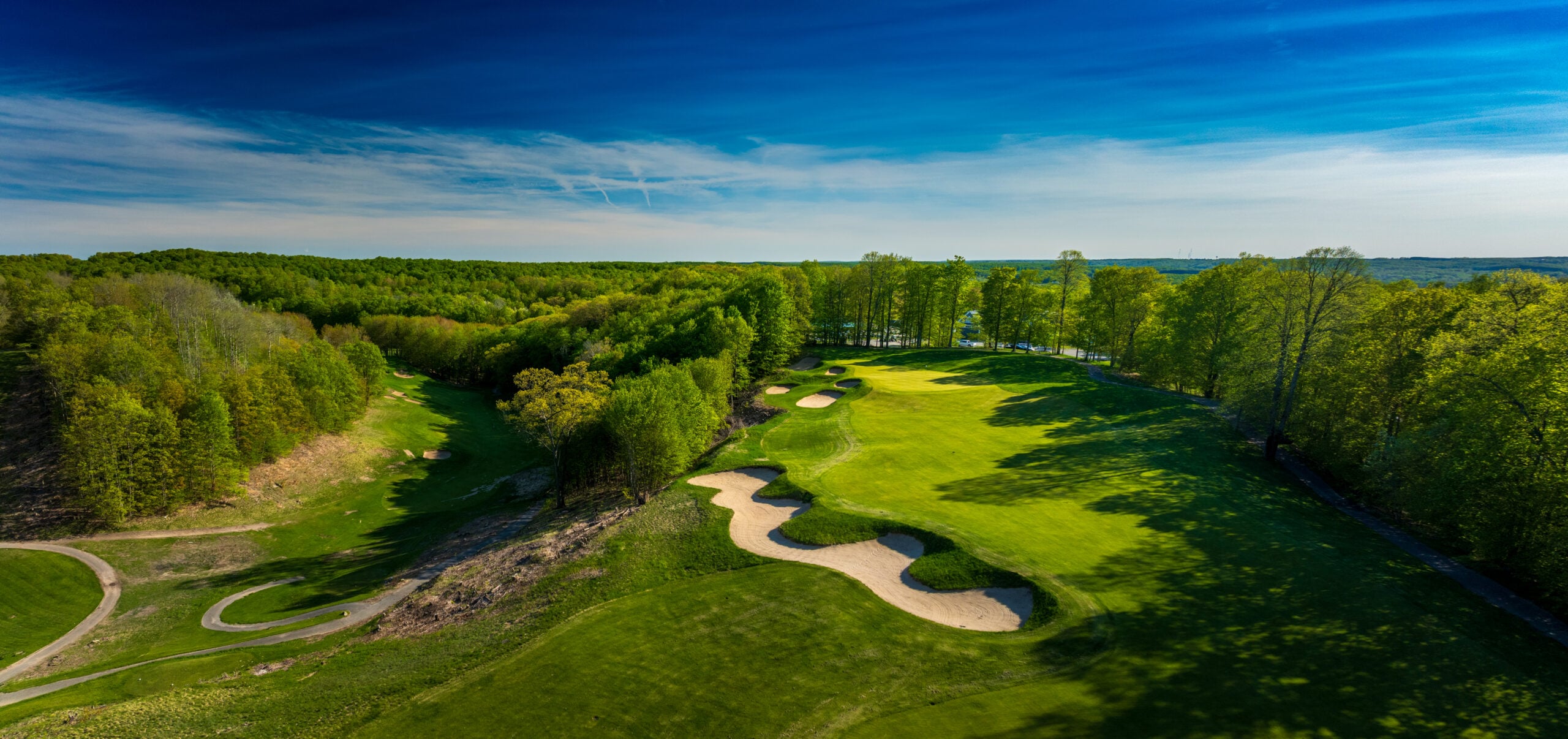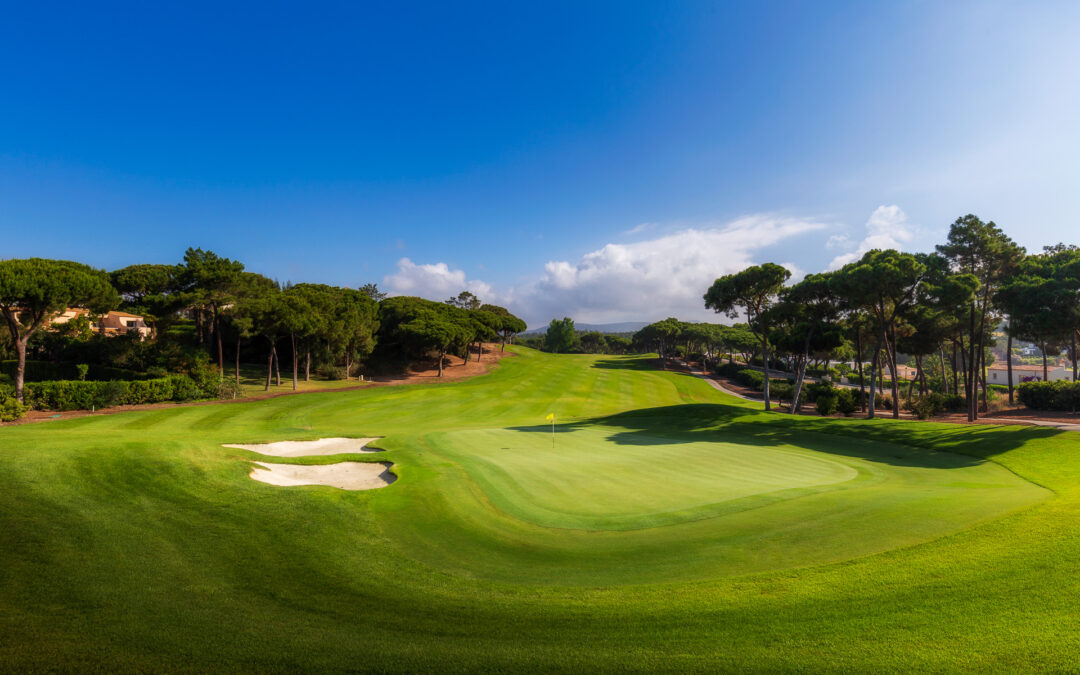
Every great golf course has a spine. The North Course at Quinta do Lago has several. It was shaped first by William Mitchell in 1974. Joe Lee and Rocky Roquemore reworked sections through the following decades. In 2014, Beau Welling and Paul McGinley rebuilt it entirely. Every green, tee, and bunker was torn out and remade. Nine million euros went into that single, uncompromising decision.
You don’t need to know that history to feel it. Walking the fairways, past pines that have clearly seen decades of change, something older seems to hum beneath the surface. This course has been reshaped so many times it feels less like a design. It feels more like a decision, made again and again, to keep getting better.
The Calm Before The Challenge
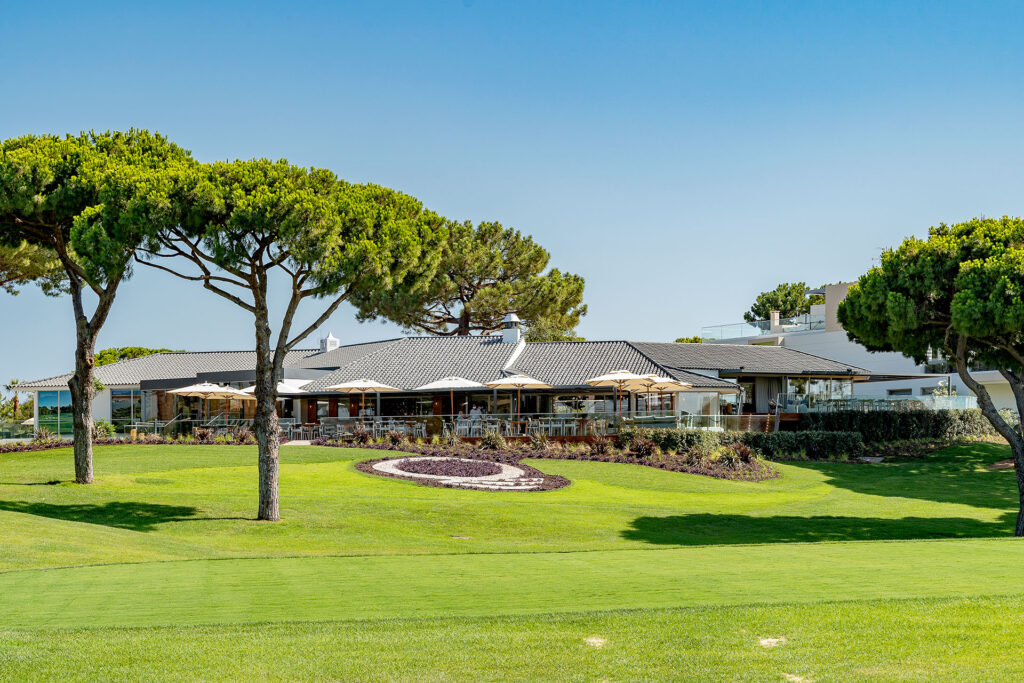
Arrival here carries its own quiet ceremony. The clubhouse sits low among the trees, unhurried, almost indifferent to first impressions. There’s no dramatic gate, no grand announcement of what’s waiting. The North Course simply lets the golf speak for itself, hole after hole, without needing to shout about it first.
That silence is deceptive, though. It’s the kind of quiet that precedes something serious. You sense it standing on the first tee, club in hand, sunlight filtering through umbrella pines. Somewhere ahead, eighteen holes are waiting to ask real questions.
Eighteen holes make up that decision. Six of them stand out as the moments where the course truly speaks. Three sit on the front nine, testing patience early. Three sit on the back, testing something closer to nerve. Together, they form the clearest possible picture of what this course actually demands.
The Front Nine: Precision Before Power
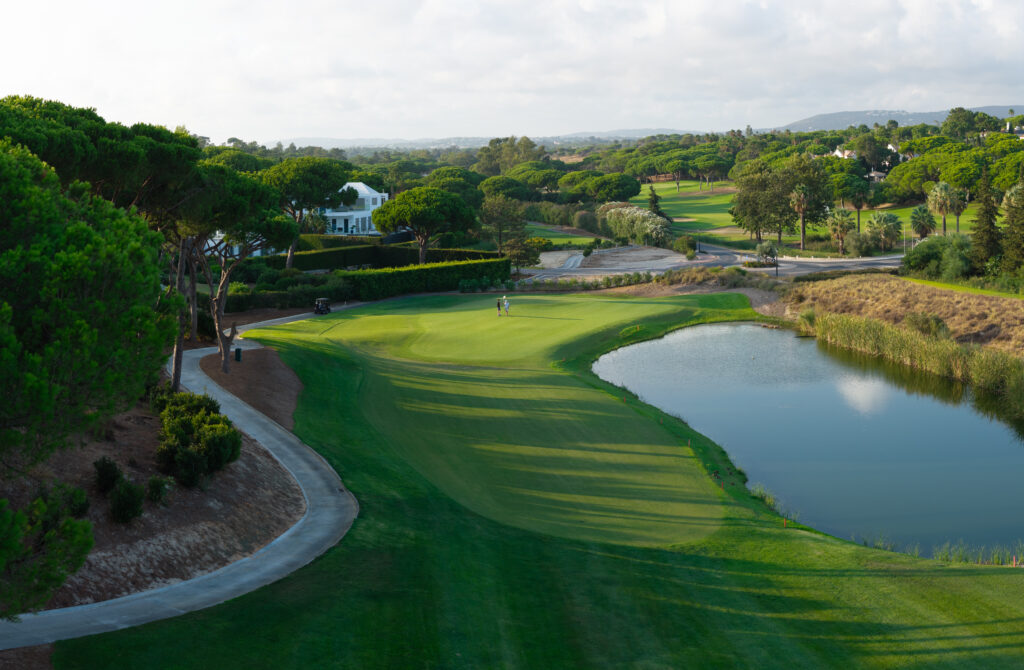
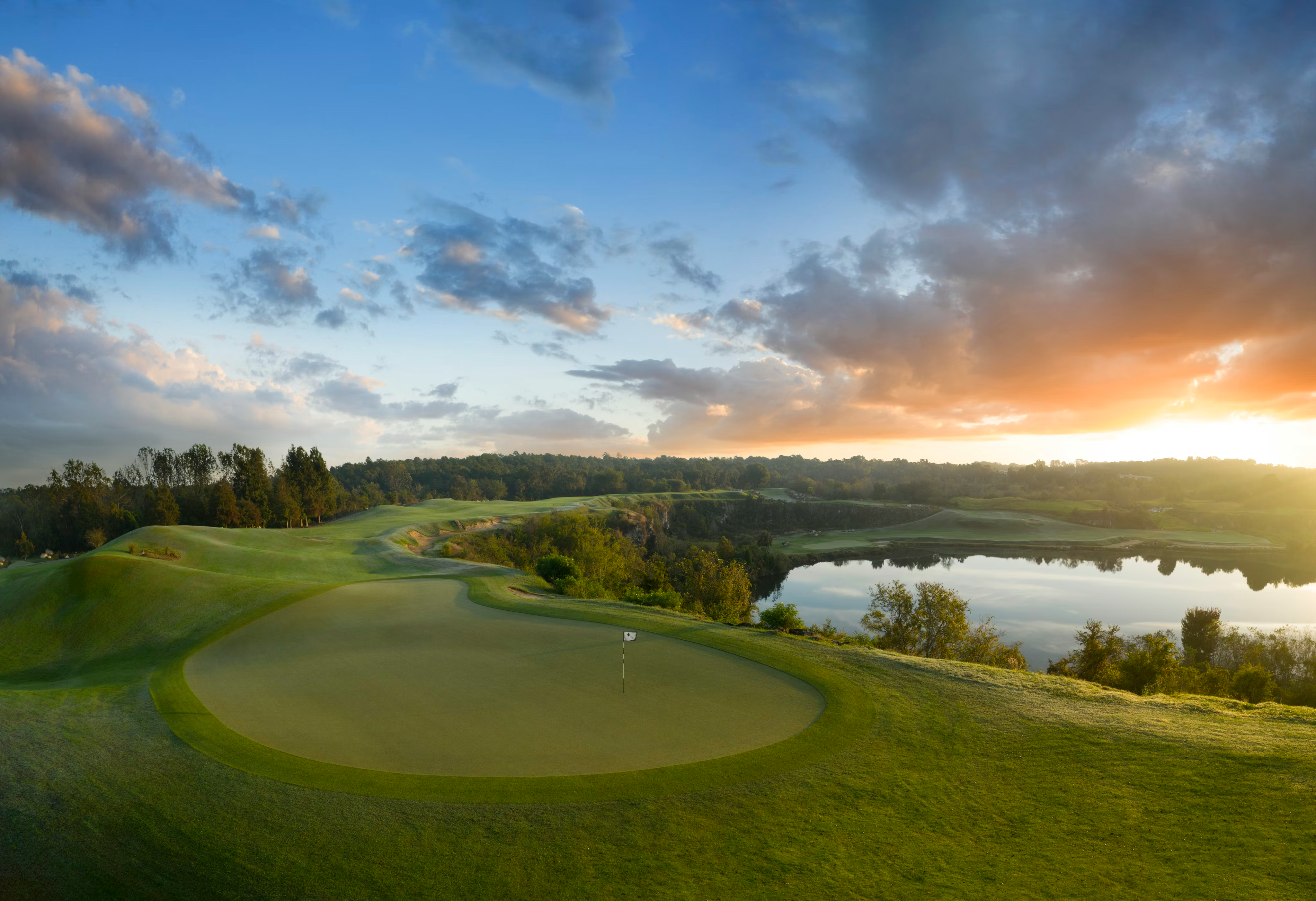
The second hole arrives fast, and it doesn’t waste a single word. This is the course’s signature par three, 186 yards and unforgiving. The green is shaped like a butterfly, oddly delicate for something so exacting. The water guards the front and right side, daring you to fly it cleanly. Accuracy isn’t optional here. It’s the entire point of the hole. Stand on that tee, iron or hybrid in hand, and you understand immediately what’s being asked of you.
There’s a stillness to that moment worth noticing. Other holes on this course announce their danger loudly, through water or bunkers stacked in plain sight. The second does it quietly, through geometry alone — a shape, a hazard, and nothing left to hide behind. It’s a small hole with an outsized reputation, and every golfer who plays it understands exactly why.
The North’s Stroke Index 1
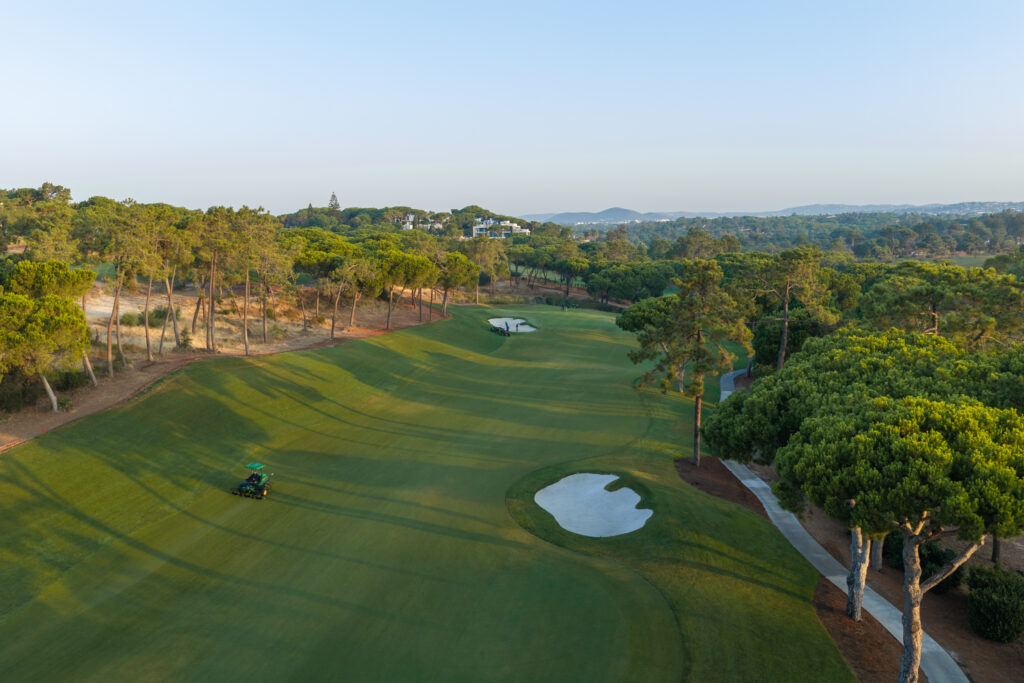
Two holes later, the fourth changes the conversation completely. This is the North’s hardest hole, 385 yards of perfection. Misjudge the line even slightly, and the fairway pushes your ball towards the bunker, or worse, the trees. The green itself might be the hardest to read anywhere on the course. Putts break in ways that seem to defy logic, testing patience as much as skill. Walking off this green, most golfers feel like they’ve just been quietly humbled.
Nothing about this hole looks threatening from the tee. That’s exactly what makes it dangerous. It’s a real test to find the fairway. Then if you succeed, the green is a small target. Two good shots earn you nothing more than the right to face a genuinely difficult putt.
A Par Five of Note
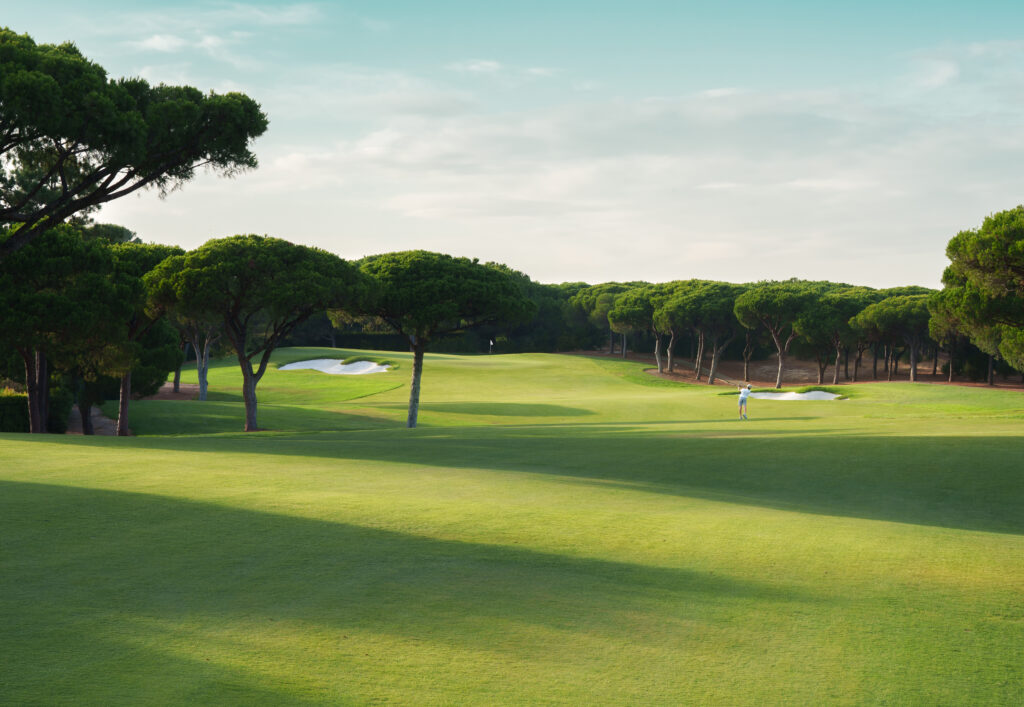
The seventh hole tells a different kind of story entirely. Played as a three-shot hole, it should be an easy par. Hit the fairway. Lay up to wedge distance. Knock it on the green and two putt for par. Unfortunately, golf is not a game of perfect. At 530 yards, it’s not reachable in two for most players. Off the tee, the landing area is fairly generous. Then it slowly starts to get tight. Your lay up needs to be carefully thought out. Avoid the trees on the left and stay short of the bunker on the right. Take enough club on your third, as the green sits above you. Find the right level, and you’ll two putt comfortably. Miss it, and good luck finding your par from there.
The Turn: Where Patience Gives Way to Nerve
Something shifts crossing from the front nine to the back. The holes grow more dramatic, the hazards more theatrical, the stakes noticeably sharper. Where the front nine asked for careful thinking, the back nine asks for something closer to courage. You feel that shift almost physically, walking toward the tenth tee.
The Back Nine: Where Fear Becomes the Opponent
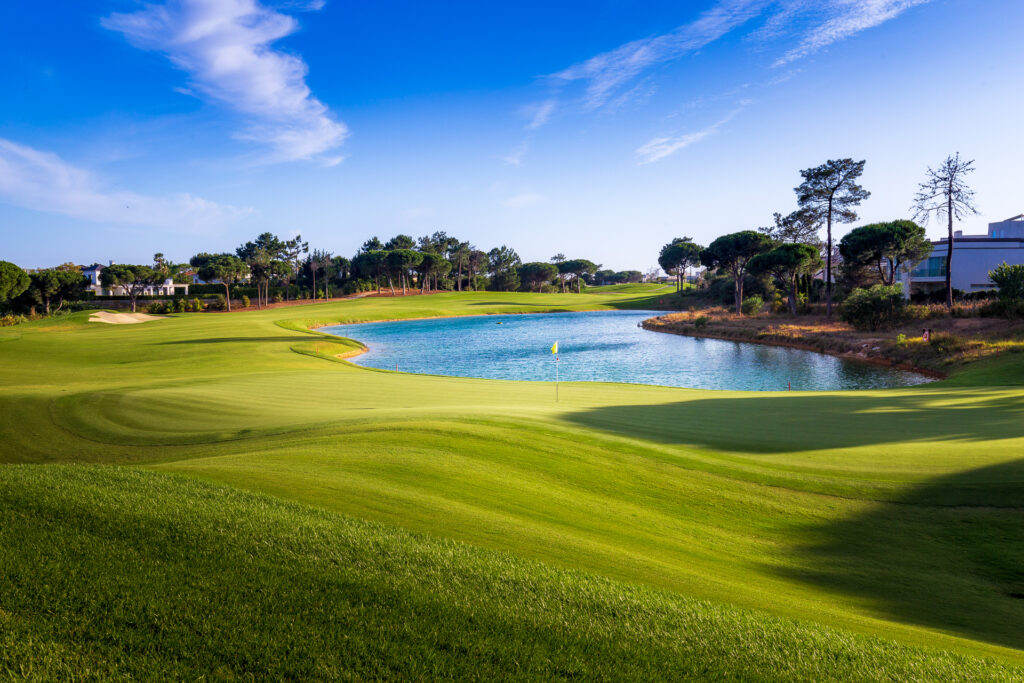
The twelfth hole introduces real danger, immediately and without apology. From an elevated tee, the water opens up menacingly on the left side. It’s the kind of hazard that changes your stance before you’ve even swung. A helpful bank sits to the right, nudging stray shots back toward safety. That safety net doesn’t make the tee shot feel any less intimidating in the moment. The approach then plays to a long green, guarded by the lake. Clear the water successfully, and the hole finally starts to feel fair again.
Few holes announce themselves as clearly as this one does. There’s no ambiguity standing on that tee. The water is right there, visible, waiting, entirely unconcerned with your nerves. It doesn’t need theatrics to intimidate you. It simply sits there, patient, doing exactly what water always does best.
Surrounded By Pines
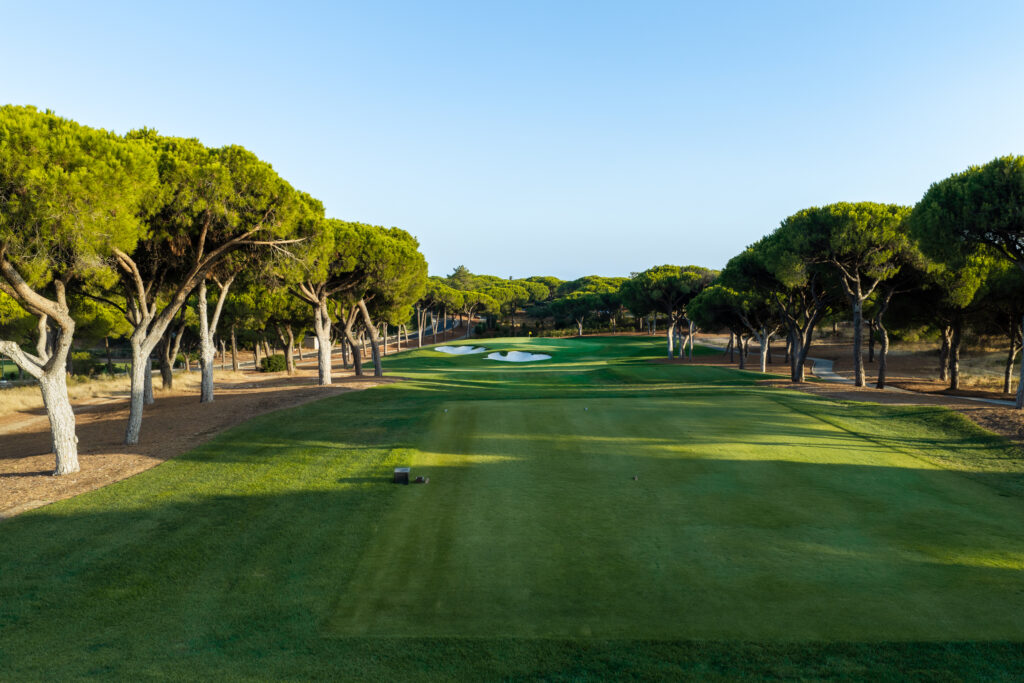
The fourteenth offers a different kind of test entirely. This is a 154 yard, tricky par three that encapsulates the overall feel of golf at Quinta do Lago. Lined by mature umbrella pines, the tee shot plays to a large green. It lies slightly below the level of the tee. Well protected by bunkers short and left, it’s all about finding the correct portion of the putting surface. Miss that portion, and even a good shot leaves a brutal two-putt.
There’s something almost meditative standing on that fourteenth tee. Pines frame the view on every side, blocking out distractions. For one brief hole, the course feels less like a battle and more like a quiet conversation.
A Fitting Climax
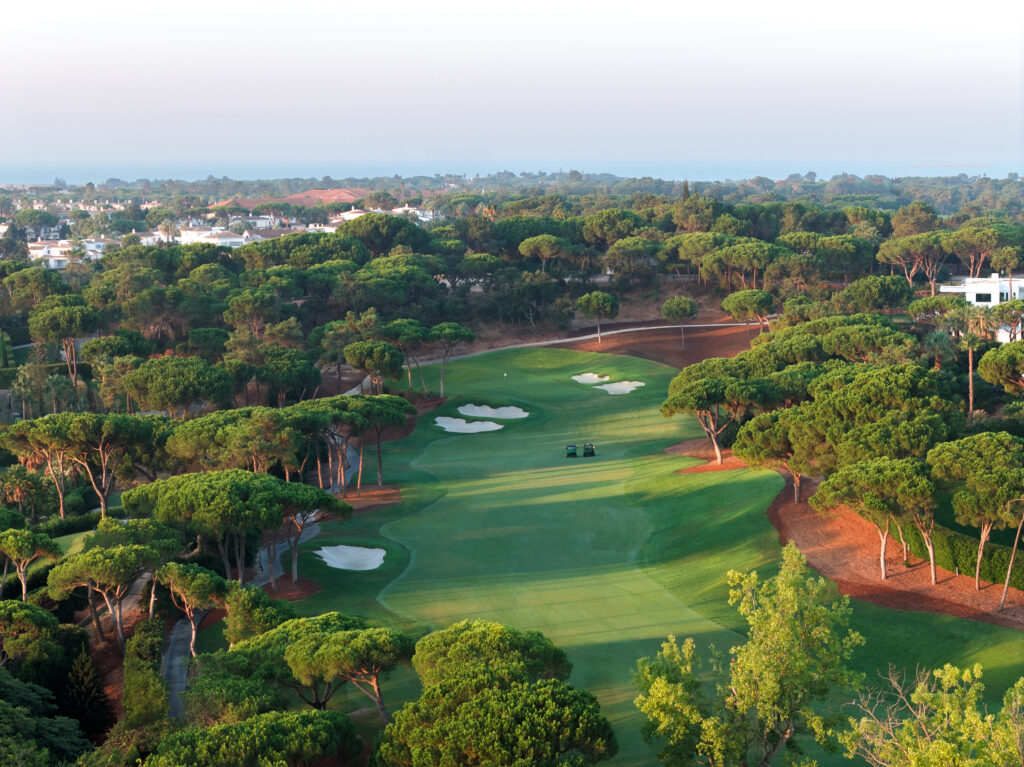
And then, finally, the eighteenth arrives — the course’s celebrated finishing statement. Every choice made across the previous seventeen holes seems to matter here. The tee shot demands precision on the dogleg right. Ideally, a strong fade will leave you in prime position. The second shot needs to carry the distance to the middle of the green. Four bunkers guard the green, positioned to punish even minor misjudgment. This hole doesn’t care how tired your legs feel by this point. It simply demands fully committed golf shots.
There’s a certain theatre to standing on that final tee. Everyone in your group falls quiet, almost without noticing. The water waits below, patient, indifferent to how well you’ve played until now. Whatever your scorecard says by this point, the eighteenth demands one final act of full commitment.
What These Six Holes Reveal
Look closely at these six holes together, and a pattern starts to emerge. The front nine tests thinking — angles, distances, the discipline to lay up wisely. The back nine tests something more primal: nerve, composure, the willingness to commit under real pressure.
That’s not an accident. Three different architects worked on this land across four decades. Somehow, their individual choices still add up to one coherent, escalating story. The course builds tension gradually, hole after hole, without ever feeling forced or artificial.
The last renovation clearly went toward more than just aesthetics. It went into strategy, into sequencing, into making sure danger arrives exactly when it matters most. The result rewards golfers who think early and commit boldly later, precisely when the round demands it most.
Compare this course to its more famous neighbour, the South. Where the South leans on reputation and championship pedigree, the North leans on rhythm. It builds slowly, deliberately, almost like a piece of music finding its tempo. By the time you reach the twelfth, you’ve already forgotten the second hole’s quiet demands. By the eighteenth, even the twelfth feels like a distant memory.
That layering is rare in modern golf design. Too many rebuilt courses front-load their drama, spending every dramatic idea on the first few holes. The North Course does the opposite entirely. It saves its heaviest questions for the very end, when your composure is already thinnest.
For travelling golfers, that structure matters more than it might first seem. A course that peaks early gets talked about for one hole and forgotten for the rest. This one builds a genuine story, worth retelling long after the trip ends.
In Our Opinion
Every round eventually ends, but these six holes tend to stay behind. You’ll remember the butterfly green at the second, small and exacting. You will remember that impossible read on the fourth green, still slightly baffling. You’ll remember how you played the seventh, patient and completely unbothered by nerves.
Then the back nine arrives in memory, sharper and more vivid still. The water on the twelfth, always there from tee to green. The pines at the fourteenth, quietly deciding your focus for you. And finally, that dogleg at eighteen, memorable finish to a legendary golf course.
Most courses ask for a good swing somewhere along the way. The North Course asks for something more layered than that. It wants careful thinking early, then real courage exactly when it counts. Give it both, across these six defining holes, and something genuinely memorable happens. You leave not just having played golf, but having been tested by it — properly, honestly, hole by hole.
Weeks later, the scorecard fades from memory almost entirely. What stays is quieter, harder to name precisely. It’s the feeling of standing over six specific shots, fully aware of the stakes each time. That, more than any final number, is what this course is actually built to deliver.
For any golfer chasing sunny destinations, that feeling is exactly what you’re travelling for. Not a low round, necessarily, but a round that actually stays with you. The North Course at Quinta do Lago offers precisely that kind of memory, freely.
At a Glance
- Location: around 20 minutes’ drive west of Faro Airport, in the eastern Algarve
- Par-72 course, originally opened in 1974, designed by William Mitchell
- Reworked through the 1990s by Joe Lee and Rocky Roquemore
- Completely rebuilt in 2014 by architect Beau Welling with former European Ryder Cup captain Paul McGinley, at a cost of around €9 million
- Gold tees length 6,204 yards
- Green fees: €223 in high season. Price correct as of September 2026
- Part of the Quinta do Lago resort, alongside the South Course and the Laranjal Course
- Courses Nearby: Quinta do Lago South Course, Laranjal Course, San Lorenzo Golf Club, Vale do Lobo Royal & Ocean Courses
- For more information, visit the Quinta do Lago website
Thank you to Luis Filipe and Renata Ferreira from Quinta do Lago for the photos used in this article.

Jim Callaghan CCM is a former Club Manager with experience of overseeing several top Scottish Golf Clubs.
Now, as European Editor of Golf Operator Magazine and World’s Best Golf Destinations, he shares insights into club operations and his golfing adventures across Europe.
Jim is also an Ambassador for premium clothing brand Fenix Xcell Clothing and also for the Spanish local DMC, Costa Verde Golf and is host of @JimTheSeniorGolfer on YouTube.
If your club/resort or brand wants to reach over 450,000 golfers, contact Jim at [email protected] or call 0044 (0) 78522 88732
Featured Post

 0
0