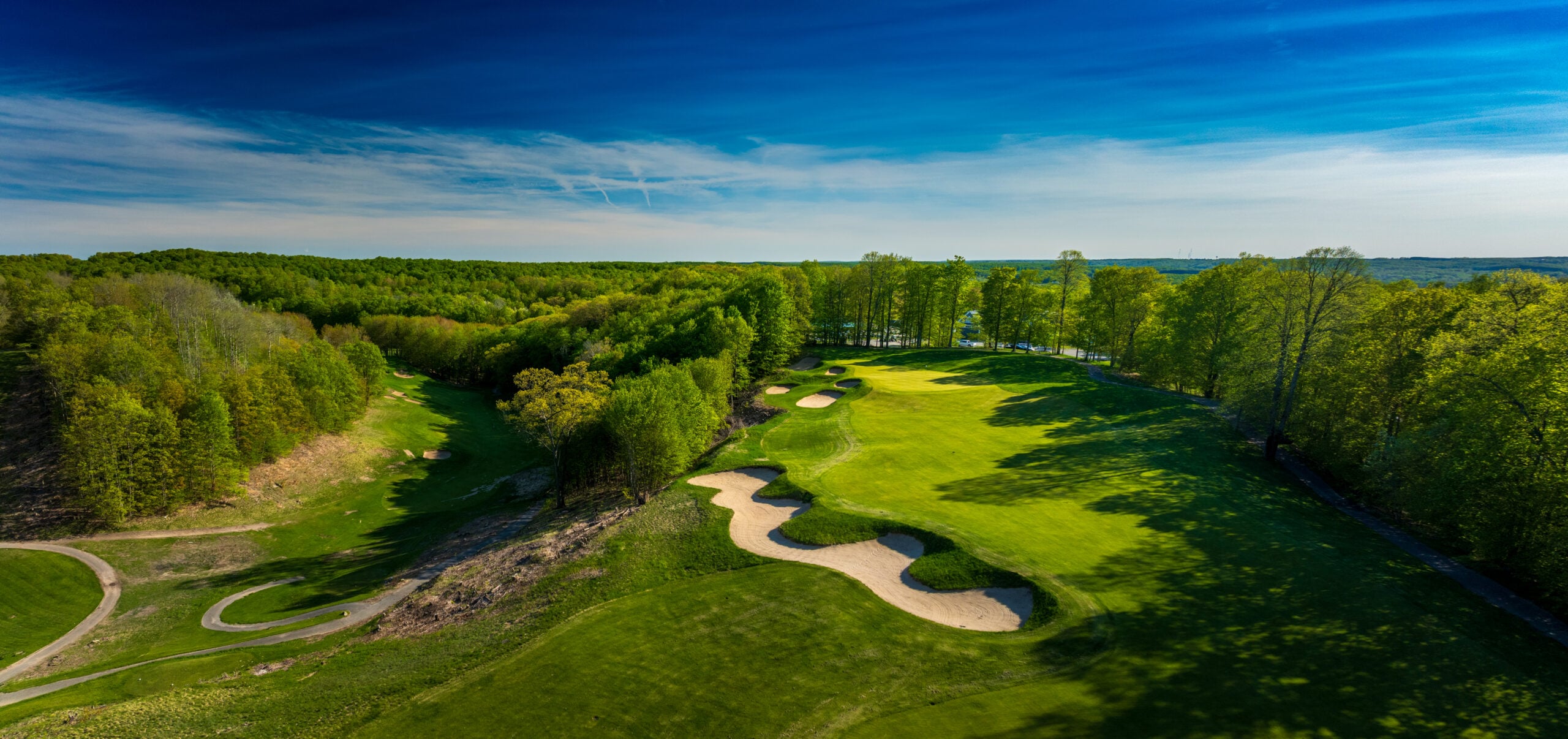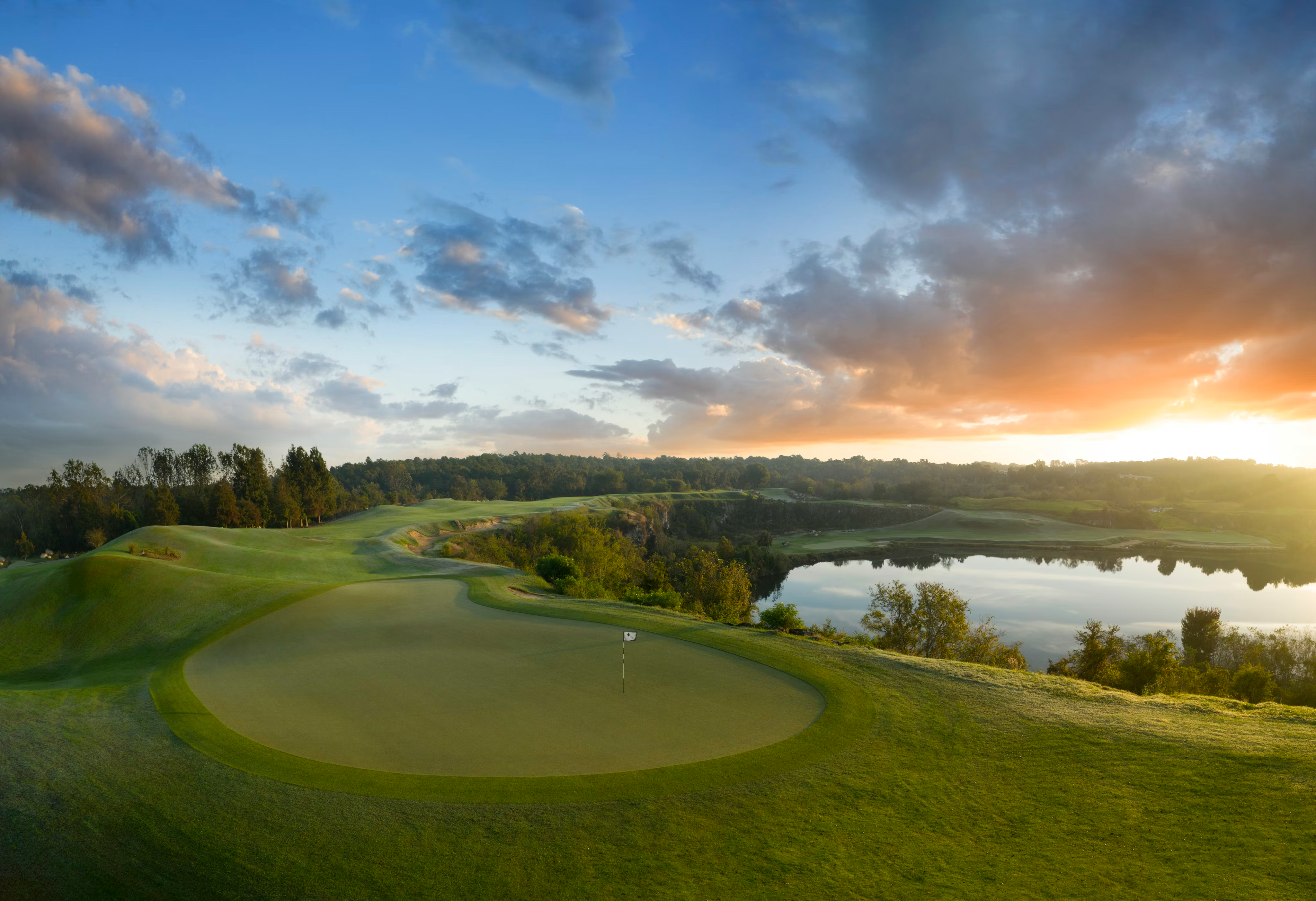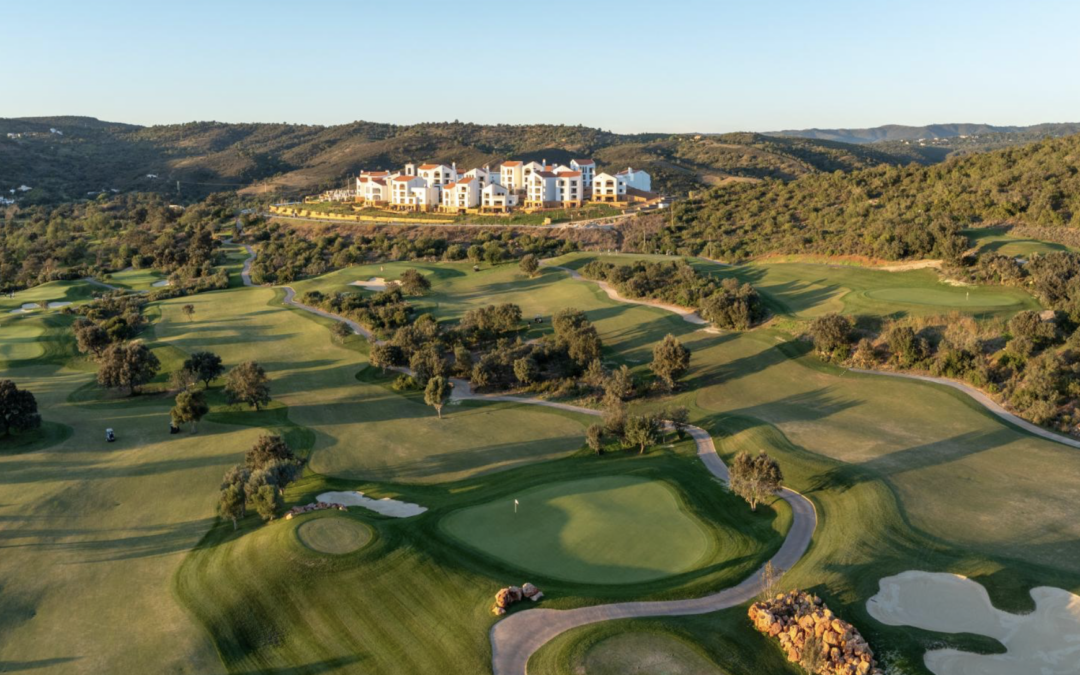
Most golfers who fly into the Algarve go looking for the coast. They want cliffs, ocean views, the roar of the Atlantic somewhere behind the fairway. Ombria asks you to do something different. It asks you to turn inland, up into the hills above Loulé. You pass the whitewashed village of Querença on the way. Beyond it waits a valley where ancient rivers still carve their own paths. They’ve cut through cork and oak forest for centuries here. There is no sea at Ombria. There doesn’t need to be.
What Ombria offers instead is something genuinely rarer on this coastline. There’s silence here, and shade, and water that moves rather than crashes. The golf course itself was built with unmistakable patience. Its creators clearly understood they were guests in someone else’s landscape.
You feel that the moment you arrive, long before your first swing. There’s no marble entrance announcing luxury, no manufactured grandeur. Just hills, trees, and the quiet sound of water somewhere close by.
A Course Grown, Not Built
Every great inland course must answer a question links courses never face. How do you belong somewhere the land was never waiting for you? At Ombria, architect Jorge Santana da Silva found his answer carefully. He took a sustainable, almost reverent approach to the routing. Eighteen holes were woven around rivers and trees already standing for generations. Nothing was cleared to force a path through.
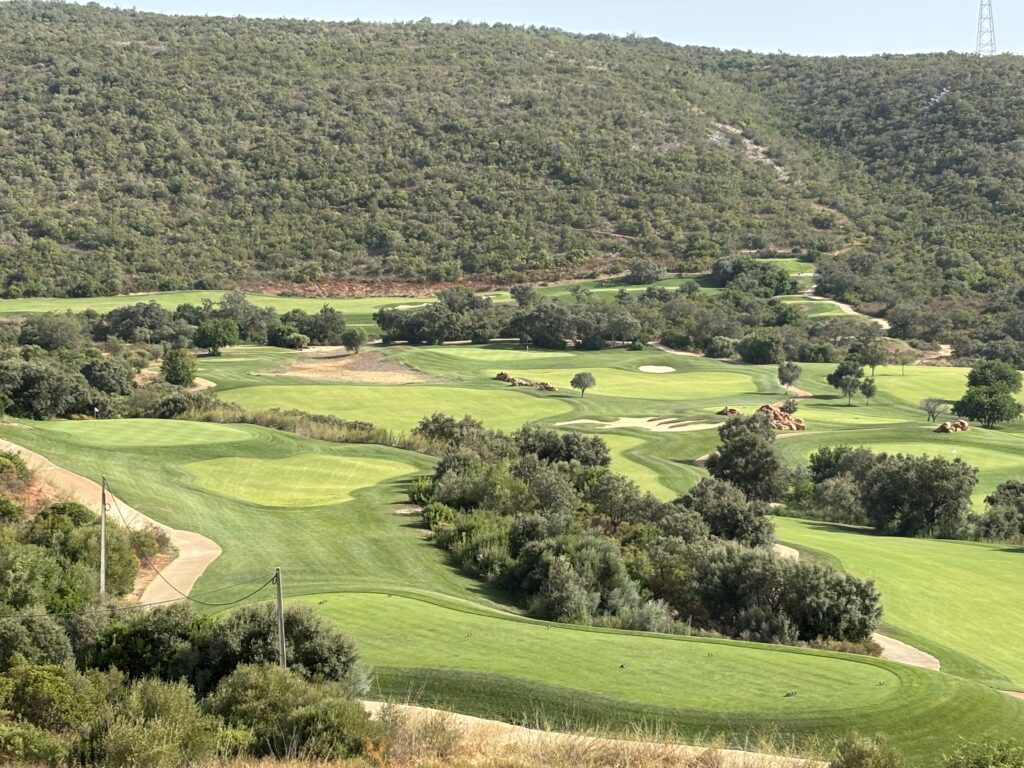
That approach earned Ombria the GEO Foundation certification, one of golf’s most prestigious ecolabels. It’s recognition that the course genuinely integrated itself into this valley. It didn’t simply occupy the land — it joined it. Less than a quarter of the entire 153-hectare resort has been built on at all. The rest remains exactly as it was found, indigenous trees and plants quietly repopulated rather than replaced.
You feel that philosophy before you’ve even swung a club. This course asks you to notice things most courses hide. The rivers crossing your line. The ancient trees framing every approach. The hillsides fairways were carved into, rather than bulldozed through. Recognition has followed that philosophy closely. Ombria was named a Best New Golf Course at the World Golf Awards. It’s been ranked among Europe’s Top Golf Resorts, and listed among the continent’s finest developments. That kind of company confirms something important. Ombria isn’t simply a pretty inland alternative to the coast. It’s a genuine destination in its own right.
Eighteen Holes, One Valley, Endless Variety
Ombria plays to 5,802 metres, a little over 6,300 yards, at a par of 71. Across those eighteen holes, it manages something genuinely rare. There’s real, constant variety here, without ever losing the valley’s thread. Water, in the form of rivers rather than ocean, accompanies the front nine constantly. The back nine climbs and falls through proper hillside terrain. Elevated tees and downhill approaches offer views back across the resort. Those views feel earned rather than simply arranged for effect.
Of the eighteen holes, six in particular explain why this course has become one of Portugal’s most talked-about new arrivals.
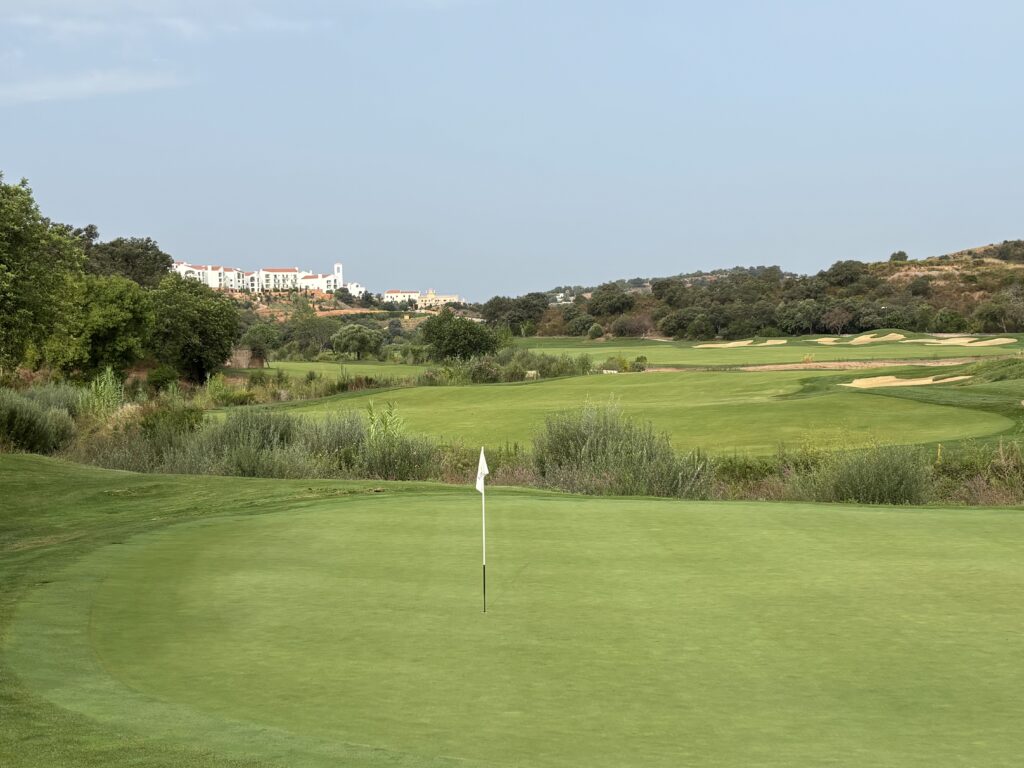
Looking back from the 2nd green
If Ombria wants to teach you something early, it does so here. Widely considered the most demanding hole on the course, the second asks real questions immediately. Players must navigate several different strategic options while water threatens at almost every turn. There is no single safe route through this hole. Only a series of calculated risks exists, each one narrower than the last. By the time you reach the green, something has clicked. This course will not be won with power alone. It’s going to be won with patience, hole after hole.
Dramatic Drop
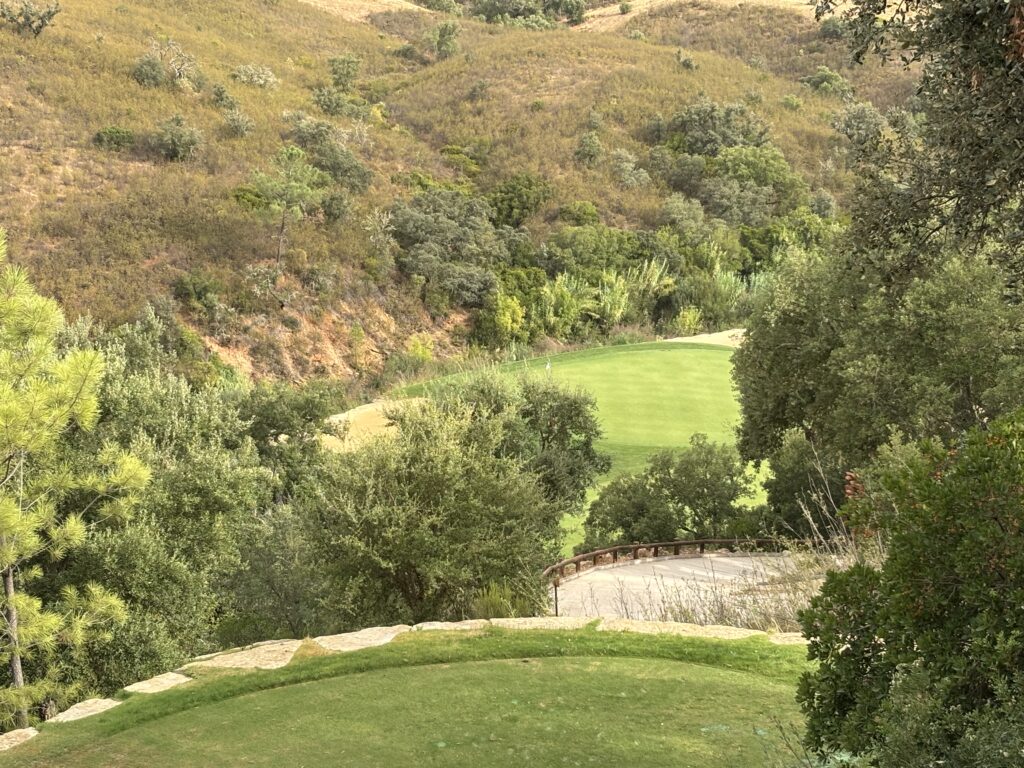
Looking down to the 5th green
Few holes on this course feel as quietly unusual as the fifth. Played over a sharp descent, it demands something most par threes never ask for. You need genuine precision judging distance against dramatic elevation change. Then comes the harder part — trusting that judgment completely, without hesitation. Misjudge it, even slightly, and the ball simply keeps falling further than intended. Get it right, though, and few feelings on this course compare. Watching a ball drop cleanly into a green far below feels like something earned.
Ombria’s Hardest Hole
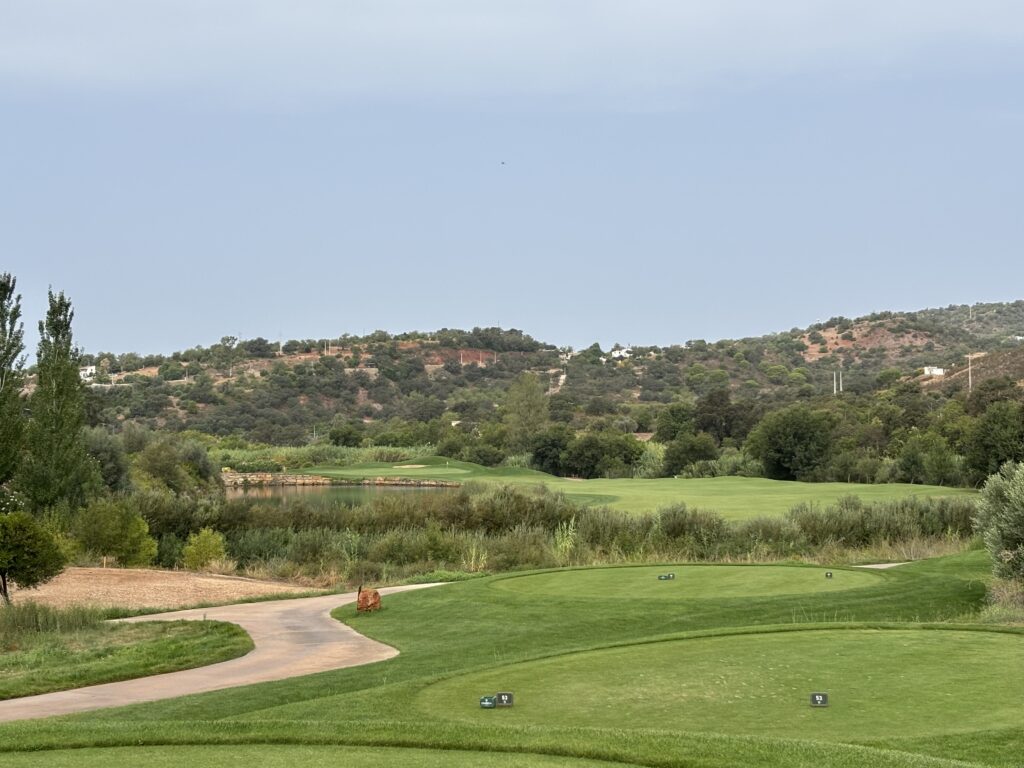
Stay right on the 9th hole
The front nine doesn’t just end at the ninth. It performs, deliberately, like a closing act. At 425 yards, the ninth is a wonderful hole. Played out dramatically along a lakeside road, spectators naturally gather here. The closing hole on the front nine rewards nothing but accuracy and sound strategy. There’s no hiding a loose tee shot on this hole. No bailing out late, no second chances offered quietly. It’s built for an audience, whether or not one’s watching. Walking to the turn afterward, something feels genuinely decided.
The Turn: Where the Valley Climbs
Crossing to the back nine, the character of Ombria shifts noticeably. The rivers that shaped the front nine start giving way to hillsides. Elevation becomes the story now, more than water ever was. You climb, you descend, and the valley keeps revealing itself slowly.
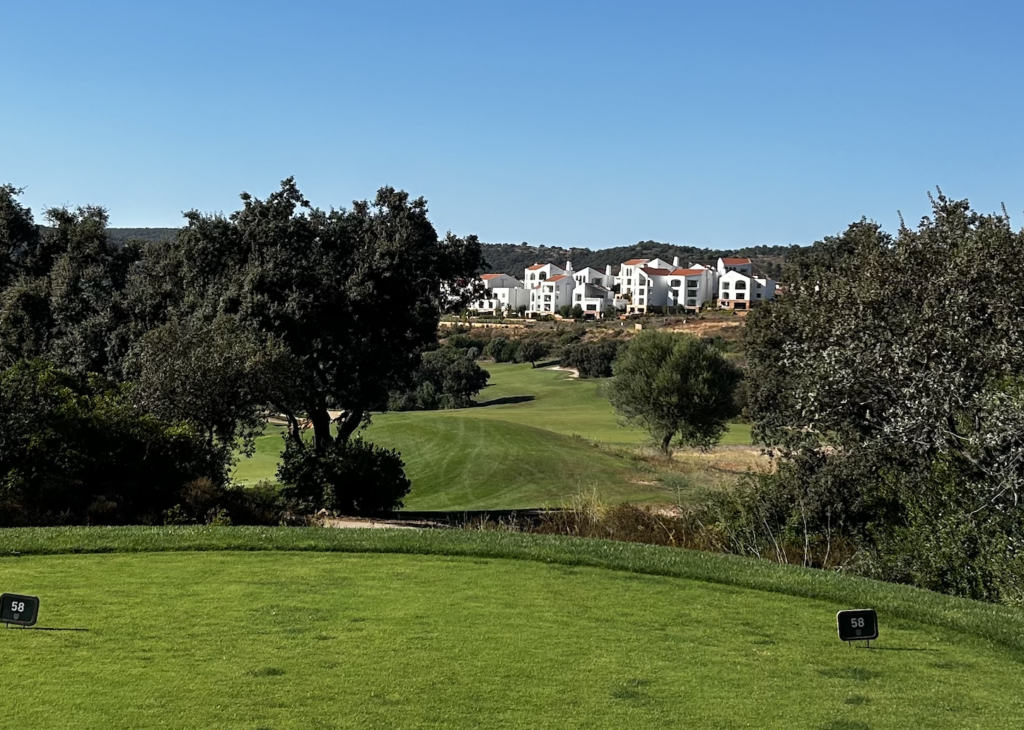
Looking down the 12th with the hotel in the background
The back nine’s most cinematic moment arrives at the twelfth. At 550 yards, this is only the third longest hole on the course. A beautiful downhill approach, framed by natural rough and old treelines, leads toward an elevated green. That green demands real care from anyone attempting the approach shot. Standing on this tee, the whole valley seems to open up below. It’s the kind of view that makes you forget your job. For one brief moment, concentrating on your second shot feels secondary. Careful, deliberate play gets rewarded generously here, though. Anything hurried tends to be punished by that patient, waiting green.
Golf Among the Ruins
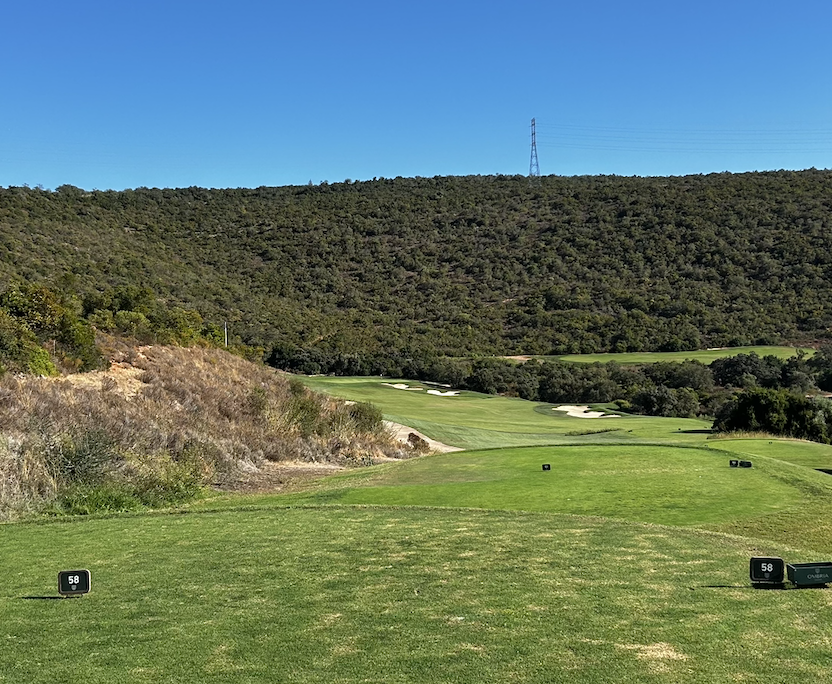
The fourteenth hole
Some holes get remembered for pure difficulty. The fourteenth, only 378 yards, gets remembered for its story instead. A left dogleg offering real strategic options for longer hitters, it plays beneath the watch of something unexpected. A genuinely striking lime kiln rises from the landscape nearby. It’s a piece of local heritage, quiet and unmistakably present. This valley had a life long before golf ever arrived here. Few holes anywhere in the Algarve fold history and strategy together this naturally.
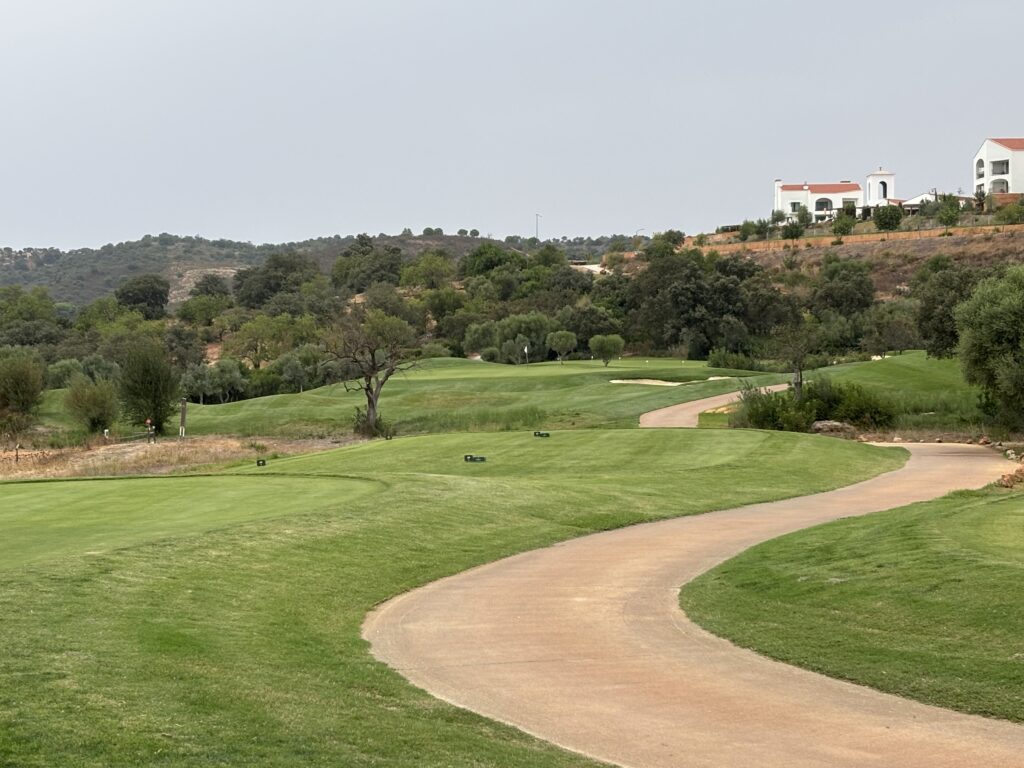
The par 3 seventeenth
Every great course needs one hole that becomes shorthand for everything. At Ombria, that’s the seventeenth, without much argument. At 193 yards, a single, ancient oak tree dominates this hole’s entire character. It frames a variety of hidden challenges from the tee. The putt that follows, by the course’s own admission, stays comparatively simple. This hole is built on atmosphere as much as difficulty. You’ll find yourself photographing it before you’ve even swung. Somehow, you already sense you’ll want to remember exactly this.
What Six Holes Reveal About the Whole
Step back from these six holes, and a pattern quietly emerges. The front nine tests patience through water, hazard after calculated hazard. The back nine tests judgment through elevation, view after distracting view. Neither half competes with the other for drama, exactly. Instead, they build toward something more layered and complete together.
That balance rewards a particular kind of traveling golfer especially well. Anyone chasing a single spectacular photograph will find plenty here. But anyone chasing an actual round worth remembering finds more. Walking off the eighteenth, you understand what Ombria was building toward. Not one unforgettable hole, but eighteen quietly connected chapters.
Ask the caddies here, and they’ll tell you something similar. Most first-time visitors arrive expecting a pleasant, scenic inland detour. Few leave describing it that modestly by the eighteenth green.
A Sanctuary to Return To
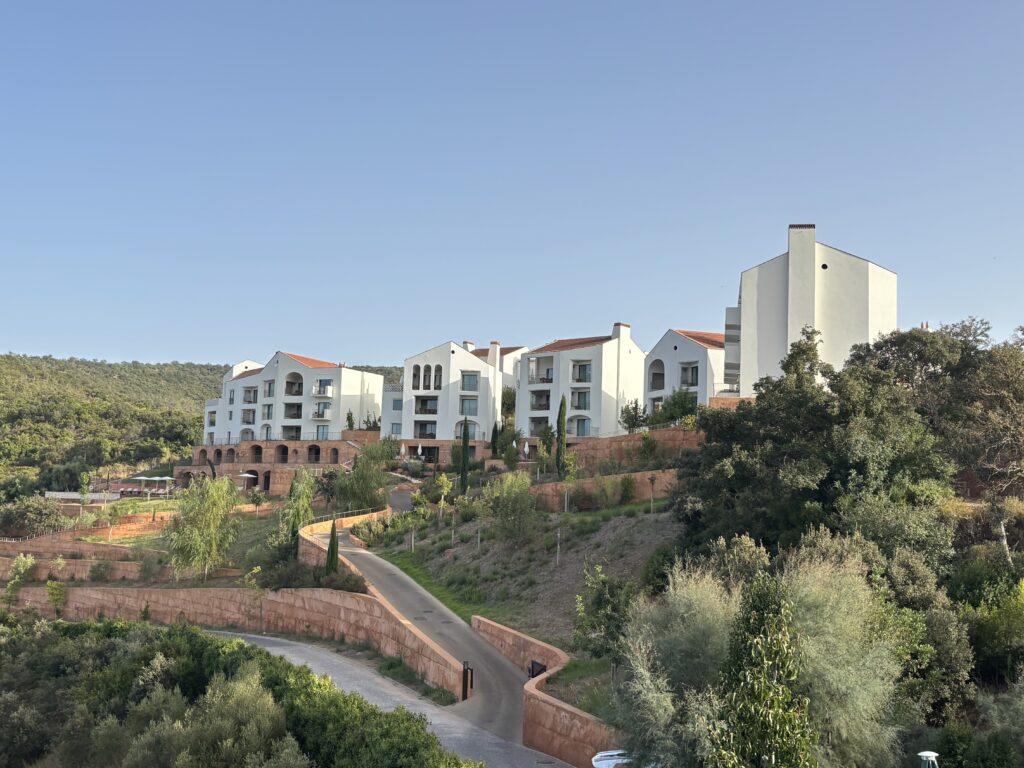
Golf at Ombria doesn’t end at the clubhouse door, notably. The resort’s five-star hotel, operated by Viceroy Hotels & Resorts, opened October 2024. It has already achieved Biosphere Certified status, genuinely earned rather than assumed. That’s recognition of authentic, responsible hospitality, not a marketing label bolted on afterward.
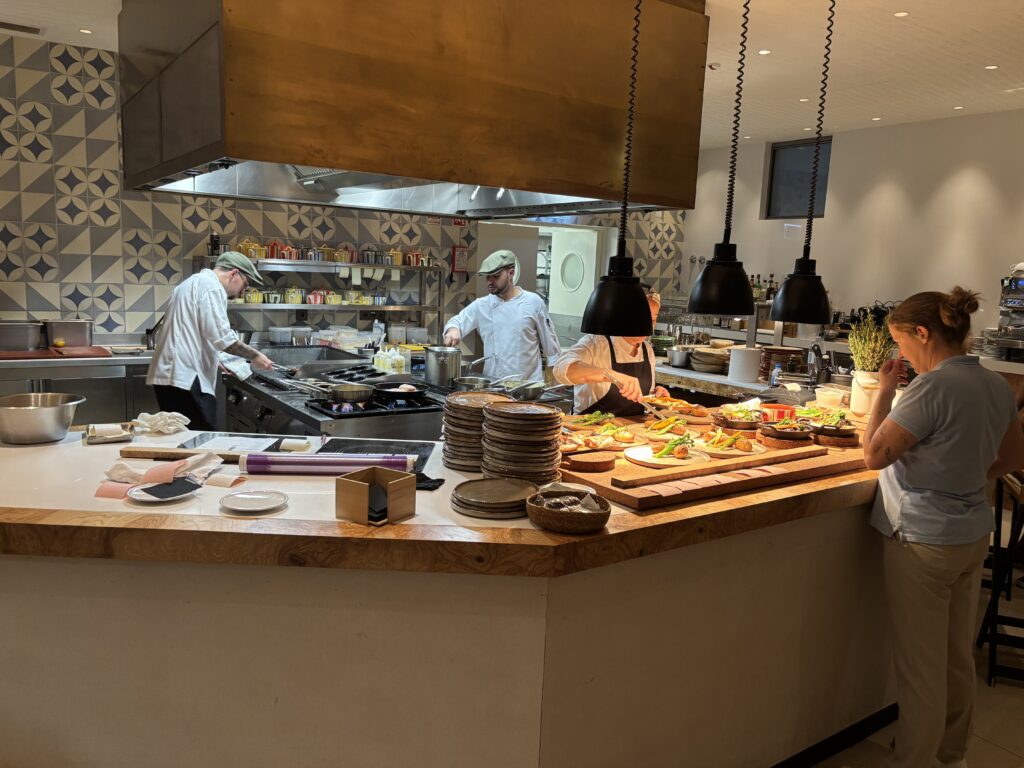
Outstanding food, freshly prepared in the Ombria kitchen
Between rounds, the resort offers a proper spa and several restaurants. Those kitchens draw directly on the Algarve’s authentic inland heritage and produce. There’s an unhurried, slow-living atmosphere throughout, the kind inland Portugal always does better. This isn’t a resort built for a rushed single day trip. It’s built for golfers wanting to wake inside the same valley. You watch the light change over the same hillsides slowly. Then you tee off again the next morning, without ever leaving.
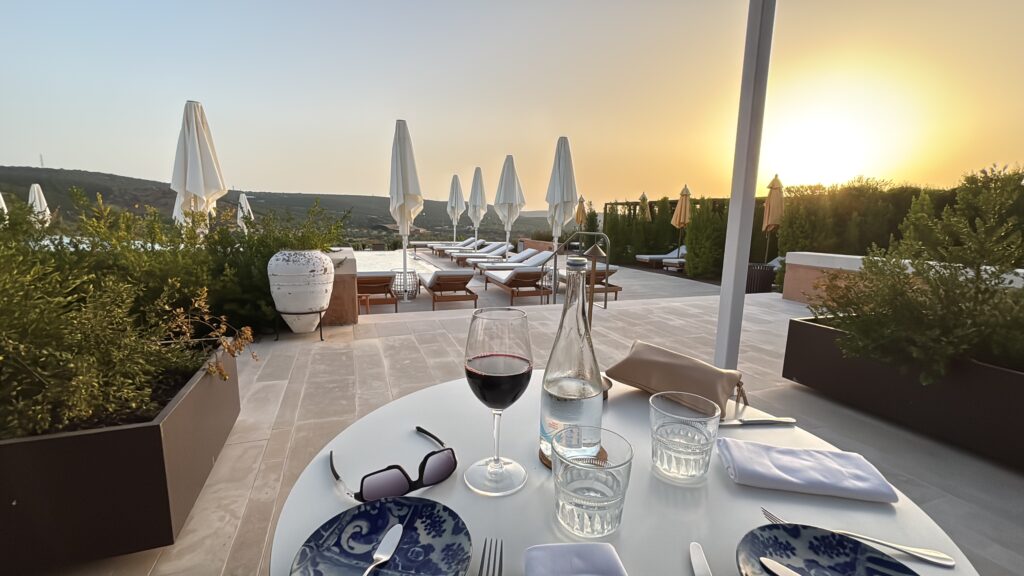
Al Fresco dining
There’s something quietly rebellious about that idea in this region. Faro’s beaches, its marinas, its endless run of seafront resorts, sit close. Yet Ombria never tries competing with any of it directly. It leans fully into what makes inland Algarve genuinely different instead. There’s the whitewashed calm of villages like Querença nearby. There’s the rhythm of a working countryside, rather than a tourist strip. And there’s a golf course that rewards slowing down over rushing through.
Guests who choose Ombria tend to describe a similar feeling afterward. It’s not simply a golf resort with pleasant surroundings attached. It’s a genuine place that happened to include world-class golf. The golf feels woven into the valley, rather than imposed upon it.
In Our Opinion
Ombria succeeds precisely because it refuses a certain kind of comparison. It never tries competing with the Algarve’s famous coastal courses directly. Dramatic cliffside drops and ocean views were never the goal here. Instead, it earns your attention through rivers rather than surf. Ancient oaks replace dunes, and patience replaces raw power completely.
There’s a genuine, deeply considered relationship between this course and its land. You feel it on every tee, at every elevation change. By the time you reach the eighteenth green, something has shifted. You’ve played through history at the lime kiln, and beneath that oak. You understand exactly why this quiet valley matters so much now. It’s become one of Portugal’s most exciting new golf destinations. Not despite turning its back on the sea, but because of it.
For travelling golfers who collect destinations rather than just scorecards, that distinction matters enormously. Ombria doesn’t ask to be your only Algarve round. It asks to be the one you talk about longest.
At a Glance
- Location: Querença, Loulé, 30 minutes drive from Faro Airport
- Designed by Jorge Santana da Silva; GEO Foundation certified for sustainable design
- Par 71, 5,802 metres (approximately 6,345 yards)
- Set within a 153-hectare resort, less than a quarter built on
- Recognised as a World Golf Awards Best New Golf Course, ranked among Europe’s Top Golf Resorts
- 5-star Viceroy at Ombria Algarve hotel opened October 2024, Biosphere Certified
- For more information, visit the Ombria Resort website

Jim Callaghan CCM is a former Club Manager with experience of overseeing several top Scottish Golf Clubs.
Now, as European Editor of Golf Operator Magazine and World’s Best Golf Destinations, he shares insights into club operations and his golfing adventures across Europe.
Jim is also an Ambassador for premium clothing brand Fenix Xcell Clothing and also for the Spanish local DMC, Costa Verde Golf and is host of @JimTheSeniorGolfer on YouTube.
If your club/resort or brand wants to reach over 450,000 golfers, contact Jim at [email protected] or call 0044 (0) 78522 88732
Featured Post

 0
0